
Soft And Fluffy Crescent Rolls (No-Knead)
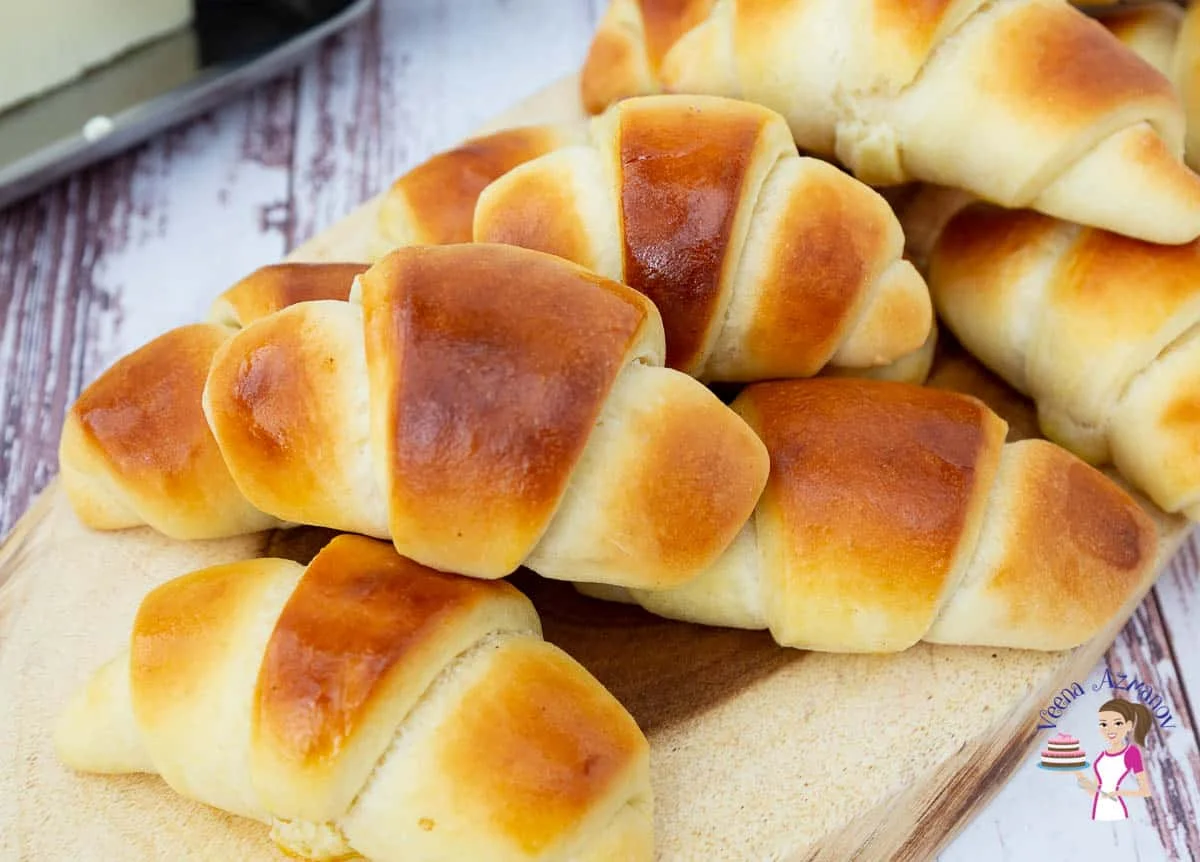
These soft, buttery crescent rolls have a tender crumb and golden tops, making them a welcome addition to a meal or a snack on their own. The no-knead method keeps the preparation straightforward, with two rises doing the work of building a light texture.
Ingredients
- 500 gAll-purpose flour
- 9 gSalt
- 7 gInstant dry yeast
- 100 gEggs
- 113 gUnsalted butter, at room temperature
- 240 gWhole milk, warmed to about 45°C (110°F)
- 15 gSugar
- 30 gUnsalted butter, at room temperature
- 1/2Egg, for egg wash
Instructions
- 1
Activate the yeast
Dissolve the sugar in the warm milk in a small bowl. Sprinkle in the yeast and leave it for 5–10 minutes, until frothy.
- 2
Mix the dough
Combine the flour and salt in a large bowl. Add the activated yeast mixture, eggs and melted butter, then mix until a soft dough forms.
- 3
Let dough rise
Put the dough in a greased bowl, cover with a damp cloth and leave in a warm place for 1–2 hours, or until doubled in size.
- 4
Shape the crescents
Punch down the risen dough and divide it into two equal portions. Roll each portion into a circle about 6 mm (¼ inch) thick and brush the surface with melted butter.
- 5
Cut and roll
Cut each circle into 8–12 wedges with a pizza cutter or sharp knife. Starting at the wide end, roll each wedge towards its point to make a crescent. Arrange on a baking sheet lined with parchment paper, leaving space between them.
- 6
Rise once more
Cover the baking sheet with a damp cloth and leave the crescents for 30–45 minutes, until puffy.
- 7
Bake until golden
Heat the oven to 190°C (375°F). Brush the tops with melted butter or egg wash and bake for 15–20 minutes, until golden brown.
- 8
Cool and serve
Transfer the rolls from the oven to a wire rack to cool. Serve warm or at room temperature.
What are crescent rolls?
Crescent rolls are small, curved yeast breads, shaped by rolling triangular pieces of dough from the wide end towards the tip. They are popular in American home cooking as a soft, buttery accompaniment to meals or as a base for fillings.
This version uses a simple enriched dough and skips kneading. The two rises help give the rolls their airy interior, while butter adds richness.
Nutrition and macros by portion
The nutrition label shows one serving as written: 153 calories, 3g protein, 20g carbs, 7g fat.
| Portion | Adjustment | kcal | Protein | Carbs | Fat |
|---|---|---|---|---|---|
| Lighter | Use less butter | 107 kcal | 2g | 14g | 5g |
| This serving | As written | 153 kcal | 3g | 20g | 7g |
| Hungry | Serve two rolls | 230 kcal | 5g | 30g | 11g |
The flour and sugar provide most of the carbohydrates, while the butter carries much of the fat. Eggs and milk contribute some protein, with flour adding a little more. To balance the plate, pair a roll with a protein-rich main and vegetables.
Why the milk temperature matters
Warm milk: The recipe calls for milk at about 45°C (110°F), which helps the yeast become active. Very hot milk can hinder the rise, so check its temperature if you have a thermometer.
Frothy yeast: After 5–10 minutes, the yeast mixture should look frothy. This is a useful visual cue before you mix it into the flour.
Mixing the soft dough
Flour and salt: Combine these first so the salt is distributed through the flour before the wet ingredients go in.
Butter and eggs: These enrich the dough and contribute to its soft texture. Mix until there are no dry patches; the dough is meant to be soft rather than stiff.
How to judge the rises
First rise: Use the stated 1–2 hours as a guide, but look for the dough to double in size. A cool room may slow this down.
Second rise: The shaped rolls should look puffy after 30–45 minutes. Give them a little more time if they still look compact.
Shaping the crescents
Even wedges: Cut each circle into wedges of similar size so the rolls bake at roughly the same rate. Roll each from its broad edge towards the point without pressing the dough flat.
Spacing: Leave room between the shaped rolls on the lined baking sheet, as they expand during their second rise and in the oven.
Butter, egg wash and browning
Butter: Brushing the dough before shaping adds buttery flavour between its layers. The recipe also allows melted butter on top before baking.
Egg wash: The listed half egg can be used to brush the tops for a glossy, golden finish. Keep an eye on the rolls near the end of the 15–20 minute baking time.
Serving ideas
At the table: Serve the rolls warm alongside soup, a roast or a simple salad. Their mild buttery flavour also works well with breakfast or brunch.
For a snack: Split a roll and add a sweet or savoury filling. Keep fillings modest so the soft roll remains easy to handle.
Recipe notes & tips
- Weigh the flour for a more consistent dough.
- Warm the milk gently and check it before adding the yeast.
- Cover the dough well during both rises to stop its surface drying out.
- Brush the dough evenly with butter so the shaped rolls have a consistent flavour.
- Use the golden colour and the 15–20 minute baking window as cues, rather than relying on time alone.
Variations
- Herb butter: Mix finely chopped herbs into the melted butter used for brushing.
- Garlic finish: Brush the baked rolls lightly with garlic butter while they are still warm.
- Cheese filling: Add a small amount of grated cheese to each wedge before rolling.
- Sweet centre: Place a little cinnamon sugar near the wide end of each wedge before shaping.
- Seeded tops: Scatter seeds over the egg-washed rolls before baking.
Common mistakes to avoid
- Milk too hot: Let it cool to about 45°C (110°F) before adding the yeast.
- Rushing the first rise: Wait until the dough has doubled, even if it takes longer than an hour.
- Uneven wedges: Cut similar-sized pieces so the rolls finish baking together.
- Tight spacing: Leave gaps on the baking sheet so the crescents have room to expand.
- Overbaking: Check the rolls from 15 minutes and take them out once golden brown.
How to store
Once completely cool, store the rolls in an airtight container at room temperature for up to 2 days. Warm them briefly in a low oven to refresh, or freeze them for longer storage and thaw before reheating.
Frequently asked questions
Can I make the dough ahead?
The recipe specifies two rises at room temperature. For advance preparation, refrigerate the dough covered and allow it to come back towards room temperature before shaping; the timing may vary.
How many wedges should I cut?
The method says to divide the dough into two circles and cut each into 8–12 wedges, which makes 16–24 rolls. For 12 rolls, cut each circle into 6 wedges instead.
Do I have to use egg wash?
No. The method allows melted butter instead, which gives the tops a buttery finish without the same glossy look.
Why has my dough not doubled?
A cool room can slow yeast activity, so give the dough more time and keep it covered in a warm, draught-free place. Check that the milk was warm rather than very hot when the yeast was added.
Can I freeze the baked rolls?
Yes. Cool them completely, pack them airtight and freeze. Thaw before serving, then warm briefly in the oven.
Cook it from the original
This recipe comes from veenaazmanov.com. Their page has the author’s own photos, notes and tips — the best place to cook it from.
Open the recipe on veenaazmanov.com