
Sweet Sour Yellow Croaker
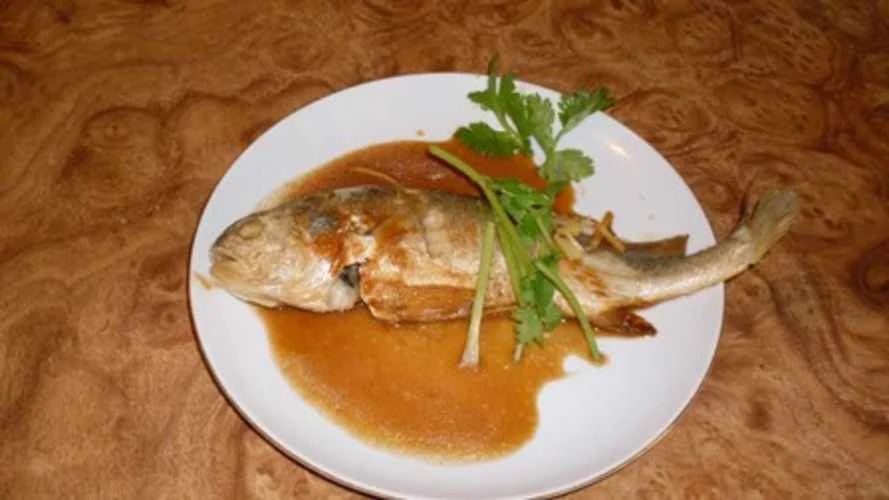
Sweet and sour yellow croaker is a Chinese-style fish dish coated in a quick sauce of vinegar, sugar, soy sauce and ketchup. It takes little hands-on preparation and is served with white rice or, as the source suggests, drinks.
Ingredients
- 1 pieceyellow croaker
- to tastesalt
- 1 tbspcooking wine
- 1 tbspwater
- 1 tspAloha shoyu
- 1 tspvinegar
- 1 tspsugar
- 1 tspketchup
- 2 slicesginger
- 1 clovegarlic
- ½green onion
- 1 piececoriander
- 1 tspstarch
- 1½ tspsugar, as specified in the method
- as neededoil
Instructions
- 1
Clean the fish
Clean the yellow croaker, remove the entrails and rinse it.
- 2
Marinate the fish
Make three cuts on each side of the fish. Season it with salt and 1 tablespoon of cooking wine, then add the chopped green onion, garlic and ginger. Leave to marinate for 10 minutes or longer.
- 3
Mix the sauce
Stir together 1 teaspoon of soy sauce, 1 teaspoon of vinegar, 1½ teaspoons of sugar, 1 teaspoon of starch, 1 tablespoon of water and 1 teaspoon of ketchup.
- 4
Fry and simmer
Heat oil in a pan and fry the fish for 1 minute on each side. Add the chopped green onion, garlic and ginger, then pour in the sweet and sour sauce. Simmer for 2 minutes and turn off the heat.
- 5
Serve the fish
Serve with white rice or alcoholic drinks.
What is sweet and sour yellow croaker?
Yellow croaker is a fish used in Chinese and Korean cooking, and this recipe pairs it with a quick sweet and sour sauce. Its brief method makes a simple pan-cooked fish meal rather than a long-simmered dish.
The version here combines soy sauce, vinegar, sugar and ketchup, then adds ginger, garlic and green onion for savoury flavour. The fish is scored and briefly marinated so the seasoning reaches beyond its surface.
Nutrition and macros by portion
The nutrition label shows one serving as written: 170 calories, 25g protein, 9g carbs, 4g fat.
| Portion | Adjustment | kcal | Protein | Carbs | Fat |
|---|---|---|---|---|---|
| Lighter | Use less frying oil | 119 kcal | 18g | 6g | 3g |
| This serving | As written | 170 kcal | 25g | 9g | 4g |
| Hungry | Serve with extra rice | 255 kcal | 38g | 14g | 6g |
The fish provides most of the protein, while the sugar, ketchup and any rice served alongside contribute carbohydrates. Oil used for frying adds fat; serve with rice and a generous portion of vegetables for a more balanced plate.
Preparing the fish
Scoring: Make three cuts on each side as directed, taking care not to cut all the way through. This gives the seasoning and heat more access to the flesh.
Marinating: The method calls for salt and cooking wine with chopped aromatics for at least 10 minutes. If marinating longer, keep the fish refrigerated.
Getting the sauce right
Mixing: Stir the starch into the water and other sauce ingredients until evenly combined before it goes into the pan. This helps prevent dry lumps.
Balancing: The sauce brings together sweet, sour and savoury flavours. The ingredient list gives 1 teaspoon of sugar, while the method specifies 1½ teaspoons; use one amount consistently, according to your preferred balance.
Frying and doneness
Frying: The stated timing is 1 minute per side, but a whole fish can vary in thickness. Use a pan that holds it comfortably and check the thickest part before serving.
Checking: The flesh should be opaque and separate readily from the bone. If it is not cooked through after the brief simmer, continue cooking gently until done.
Timing and pan handling
The listed total time is 35 minutes, including the 10-minute minimum marinating period. Prepare and measure the sauce while the fish marinates to make the cooking stage straightforward.
Turn the fish carefully so it stays intact, and add the sauce after the aromatics. A gentle simmer helps the sauce coat the fish without breaking it apart.
What to serve alongside
Rice: Plain white rice is the suggested accompaniment and works well for catching the sauce. Serve it alongside the fish rather than cooking it in the pan.
Garnish: The ingredient list includes coriander, although the method does not say when to add it. Chop it and scatter it over the finished fish if you want to use it.
Recipe notes & tips
- Pat the rinsed fish dry before seasoning so it is easier to handle in the pan.
- Have the sauce mixed before frying, as the cooking stage is brief.
- Use a fish slice or two spatulas to turn the croaker without tearing it.
- Keep the sauce at a gentle simmer rather than letting it boil hard.
- Check the thickest part of the fish, as cooking time depends on its size.
Variations
- More ginger: Add extra chopped ginger for a sharper aromatic flavour.
- More tang: Increase the vinegar slightly if you prefer a more pronounced sour note.
- Less sweet: Use the lower sugar amount from the ingredient list.
- Coriander finish: Scatter the listed coriander over the fish just before serving.
- Rice bowl: Serve the fish and sauce over a bowl of plain white rice.
Common mistakes to avoid
- Skipping the cuts: Score both sides as directed so the seasoning reaches the fish more evenly.
- Crowding the pan: Use a pan that fits the fish, making it easier to fry and turn.
- Turning too soon: Let the first side cook for the stated minute before carefully turning the fish.
- Lumpy sauce: Mix the starch thoroughly with the other sauce ingredients before adding it to the pan.
- Relying only on the timer: Check the thickest part and continue cooking gently if it is not opaque.
How to store
Refrigerate leftovers in a covered container and eat within 1–2 days. Reheat gently in a covered pan until piping hot throughout; the fish may become more delicate after storage.
Frequently asked questions
Can I use a different fish?
Yes. Choose a similarly sized whole fish that is suitable for pan-frying, and check the thickest part for doneness because cooking time may differ.
How long should I marinate the croaker?
The method says at least 10 minutes. Marinate it in the refrigerator if leaving it for longer.
Why does the sugar amount differ?
The ingredient list gives 1 teaspoon, while the sauce method specifies 1½ teaspoons. Choose one amount and adjust to the sweet-and-sour balance you like.
Is the starch necessary?
It is included in the sauce method and helps thicken the sauce. Mix it in thoroughly before pouring the sauce into the pan.
What should I serve with it?
The recipe suggests white rice, which is a practical accompaniment for the sauce. A simple vegetable side also works.
Cook it from the original
This recipe comes from cookinghawaiianstyle.com. Their page has the author’s own photos, notes and tips — the best place to cook it from.
Open the recipe on cookinghawaiianstyle.com