
Challah Sandwich Bread
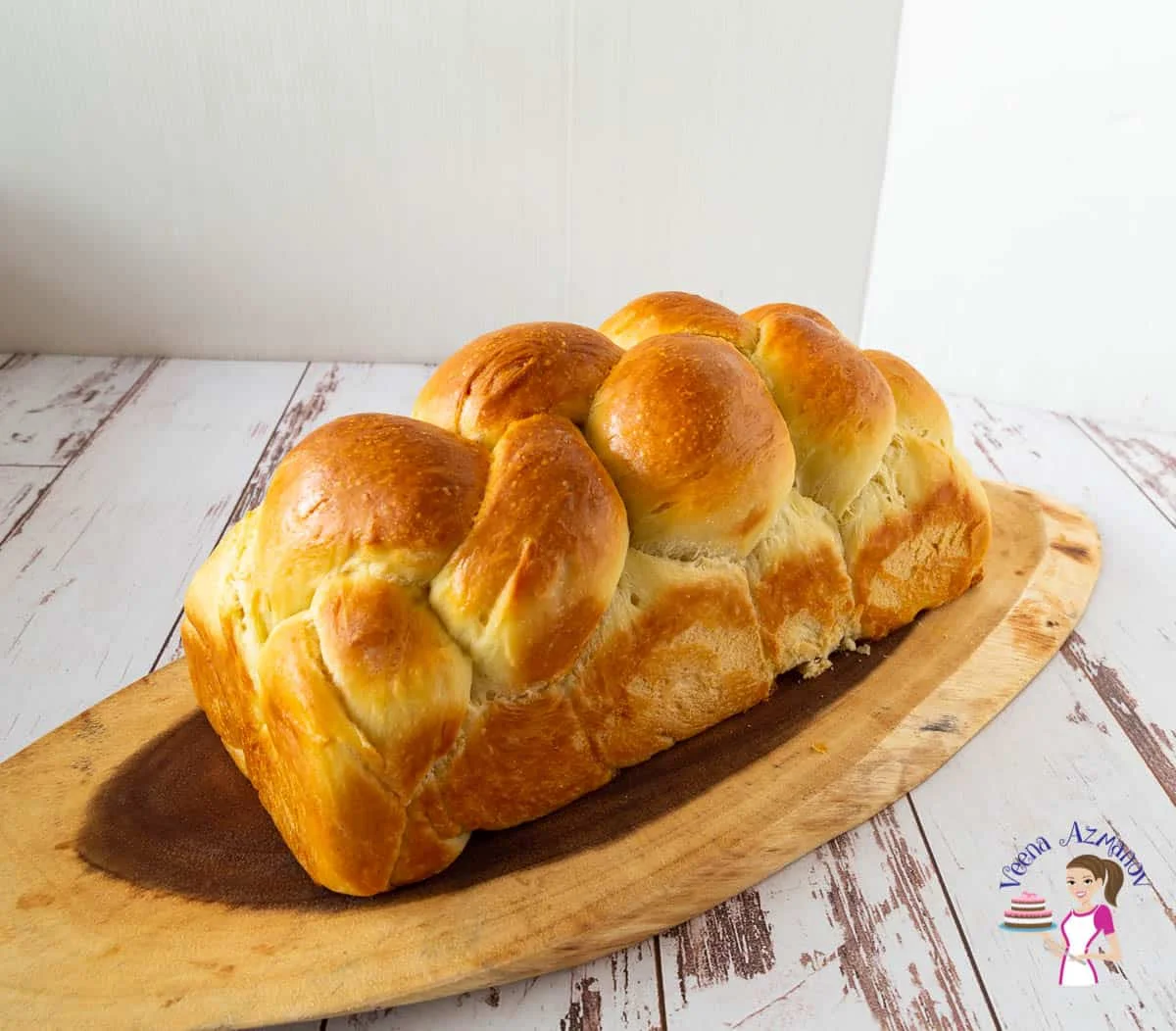
This soft, egg-enriched challah is braided into a loaf and baked in a tin, giving you neat slices for sandwiches. The six-strand plait makes it look special, while the tender crumb works just as well for toast.
Ingredients
- 240 gwarm water (43 °C)
- 9 ginstant dried yeast
- 30 ghoney or sugar
- 30 golive oil
- 100 geggs
- 550 gplain flour
- 9 gsalt
Instructions
- 1
Mix the yeast
In a mixing bowl or measuring jug, stir together the warm water, yeast, honey, oil and eggs. Set aside for 3 minutes, until foamy.
- 2
Combine ingredients
Measure the flour and salt into a mixing bowl or the bowl of a stand mixer fitted with a dough hook. Add the yeast mixture and combine well.
- 3
Knead the dough
Turn the dough out on to a well-dusted work surface and knead for 5–6 minutes, or knead in the stand mixer for 4–5 minutes.
- 4
Let it rise
Once the dough is soft and shiny but still slightly sticky, shape it into a ball. Put it seam-side down in an oiled bowl and coat the surface with oil to stop it drying out. Cover with a clean tea towel or cling film and leave somewhere warm for 60–90 minutes, until doubled in volume.
- 5
Divide the dough
When the dough has doubled, transfer it to a well-dusted surface. Press out the air and reshape it into a ball, then roll it into a small log. Divide the dough into six roughly equal portions; use kitchen scales if you have them.
- 6
Shape the strands
Shape each portion into a ball. If the dough resists rolling, leave it to rest for 5–10 minutes. Roll each ball with a rolling pin on an unfloured work surface, then roll it up like a Swiss roll and shape it into a rope about 46 cm (18 inches) long.
- 7
Braid the challah
Secure the six strands together at the top and arrange them from left to right, numbered 1 to 6. Cross strand 1 over strand 6, then bring strand 1 down between strands 2, 3 and 4, 5. Move strand 3 over into the place strand 6 left; bring strand 1 down between strands 2, 3 and 4, 5 again, then move strand 4 over into the place strand 1 left. Continue this sequence to the end, then tuck both ends underneath.
- 8
Proof in the tin
Transfer the braid to a greased 23 cm (9-inch) loaf tin. Cover with a clean tea towel and leave to proof for 30–45 minutes.
- 9
Preheat and glaze
About 20 minutes before baking, preheat the oven to 177 °C (350 °F; Gas Mark 4). Brush the loaf with beaten egg.
- 10
Bake until golden
For two challahs made from this dough, bake each for 20–25 minutes. For one large challah, bake for about 45–50 minutes, until golden brown.
- 11
Cool the loaf
Remove the loaf and leave it on a wire rack for 5 minutes. Cover it with a clean tea towel to help keep it soft.
What is challah sandwich bread?
Challah is an enriched bread associated with Jewish cuisine, traditionally braided and often served for Shabbat and festivals. This version adapts the familiar plait into a loaf-tin shape that is easy to slice for sandwiches.
Eggs and olive oil give the dough its tender texture, while a six-strand braid brings the distinctive look. Baking it in a tin helps the loaf hold a practical shape.
Nutrition and macros by portion
The nutrition label shows one serving as written: 130 calories, 4g protein, 24g carbs, 2g fat.
| Portion | Adjustment | kcal | Protein | Carbs | Fat |
|---|---|---|---|---|---|
| Lighter | Thinner sandwich slices | 91 kcal | 3g | 17g | 1g |
| This serving | As written | 130 kcal | 4g | 24g | 2g |
| Hungry | Add a second slice | 195 kcal | 6g | 36g | 3g |
The flour provides most of the carbohydrates, while the eggs contribute protein and the eggs and olive oil supply much of the fat. Pair a slice or sandwich with a source of vegetables and a protein-rich filling to make a more balanced plate.
The dough’s key ingredients
Warm water: At about 43 °C, the water should feel warm rather than hot. It helps the yeast get started without overheating it.
Eggs and oil: These enrich the dough and help make the finished slices soft. Honey adds sweetness; sugar is offered as an alternative.
Kneading and the first rise
Knead until the dough looks smooth, soft and slightly shiny, while still feeling a little tacky. Adding plenty of extra flour can make the loaf less tender, so dust the work surface lightly rather than working in a lot more flour.
First rise: Give the covered dough 60–90 minutes in a warm place, or until it has doubled in volume. The dough’s size is a more useful cue than the clock alone.
Shaping six strands
Even portions: Divide the dough into six similar weights so the strands bake at a similar rate. A kitchen scale makes this easier.
Ropes: Roll each portion into a rope about 46 cm long. If the dough keeps shrinking back, let it rest for 5–10 minutes before trying again.
Getting the braid right
Secure the strands at the top and keep them arranged from left to right as you work through the stated sequence. Take your time, since keeping the strands in order makes the pattern easier to follow.
Tuck the ends underneath before transferring the loaf to the tin. This helps keep the braid neat as it proofs and bakes.
Proofing and baking cues
Second rise: The braid proofs in the loaf tin for 30–45 minutes. It should look puffier before it goes into the oven.
Baking: The recipe gives different times for one large loaf and two smaller challahs. Look for a golden-brown surface, and take care not to judge doneness by colour alone if the loaf is browning quickly.
Serving and slicing
Let the loaf cool briefly on a wire rack, then cover it with a clean tea towel as directed to help maintain a soft crust. For tidy sandwich slices, allow it to cool further before cutting.
The mild, slightly sweet flavour suits savoury fillings such as cheese, salad or roasted vegetables, as well as simple buttered toast.
Recipe notes & tips
- Keep the water warm rather than hot when mixing it with the yeast.
- Use a light dusting of flour on the work surface so the dough does not become dry.
- Weigh the six portions for more even strands and baking.
- Let the dough rest briefly if it springs back while you roll it into ropes.
- Grease the loaf tin well so the baked bread releases cleanly.
- Cool the loaf further before slicing if you want neater sandwich pieces.
Variations
- Use sugar: Swap the honey for the same amount of sugar.
- Make two loaves: Divide and shape the dough into two challahs, then bake each for 20–25 minutes.
- Try a different braid: Use the same dough with a simpler braid if you prefer fewer strands.
- Serve it toasted: Toast slices and top with butter or your preferred sandwich filling.
Common mistakes to avoid
- Water too hot: Use warm water at about 43 °C so it does not overheat the yeast.
- Too much extra flour: Dust the surface lightly and keep the dough slightly tacky for a softer result.
- Uneven strands: Divide the dough into six portions of similar weight before shaping.
- Rushing the rise: Wait until the dough has doubled in the first rise and looks puffier after the second.
- Cutting too soon: Let the loaf cool further after its initial 5 minutes on the rack for cleaner slices.
How to store
Once completely cool, store the loaf in an airtight container or wrapped well at room temperature and use within 2–3 days. Reheat or toast individual slices; freeze well-wrapped slices for longer storage and thaw as needed.
Frequently asked questions
Can I use sugar instead of honey?
Yes. The recipe gives 30 g of honey or sugar, so use the same quantity of either.
How do I know when the first rise is finished?
The dough should have doubled in volume. Depending on the warmth of your kitchen, this may take 60–90 minutes.
Can I make two smaller loaves?
Yes. The method specifies baking two challahs made from the dough for 20–25 minutes each, until golden brown.
What if the dough is difficult to roll into ropes?
Leave it to rest for 5–10 minutes, then try again. The brief rest can make the dough easier to shape.
Do I need to wait before slicing?
The method calls for 5 minutes on a wire rack, followed by covering the loaf with a tea towel. For cleaner sandwich slices, let it cool further before cutting.
Can I freeze the bread?
Yes. Once cool, wrap the loaf or individual slices well and freeze. Thaw at room temperature or toast slices from frozen.
Cook it from the original
This recipe comes from veenaazmanov.com. Their page has the author’s own photos, notes and tips — the best place to cook it from.
Open the recipe on veenaazmanov.com