
Oreo Cheesecake
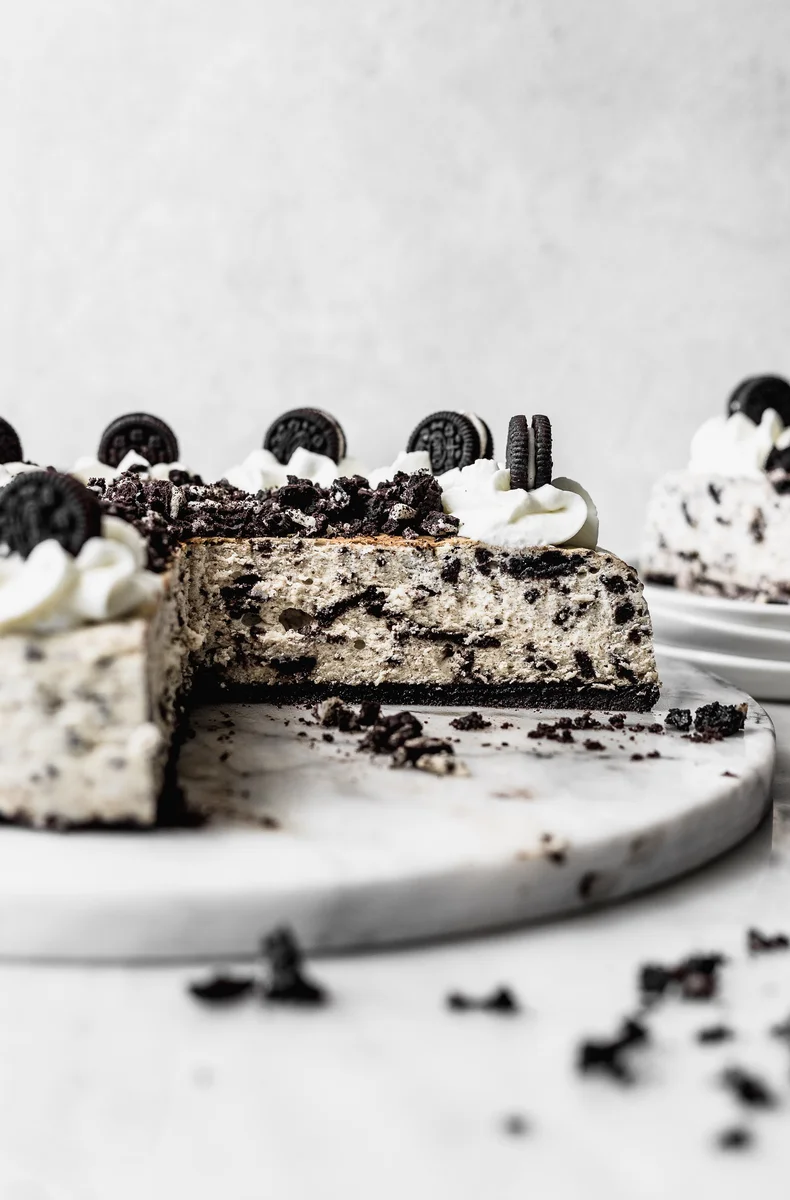
This Oreo cheesecake has a crisp biscuit base, a creamy filling studded with Oreo pieces and a whipped-cream finish. It is a good make-ahead dessert: chill it overnight so the filling sets before decorating and serving.
Ingredients
- 220 gOreo cookies (or similar)
- 2 tbspunsalted butter, melted
- 1 tspsalt
- 900 g (approximately 4 packages), at room temperaturecream cheese
- 220 ggranulated sugar
- 220 g, at room temperaturesour cream
- 2 tspvanilla extract or vanilla essence
- 1/2 tspsalt
- 4, at room temperatureeggs
- 150 gOreo cookies
- 200 mlwhipping cream
- 2 tspicing sugar
- 40 gOreo cookies, chopped
- to tastemini Oreos
Instructions
- 1
Make the base
Process the 220 g of cookies until fine. Add 1 tsp salt and the melted butter, then mix.
- 2
Prepare the tin
Cut baking paper to fit the base and sides of the tin. Use a little vegetable oil, spread with kitchen paper, to hold it in place.
- 3
Chill the base
Press the biscuit mixture firmly over the base of the tin with the bottom of a glass, then press it around the edges with your fingers. Freeze for at least 15 minutes.
- 4
Mix the filling
Beat the cream cheese and sugar until very soft and smooth, stopping occasionally to scrape down the sides of the bowl. Add the sour cream, vanilla and 1/2 tsp salt, then beat again.
- 5
Add the eggs
Turn the mixer to its lowest speed and add the eggs one at a time, waiting until each is incorporated before adding the next.
- 6
Fold in biscuits
Pulse the 150 g of cookies until they are in medium-sized pieces, or chop them by hand. Fold the pieces into the filling with a spatula.
- 7
Fill and preheat
Pour the filling into the tin. Preheat the oven to 180°C (350°F), with a tray of water on the bottom shelf so it heats too. Place the cheesecake on the shelf above the water, not in it; if you forgot to preheat the water, add boiling water.
- 8
Bake gently
As soon as the cheesecake goes into the oven, reduce the heat to 150°C (300°F). Bake for 40–50 minutes, until the top starts to turn golden. Halfway through, check the water level and top it up with boiling water if it has dropped too much. The centre will still wobble when removed; it will firm up in the fridge.
- 9
Cool and chill
Let the cheesecake cool completely, then refrigerate overnight or for at least 8 hours.
- 10
Unmould the cake
Wait until the cheesecake is cold before adding whipped cream. Gently pull the baking paper towards the centre to loosen it from the tin. Set the tin on a bowl or glass taller than its edge, slide the sides down and lift away the cake; use a cake lifter to remove it from the base.
- 11
Whip the cream
Beat the whipping cream with the icing sugar until fluffy and able to hold its shape when moved with a spatula or whisk.
- 12
Decorate and serve
Using a piping bag fitted with a star nozzle, pipe four rosettes around the edge at the positions of 12, 3, 6 and 9 on a clock. Pipe more rosettes between them to suit the number of portions; for 12 portions, make 12 rosettes in total. Scatter the 40 g of chopped Oreos in the centre and place mini Oreos on the cream rosettes.
What is Oreo cheesecake?
Cheesecake has a long history, with many versions evolving across Europe and later in the United States. This version uses Oreo biscuits for both the base and the pieces folded through a cream-cheese filling.
A chilled finish gives the filling time to set, while whipped cream and extra biscuits add contrast in flavour and texture.
Nutrition and macros by portion
The nutrition label shows one serving as written: 590 calories, 9g protein, 49g carbs, 41g fat.
| Portion | Adjustment | kcal | Protein | Carbs | Fat |
|---|---|---|---|---|---|
| Lighter | Smaller slice, lighter topping | 413 kcal | 6g | 34g | 29g |
| This serving | As written | 590 kcal | 9g | 49g | 41g |
| Hungry | Larger slice | 885 kcal | 14g | 74g | 62g |
The biscuits and sugar provide most of the carbohydrates, while cream cheese, butter and whipping cream contribute much of the fat. Cream cheese, sour cream and eggs supply protein. Serve a slice with fresh fruit to add a fresh, contrasting side to the rich cheesecake.
Building a firm base
Biscuit crumbs: process the base cookies finely so they press into a compact layer. The melted butter helps bind them, and the short freezer chill firms the base before the filling is added.
Baking paper: line both the bottom and sides of the tin, securing the paper with a little vegetable oil as described in the method. This makes it easier to release the chilled cheesecake.
Mixing the filling
Room-temperature dairy: cream cheese and sour cream at room temperature are easier to beat into a smooth mixture. Scrape down the bowl as you go so the ingredients are evenly combined.
Eggs: add them one at a time at the mixer's lowest speed, allowing each to disappear into the filling before adding the next. This keeps the mixture from being worked more than necessary.
Gentle oven heat
Water tray: preheating a tray of water on the bottom shelf creates a humid oven environment while the cheesecake bakes on the shelf above. Keep the cake out of the water, and top up the tray with boiling water if its level falls halfway through.
Oven change: begin at 180°C (350°F), then reduce the heat to 150°C (300°F) as soon as the cheesecake goes in. The recipe gives a 40–50 minute baking window.
When is it baked?
Look for the top to start turning golden after 40–50 minutes. The centre can still wobble when you take the cake out; it is expected to firm as it cools and chills.
Cooling: let the cheesecake cool completely before refrigerating it overnight or for at least 8 hours. Add the cream only when the cake is cold, so the topping does not melt.
Whipped cream and serving
Whipped cream: beat it with the icing sugar until fluffy and able to hold its shape. Pipe rosettes around the edge, spacing them for the number of portions you plan to cut.
To serve: the Oreo pieces in the filling and the chopped biscuits on top give each slice a crunchy contrast. The method suggests 12 rosettes for 12 portions.
Recipe notes & tips
- Bring the cream cheese, sour cream and eggs to room temperature before mixing.
- Scrape the mixing bowl regularly so the filling stays evenly blended.
- Keep the mixer on its lowest speed when adding the eggs.
- Have the water tray heating in the oven before the cheesecake goes in.
- Check the tray's water level halfway through baking and refill with boiling water if needed.
- Chill the cheesecake for at least 8 hours before decorating.
Variations
- Change the biscuits: use a similar chocolate sandwich biscuit for the base and filling.
- Skip the piping: spread the whipped cream over the chilled cheesecake instead of piping rosettes.
- Adjust the topping: scatter the chopped Oreos over the whole top rather than keeping them in the centre.
- Make fewer portions: pipe fewer rosettes to match the number of slices you plan to serve.
Common mistakes to avoid
- Warm cream cheese: it can be harder to beat smoothly; bring it to room temperature first.
- Adding eggs together: the method calls for one at a time; wait for each to incorporate before adding the next.
- Putting the cake in the water: bake it on the shelf above the water tray, not in the tray.
- Ignoring the water level: check halfway through and replenish with boiling water if it has dropped too much.
- Overbaking for a firm centre: the cheesecake should still wobble when it comes out and will set as it chills.
- Topping a warm cake: the cream can melt; wait until the cheesecake is cold.
How to store
Keep the cheesecake covered in the fridge and serve it chilled. The recipe does not specify a storage duration; use promptly and follow your usual food-safety guidance. Reheating is not recommended for this chilled dessert.
Frequently asked questions
Why does the cheesecake still wobble when it comes out of the oven?
A slight wobble is expected in this recipe. The filling firms as it cools and spends at least 8 hours in the fridge.
Can I chill it for less than overnight?
The method calls for overnight chilling or at least 8 hours. Give it the full chilling time so the filling can set before decorating.
Does the cheesecake go in the water tray?
No. The water tray sits on the bottom shelf, and the cheesecake bakes on the shelf above it.
When should I add the whipped cream?
Wait until the cheesecake is completely cold. Cream added to a warm cake can melt.
How many cream rosettes should I pipe?
The method uses 12 rosettes for 12 portions. Start with four at the clock positions of 12, 3, 6 and 9, then fill in between.
Can I use another biscuit instead of Oreos?
Yes. The ingredient list allows a similar biscuit for the base; it also gives Oreo cookies for the filling and topping.
Cook it from the original
This recipe comes from cravingsjournal.com. Their page has the author’s own photos, notes and tips — the best place to cook it from.
Open the recipe on cravingsjournal.com