
Roast beef
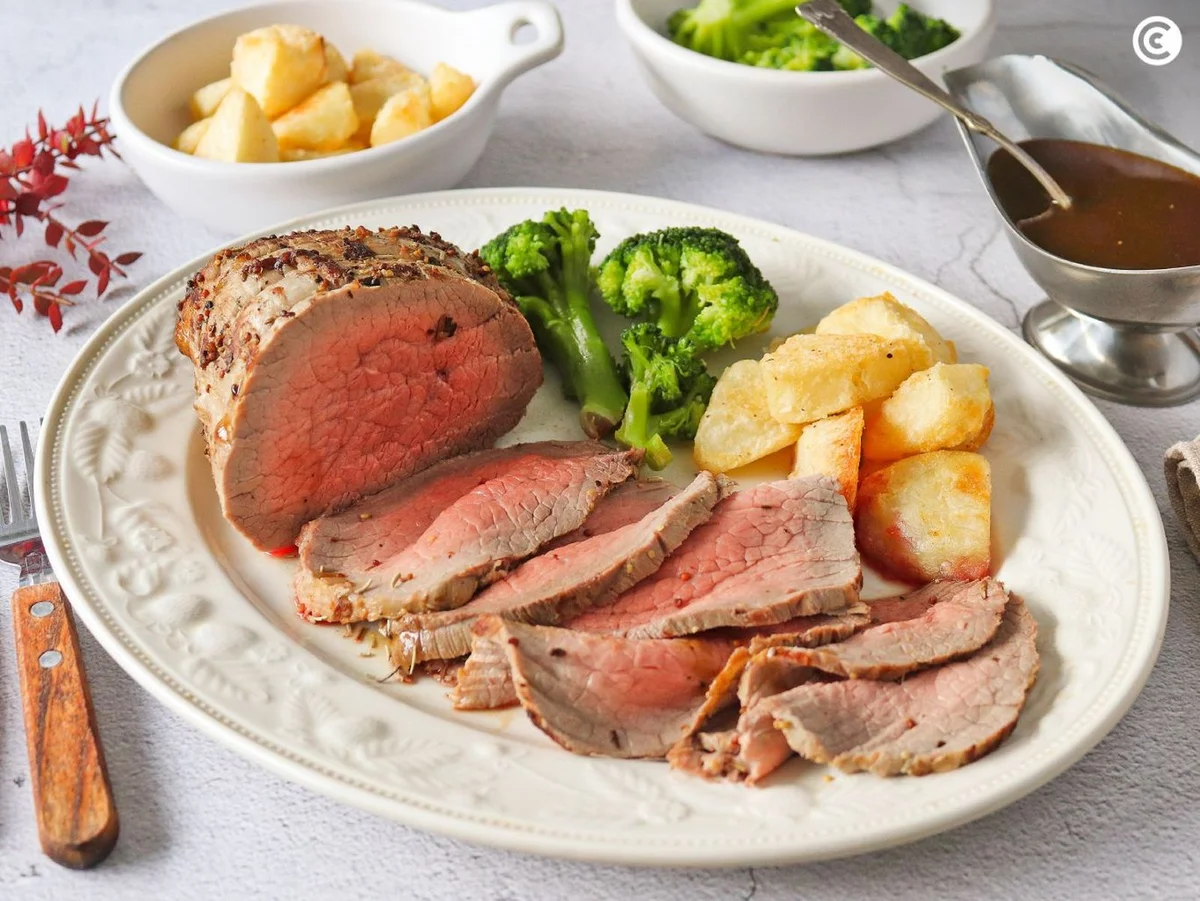
Roast beef is a classic British-style joint, seasoned, browned and roasted until tender, then served in thin slices with a simple brandy gravy. It makes a special meal without complicated preparation.
Ingredients
- 1.2 kgbeef topside
- to tastesalt
- to tastefreshly ground black pepper
- 30 ml (2 tablespoons)extra-virgin olive oil
- 30 ml (2 tablespoons)mustard
- 5 ml (1 teaspoon)chopped rosemary
- 100 mlbrandy
- 300 mlbeef stock
Instructions
- 1
Season the beef
Rub the 1.2 kg piece of topside all over with salt and freshly ground black pepper. If possible, tie it with kitchen string to help it keep its shape as it roasts; you can do this yourself or ask your butcher.
- 2
Brush with mustard
Brush 30 ml (2 tablespoons) of mustard over the surface of the meat.
- 3
Brown the joint
Heat 30 ml (2 tablespoons) of extra-virgin olive oil in a large frying pan. When it is hot, brown the beef over a high heat on every side.
- 4
Roast the beef
With the oven preheated to 180°C, put the meat in a roasting tin and roast for about 30 minutes. Check the centre temperature: after this time it should be around 60°C for a well-done result. For beef that is pinker, take it out a few minutes earlier, when the centre reaches 54–56°C.
- 5
Rest and slice
Cover the beef with foil and leave it to rest for about 20 minutes. Slice it very thinly with a sharp knife or electric slicer, then set the slices aside while you make the sauce.
- 6
Make the sauce
Deglaze the roasting tin with 100 ml of brandy. Let the alcohol evaporate for a few moments, then add 300 ml of beef stock and cook over a medium heat until the sauce has reduced slightly and thickened.
- 7
Serve the roast
Serve the roast beef with roast potatoes, mashed potatoes or steamed vegetables, and offer the hot sauce at the table.
What is roast beef?
Roast beef is a British classic: a joint of beef is roasted, rested and carved into slices. It is often served as the centrepiece of a meal with potatoes, vegetables and gravy.
This version uses topside, mustard and rosemary for a savoury, aromatic crust, with a quick brandy sauce made from the roasting tin.
Nutrition and macros by portion
The nutrition label shows one serving as written: 259 calories, 33g protein, 1g carbs, 14g fat.
| Portion | Adjustment | kcal | Protein | Carbs | Fat |
|---|---|---|---|---|---|
| Lighter | Trim visible beef fat | 181 kcal | 23g | 1g | 9g |
| This serving | As written | 259 kcal | 33g | 1g | 14g |
| Hungry | Add extra roast potatoes | 389 kcal | 49g | 1g | 20g |
The beef provides most of the protein, while the small amount of carbohydrate comes mainly from the mustard and stock. Olive oil and the beef contribute most of the fat; pair a serving with vegetables and potatoes to make a balanced plate.
Choosing and preparing the beef
Topside: this lean cut suits roasting and is easiest to carve thinly after resting. Choose a piece of an even shape so it cooks more consistently.
Kitchen string: tying the joint helps it hold its shape in the oven. Ask the butcher to tie it if you would rather not do this yourself.
Building flavour before roasting
Mustard and rosemary: brush on the mustard before roasting and use the chopped rosemary to add an aromatic note. The recipe’s method seasons with salt and pepper first; include the rosemary with the mustard on the surface.
Browning: sear the beef on every side in hot oil before it goes into the oven. Turn it as needed to colour the surface evenly.
Checking the doneness
Temperature: use a meat thermometer in the centre of the joint for the most useful doneness cue. The method gives around 60°C after about 30 minutes for a well-done result, or 54–56°C for a pinker centre.
Timing: treat the stated roasting time as a guide, since the joint’s shape and your oven can affect how quickly it cooks. Check the temperature rather than relying on time alone.
Resting and carving
Rest: cover the roast loosely with foil and leave it for about 20 minutes before carving. This pause makes it easier to slice and gives the juices time to settle.
Thin slices: use a sharp knife or an electric slicer, cutting across the meat into very thin slices. Keep the slices aside while you finish the sauce.
Making and serving the sauce
Brandy: pour it into the roasting tin to loosen the browned cooking residue, then allow the alcohol to evaporate briefly. White wine is suggested as an alternative if you prefer.
Beef stock: add it after the brandy and simmer until the sauce reduces slightly and gains body. Serve it hot alongside roast potatoes, mash or steamed vegetables.
Recipe notes & tips
- Ask the butcher to tie the joint if it is an uneven shape.
- Use a thermometer to check the centre of the beef.
- Brown the joint on all sides before roasting.
- Rest the meat for about 20 minutes before slicing.
- Carve across the grain into thin slices.
- Let the sauce reduce only until it has slightly thickened.
Variations
- Use white wine: replace the brandy with white wine for the sauce.
- Add rosemary: mix the chopped rosemary with the mustard before brushing it on.
- Serve with mash: choose mashed potatoes instead of roast potatoes.
- Add steamed vegetables: serve them alongside the sliced beef.
- Make it pinker: remove the beef when the centre reaches 54–56°C.
Common mistakes to avoid
- Skipping the sear: the surface misses its browned finish; colour the joint on every side first.
- Guessing doneness by time: the centre may cook differently; check it with a thermometer.
- Cutting too soon: the meat has not had its rest; leave it covered for about 20 minutes.
- Slicing thickly: the joint is harder to serve neatly; cut very thin slices with a sharp knife.
- Adding stock too early: the tin will not deglaze properly; pour in the brandy first and let it evaporate briefly.
How to store
Refrigerate leftover beef and sauce in separate airtight containers and use within 3 days. Reheat the beef gently with a little sauce so it does not dry out, and heat the sauce until hot.
Frequently asked questions
What cut of beef works for this recipe?
The recipe uses topside. A joint with an even shape is helpful for more consistent roasting and neat slices.
How do I know when the beef is done?
Check the centre with a meat thermometer. The method suggests around 60°C for a well-done result, or 54–56°C for a pinker centre.
Can I make the sauce without brandy?
Yes. The recipe suggests using white wine instead. Deglaze the roasting tin with it before adding the beef stock.
Why should I rest roast beef before carving?
Resting for about 20 minutes gives the juices time to settle and makes the joint easier to carve into thin slices.
What should I serve with roast beef?
Serve it with roast potatoes, mashed potatoes or steamed vegetables, and offer the hot sauce alongside.
Can I prepare the beef ahead?
You can season and tie the joint ahead, then keep it refrigerated until you are ready to cook it. Roast, rest and slice it close to serving time for the best texture.
Cook it from the original
This recipe comes from cocinatis.com. Their page has the author’s own photos, notes and tips — the best place to cook it from.
Open the recipe on cocinatis.com