
Parmesan Garlic Rolls
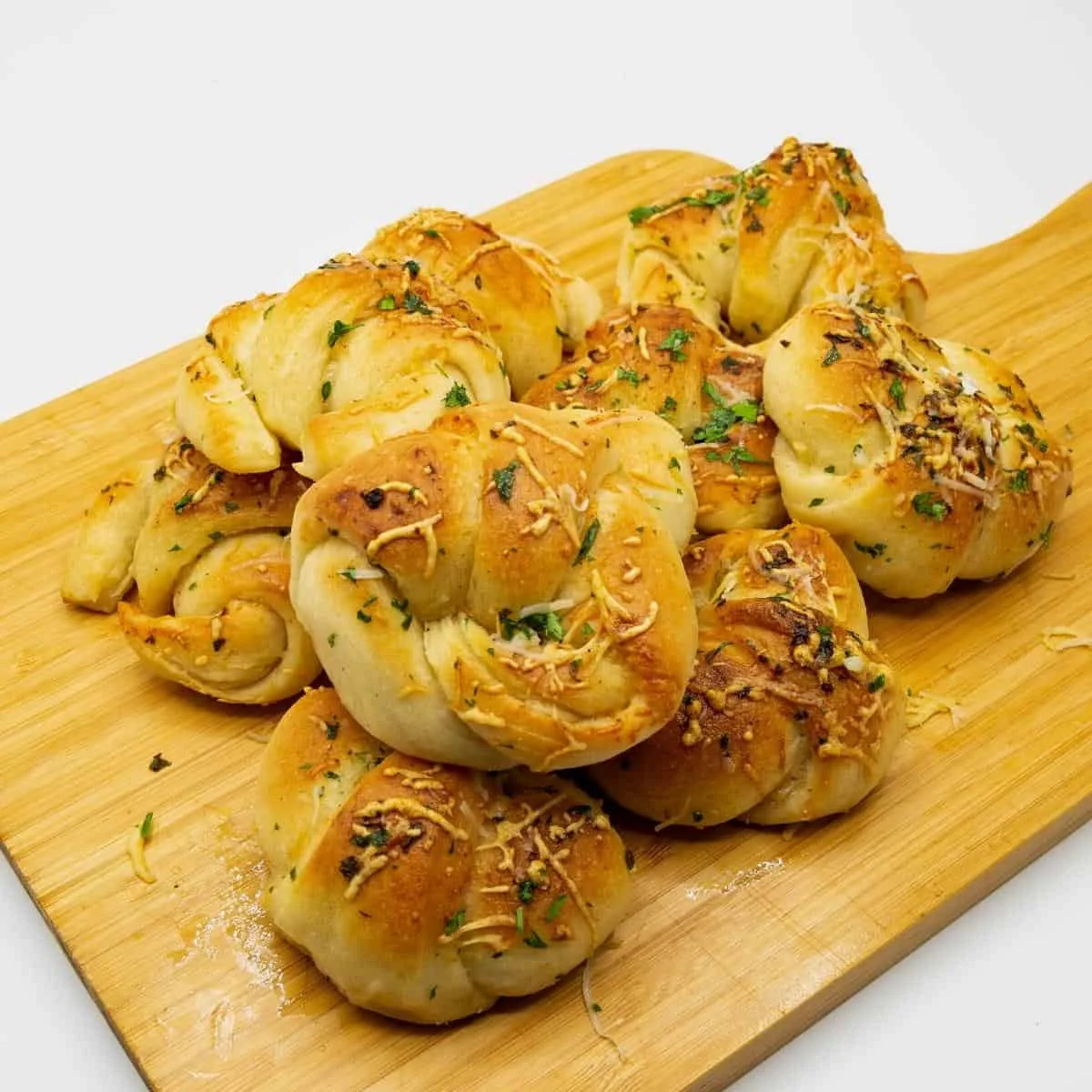
These soft, crescent-shaped rolls combine fluffy bread with garlic, herbs and Parmesan. Make them for a savoury side or a sharing bread when you want plenty of garlic flavour.
Ingredients
- 340 g (100°F / 38°C)warm water or milk
- 7 g (1 sachet)instant dry yeast
- 30 gsugar or honey
- 30 golive oil
- 500 gbread flour or plain flour
- 9 gkosher salt
- 2–4 tbspminced garlic cloves, or 4–6 tbsp mashed roasted garlic
- 6 tbspunsalted butter, at room temperature
- ½ tsppepper
- ½ tspsalt
- 2 tbspfinely chopped parsley
- 6 tbspgrated Parmesan cheese
- 2 tbspgrated Parmesan, for garnish
- 2 tbspchopped parsley, for garnish
Instructions
- 1
Make garlic butter
Mix the butter, garlic, salt, pepper and chopped parsley in a bowl or saucepan. Heat in the microwave or on the hob until melted, then set aside.
- 2
Mix yeast
Combine the warm water or milk (110°F / 43°C), yeast, sugar and oil in a mixing bowl or measuring jug. Stir and leave aside.
- 3
Combine flour
Put the flour and salt in a mixing bowl or the bowl of a stand mixer fitted with a dough hook. Add the yeast mixture and mix at medium to high speed until the flour is incorporated.
- 4
Knead dough
Knead at medium speed for 5–7 minutes, until smooth and elastic. When the dough is soft and shiny but still slightly sticky, shape it into a ball and place it seam-side down in an oiled bowl.
- 5
Let dough rise
Oil the surface of the dough to stop it drying out, then cover the bowl with a clean tea towel or cling film. Leave somewhere warm for 45–60 minutes, until doubled in volume.
- 6
Divide dough
Once doubled, transfer the dough to a well-floured surface. Punch it down and shape it into a ball again, then divide it into two portions. Shape each portion into a ball and set aside.
- 7
Shape the rolls
Work with one ball at a time, rolling it into a disc 12–14 inches (30–36 cm) across. Spread a generous amount of garlic butter over the dough and cut the disc into 12 slices with a pizza wheel. Roll each slice into a crescent, bring the two edges towards the front and tuck them underneath.
- 8
Proof the rolls
Arrange the rolls on a baking tray lined with parchment paper or a silicone mat. Repeat with the remaining dough, then cover the rolls with cling film or a clean tea towel and leave to proof for 20 minutes.
- 9
Heat the oven
Meanwhile, preheat the oven to 180°C (360°F / Gas Mark 4).
- 10
Bake until golden
Brush each roll with more garlic butter and sprinkle with grated Parmesan. Bake for 15–20 minutes, until lightly golden on top.
- 11
Finish while warm
As soon as the rolls come out of the oven, brush them with more garlic butter and add Parmesan and chopped parsley. Cover with a clean tea towel for 5 minutes to keep them soft.
What are Parmesan garlic rolls?
These are enriched, crescent-shaped bread rolls flavoured with garlic butter, herbs and Parmesan. Their shape and garlic-and-cheese seasoning make them a fitting addition to an Italian-inspired meal.
This version uses a yeasted dough that rises before shaping and again briefly on the tray. Brushing with garlic butter after baking adds flavour and helps keep the crust tender.
Nutrition and macros by portion
The nutrition label shows one serving as written: 187 calories, 6g protein, 32g carbs, 4g fat.
| Portion | Adjustment | kcal | Protein | Carbs | Fat |
|---|---|---|---|---|---|
| Lighter | Use less garlic butter | 131 kcal | 4g | 22g | 3g |
| This serving | As written | 187 kcal | 6g | 32g | 4g |
| Hungry | Serve extra rolls | 281 kcal | 9g | 48g | 6g |
The flour and sugar provide most of the carbohydrates, while butter and olive oil contribute much of the fat. Flour, milk if used, and Parmesan contribute protein; serve a roll or two with vegetables and a protein-rich main to make a more balanced plate.
Choosing the dough ingredients
Flour: Bread flour is the listed choice and gives the rolls a chewy, springy structure; plain flour can be used as an alternative. Measure the flour carefully so the dough stays soft rather than dry.
Liquid: The recipe allows warm water or milk. Use the listed 340 g and aim for warm, not hot, liquid to mix with the yeast.
Garlic: Use minced fresh garlic for a sharper flavour or mashed roasted garlic for a milder, sweeter one. The amount can be adjusted within the range given.
Mixing the garlic butter
Melt the butter with the garlic, salt, pepper and parsley, then keep it handy for shaping and finishing the rolls. If heating it on the hob, use gentle heat and take it off once melted.
The method uses garlic butter at several stages, so set some aside for brushing after baking. The listed Parmesan is sprinkled on before baking and again for the garnish.
Getting the dough texture right
Knead for 5–7 minutes, stopping when the dough looks smooth and elastic. It should feel soft and slightly sticky rather than firm or dry.
A light coating of oil on the dough and bowl helps prevent a dry skin as it rises. Cover it during both rests so the surface stays supple.
Shaping even crescents
Roll each half into a 12–14-inch (30–36 cm) disc and cut it into 12 slices, making 24 rolls altogether. Aim for similarly sized slices so the rolls bake at about the same rate.
Roll each slice into a crescent, bring its two edges towards the front and tuck them underneath. This keeps the shape neat on the tray.
Proofing and baking cues
The first rise takes 45–60 minutes in a warm place, or until the dough has doubled. The shaped rolls then proof for 20 minutes before baking.
Bake at 180°C for 15–20 minutes, checking for lightly golden tops. If they need more colour, continue baking while keeping an eye on them so they do not become dry.
Serving the rolls
Serve the rolls warm, with their final coating of garlic butter, Parmesan and parsley. They work alongside pasta, soup or a salad, or as part of a spread of small savoury dishes.
For a softer finish, cover them with a clean tea towel for the specified 5 minutes after baking. Bring them to the table while still warm.
Recipe notes & tips
- Use warm rather than hot liquid when mixing the yeast.
- Keep the dough slightly sticky after kneading instead of adding extra flour too quickly.
- Oil the dough surface before covering it for the first rise.
- Dust the work surface well so the dough is easier to roll and shape.
- Brush the rolls while they are hot so the garlic butter coats them easily.
- Cover the baked rolls for 5 minutes to help keep them soft.
Variations
- Roasted garlic: Use mashed roasted garlic in place of minced garlic for a milder, sweeter flavour.
- Milk dough: Choose milk instead of water for the liquid in the dough.
- Flour swap: Use plain flour instead of bread flour if that is what you have.
- Extra herbs: Add more chopped parsley to the butter for a stronger herbal finish.
- Peppery finish: Add a little extra pepper to the butter mixture before melting.
Common mistakes to avoid
- Hot liquid: Excessively hot liquid can affect the yeast; use warm liquid as specified.
- Dry dough: Adding too much extra flour can make the rolls dense; keep the dough soft and slightly sticky.
- Uncovered rising: Dough can develop a dry surface; cover it with a tea towel or cling film.
- Uneven wedges: Different-sized slices bake at different rates; cut each disc into 12 similar portions.
- Crowded tray: Rolls need room as they proof; arrange them on the lined tray without pressing them together.
- Overbaking: Rolls can lose their softness if baked too long; check for lightly golden tops from 15 minutes.
How to store
Keep cooled rolls in an airtight container at room temperature for up to 2 days. Reheat briefly in a warm oven, and brush with a little reserved or freshly melted garlic butter if desired.
Frequently asked questions
Can I use water instead of milk?
Yes. The recipe lists 340 g of warm water or milk for the dough.
Can I use plain flour?
Yes, plain flour is listed as an alternative to bread flour. The texture may be a little less chewy.
How do I know when the dough has risen enough?
After 45–60 minutes in a warm place, it should have doubled in volume.
Can I use roasted garlic?
Yes. The ingredient list gives 4–6 tbsp mashed roasted garlic as an alternative to 2–4 tbsp minced garlic.
How many rolls does this recipe make?
It makes 24 rolls: each of the two dough discs is cut into 12 slices.
Why cover the rolls after baking?
The method calls for covering them with a clean tea towel for 5 minutes to help keep them soft.
Cook it from the original
This recipe comes from veenaazmanov.com. Their page has the author’s own photos, notes and tips — the best place to cook it from.
Open the recipe on veenaazmanov.com