
Small Kid Time Favorite Pork With Ong Choi
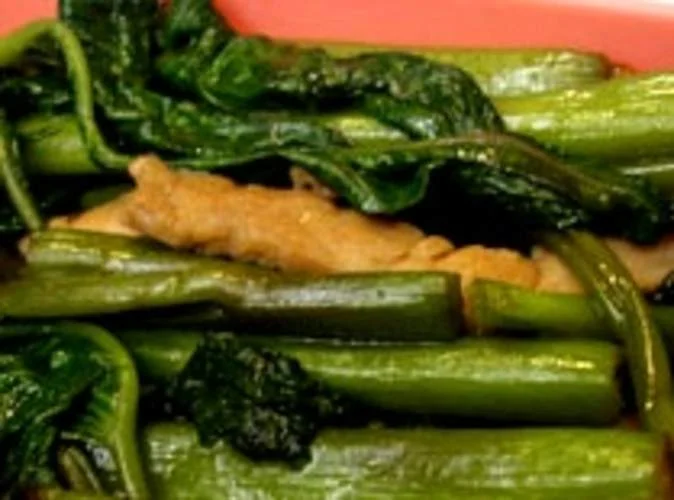
Ong choi, also called water spinach, is stir-fried with thinly sliced pork, garlic and savoury sauces for a quick Chinese home-style dish. The stems stay pleasantly crisp while the leaves soften, making this a comforting meal to serve with rice.
Ingredients
- 10 ml (2 tsp)peanut oil
- 3 clovesgarlic, crushed
- 227 g (½ lb)boneless pork, thinly sliced
- 10 ml (2 tsp)oyster sauce
- 10 ml (2 tsp)harm ha (fermented shrimp paste or sauce)
- 1 medium bunch, cut into 5 cm (2-inch) piecesong choi
Instructions
- 1
Stir-fry pork
Heat the peanut oil in a wok over medium-high heat. Add the crushed garlic and pork, and stir-fry.
- 2
Add sauces
Add the oyster sauce, harm ha and ong choi stems. Stir-fry for 2 minutes.
- 3
Cook the leaves
Add the ong choi leaves and cover the wok. Cook for 2–3 minutes, until tender.
What is ong choi?
Ong choi is a leafy vegetable with hollow stems, also known as water spinach or swamp cabbage. Despite those English names, it is not spinach or cabbage.
This Chinese home-style stir-fry pairs the vegetable with pork, garlic and savoury sauces. The stems and leaves go into the wok at different times so each cooks appropriately.
Nutrition and macros by portion
The nutrition label shows one serving as written: 120 calories, 13g protein, 5g carbs, 7g fat.
| Portion | Adjustment | kcal | Protein | Carbs | Fat |
|---|---|---|---|---|---|
| Lighter | Use less peanut oil | 84 kcal | 9g | 4g | 5g |
| This serving | As written | 120 kcal | 13g | 5g | 7g |
| Hungry | Serve with extra rice | 180 kcal | 20g | 8g | 11g |
The pork supplies most of the protein, while the peanut oil contributes much of the fat. The ong choi adds some carbohydrates, and rice served alongside would add substantially more. For a balanced plate, pair a portion with a moderate serving of rice and extra vegetables if available.
Choosing the ingredients
Ong choi: Look for fresh, crisp stems and unwilted leaves. Trim any damaged ends and cut the bunch into roughly 5 cm pieces.
Pork: Thin slices cook quickly in the hot wok and are easy to eat alongside the greens. Slicing the pork evenly helps the pieces cook at a similar rate.
Harm ha: This fermented shrimp paste or sauce adds a distinctive savoury flavour. The original family version omitted it, so leaving it out is also in keeping with the recipe.
Getting the wok ready
Hot pan: Heat the wok over medium-high heat before adding the oil, garlic and pork. Keep the ingredients moving as they stir-fry.
Garlic: Crushed garlic releases flavour quickly, so avoid letting it sit unattended in the hot oil while the pork cooks.
Add the stems first
Stems: Give them the specified 2 minutes with the sauces before adding the leaves. This head start helps the thicker, hollow stems soften while retaining some bite.
Leaves: Add these last and cover the wok for 2–3 minutes. Check that they have wilted and the stems are tender before serving.
Balancing the sauces
Oyster sauce and harm ha both bring savoury, salty notes to the pan. Stir them through the pork and stems so the flavour is spread across the dish.
If you omit the harm ha, as in the original family version, the oyster sauce still seasons the stir-fry. Taste before serving rather than adding extra sauce automatically.
What to serve with it
Steamed rice is a simple accompaniment that soaks up the sauce and makes this pork-and-greens dish a more complete meal. Serve it as soon as the leaves are tender, while the stems still have some texture.
Recipe notes & tips
- Cut the pork thinly and evenly so it cooks quickly in the wok.
- Separate the ong choi stems and leaves if that makes it easier to add them at the right times.
- Have the sauces measured and ready before heating the wok.
- Keep the pork and garlic moving in the pan as they stir-fry.
- Check the stems for tenderness after the covered cooking time and serve promptly.
Variations
- Omit the harm ha: Leave out the fermented shrimp paste or sauce for the original family-style version.
- Use another cooking oil: Substitute a neutral oil if you do not have peanut oil.
- Add ginger: Stir a little sliced ginger with the garlic for a different aromatic note.
- Adjust the greens: Use more ong choi for a vegetable-forward plate.
- Serve with rice: Add steamed rice to make the stir-fry a fuller meal.
Common mistakes to avoid
- Adding leaves too early: They cook faster than the stems, so add them after the stems have stir-fried for 2 minutes.
- Cutting pork unevenly: Different-sized pieces cook at different rates; slice it thinly and consistently.
- Walking away from the wok: Garlic can cook quickly in hot oil, so keep the ingredients moving.
- Overcooking the greens: Cook the covered leaves for 2–3 minutes and check for tenderness rather than leaving them in the wok.
- Assuming harm ha is essential: The original version did without it, so omit it if preferred.
How to store
Refrigerate leftovers in a covered container and eat within 3 days. Reheat in a wok or frying pan until piping hot, adding a small splash of water if the dish seems dry.
Frequently asked questions
What is ong choi called in English?
It is often called water spinach or swamp cabbage. It has hollow stems but is not related to spinach or cabbage.
Can I leave out the harm ha?
Yes. The original family version was made without it, and the recipe's description says it can be omitted.
How do I know when the ong choi is cooked?
The leaves should be wilted and the stems tender, with some bite remaining. Follow the recipe's 2 minutes for the stems, then 2–3 minutes covered for the leaves.
Can I make this without a wok?
A large frying pan can work if it has enough room for the pork and greens. Cook in batches if the pan is crowded.
How many people does this serve?
The recipe lists 4 servings, while its serving note says 4–6. The portion size will depend on whether you serve it with rice or other dishes.
Cook it from the original
This recipe comes from cookinghawaiianstyle.com. Their page has the author’s own photos, notes and tips — the best place to cook it from.
Open the recipe on cookinghawaiianstyle.com