
Chocolate Babka
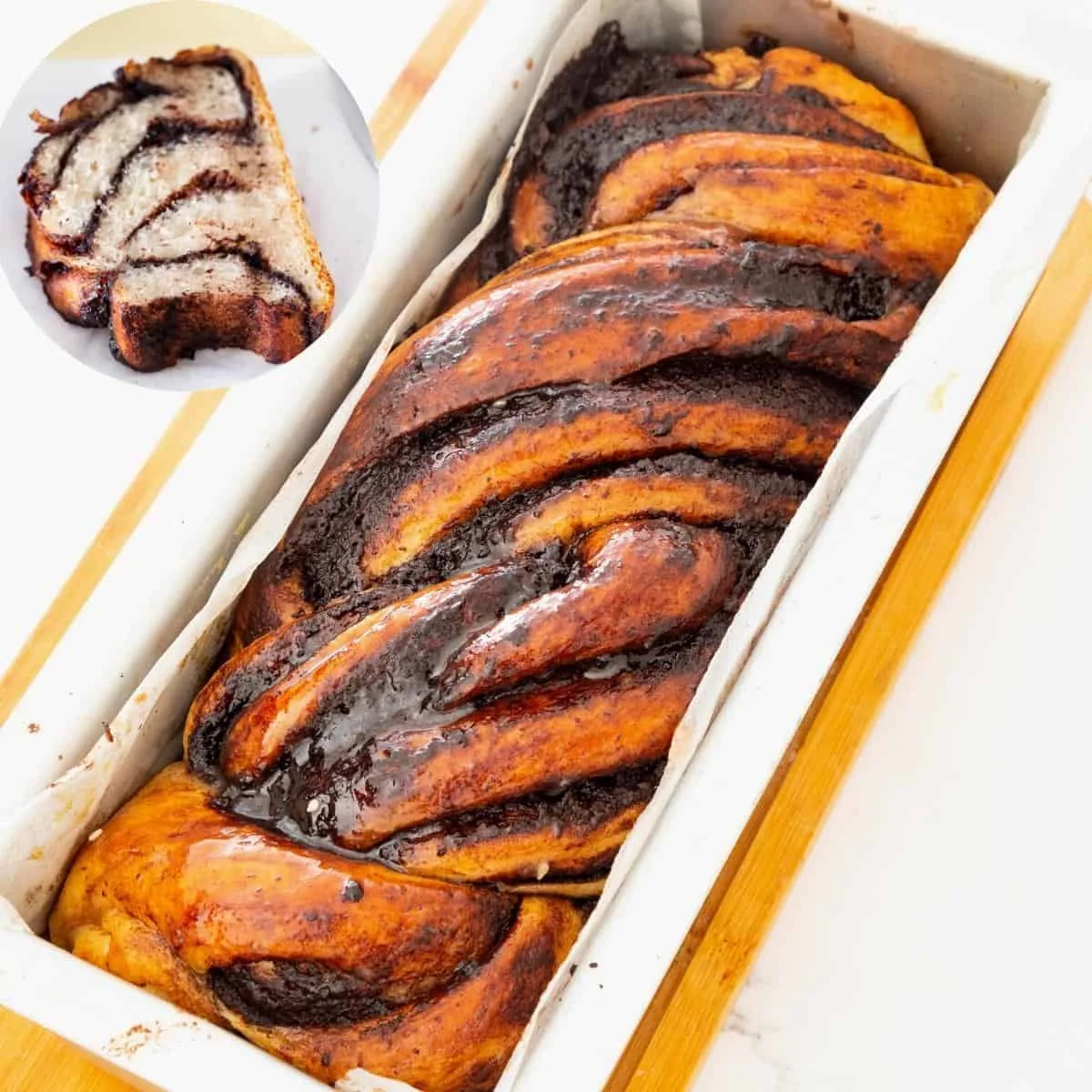
Chocolate babka is a soft, buttery brioche loaf swirled with a rich chocolate filling and finished with sugar syrup. It takes a little time to rise and shape, but makes two impressive loaves for sharing or serving with coffee.
Ingredients
- 120 g, warmed to about 43°C (110°F)milk
- 150 geggs
- 9 g (or 21 g fresh baker’s yeast)instant yeast
- 50 gsugar
- 113 g, softened to room temperatureunsalted butter
- 9 gkosher salt
- 500 gbread flour (or plain flour)
- 200 g, choppedsemi-sweet chocolate
- 60 ml (4 tbsp)cream
- 30 ml (2 tbsp)icing sugar
- 60 ml (4 tbsp)butter
- 5 ml (1 tsp)ground cinnamon
- 60 gsugar, for the syrup
- 60 gwater, for the syrup
- ½ egg, beaten with 30 ml (2 tbsp) wateregg, for the wash
Instructions
- 1
Mix the dough
In the bowl of a stand mixer fitted with a dough hook, combine the warm milk, yeast, sugar and eggs. Add the flour and salt, then mix on medium-high for 1–2 minutes.
- 2
Knead the dough
Once the flour is incorporated, knead on medium speed for 8–10 minutes.
- 3
Add the butter
Add the softened butter one piece at a time. When it is all incorporated, knead for a further 8–10 minutes.
- 4
First rise
Transfer the dough seam-side down to an oiled bowl and coat its surface with oil to prevent it drying out. Cover with a damp tea towel or plastic wrap and leave in a warm place for about 1 hour, or until doubled in volume.
- 5
Make the filling
Melt the chocolate, butter and cream together in a microwave-safe bowl or over a double boiler. Stir in the icing sugar, cinnamon and cocoa powder until smooth.
- 6
Prepare the tins
Grease two 23 x 10 cm (9 x 4-inch) loaf tins generously and set them aside.
- 7
Divide the dough
Punch down the dough and transfer it to a lightly floured work surface. Divide it into two portions for two loaves.
- 8
Fill the dough
Roll each portion into a rectangle about 3 mm (⅛ inch) thick. Spoon chocolate filling over the dough and spread it evenly with an offset spatula, reaching all the edges.
- 9
Roll into logs
Starting at a long edge, roll each rectangle into a log, like a Swiss roll. Pinch the seam closed.
- 10
Twist the logs
With a serrated knife or bench scraper, cut each log in half lengthways. Turn the cut sides upwards, twist the two pieces together and pinch the ends so they stay closed.
- 11
Place in tins
Carefully lift each twist into a prepared loaf tin, with the cut, twisted side facing up and the seams underneath.
- 12
Second proof
Cover the loaves with plastic wrap and leave them in a warm place for 60–90 minutes.
- 13
Make the syrup
While the loaves proof or bake, combine the water and sugar in a saucepan. Bring to the boil, simmer for 3–4 minutes, then set aside and keep warm.
- 14
Heat the oven
Ten minutes before baking, preheat the oven to 190°C (375°F/Gas Mark 5).
- 15
Bake the babka
Brush the loaves with egg wash and bake on the middle shelf for 20 minutes, or until lightly golden on top.
- 16
Brush with syrup
Remove the loaves from the oven and brush with sugar syrup. Return them to the oven for another 10 minutes, for about 30–35 minutes of total baking time.
- 17
Cool the loaves
Remove the loaves from the oven and brush with melted butter. Cool in the tins for 10 minutes, then turn out onto a cooling rack or platter to cool further.
What is chocolate babka?
Babka is a rich, yeasted loaf associated with Eastern European Jewish baking, with variations found across the region. This version uses brioche-style dough wrapped around a chocolate filling, then twisted to create its characteristic swirls.
The dough’s butter and eggs make it tender, while the syrup brushed on after baking helps keep the loaf moist. Baking two loaves also makes this a useful recipe for sharing or saving one for later.
Nutrition and macros by portion
The nutrition label shows one serving as written: 440 calories, 9g protein, 54g carbs, 21g fat.
| Portion | Adjustment | kcal | Protein | Carbs | Fat |
|---|---|---|---|---|---|
| Lighter | Smaller, thinner slice | 308 kcal | 6g | 38g | 15g |
| This serving | As written | 440 kcal | 9g | 54g | 21g |
| Hungry | Larger slice | 660 kcal | 13g | 81g | 32g |
The flour and sugar supply most of the carbohydrates, while butter, chocolate and cream contribute much of the fat. Eggs and flour provide some protein, with smaller contributions from the dairy and chocolate; serve a slice with plain yoghurt and fruit to make a more balanced plate.
Build a supple dough
Warm milk: It should feel warm rather than hot, around 43°C (110°F), so it can be mixed with the yeast without overheating it.
Butter: Add the softened butter gradually after the initial kneading. The dough may look slippery or loose at first; continued kneading helps it come together.
Get an even chocolate swirl
Filling: Melt the chocolate, butter and cream together, then stir in the dry ingredients until smooth. Let it cool enough to spread without running, but not so much that it becomes stiff.
Rolling: Spread the filling right to the edges and roll from a long side. A close, even roll helps the chocolate show throughout the loaf.
Shape without losing the layers
Cutting: Use a serrated knife or bench scraper to split each log lengthways. Work carefully so the halves stay together and the cut layers remain visible.
Twisting: Keep the cut sides facing upwards as you cross the two strands. Pinch the ends closed, then place the loaf in its tin with the twist on top.
Read the proofing cues
First rise: The dough is ready when it has roughly doubled in volume; the hour given is a guide, as a cool room can slow it down.
Second proof: Allow 60–90 minutes, checking that the shaped dough looks puffy before baking. Avoid relying on the clock alone if your kitchen is particularly warm or cool.
Bake, syrup and cool
Bake: The loaves should be lightly golden after the first 20 minutes, then return to the oven for another 10 minutes after the syrup is brushed on. The recipe gives 30–35 minutes as the total baking time.
Finish: Brushing with warm syrup after the first bake adds moisture to the crust. Give the babka 10 minutes in the tin before turning it out so it can firm up for cooling.
How to serve it
Serve slices at room temperature, or warm them briefly for a softer crumb and more yielding chocolate. The loaf is rich enough to enjoy on its own with tea or coffee.
For a more balanced plate, pair a slice with plain yoghurt and fresh fruit rather than adding another rich topping.
Recipe notes & tips
- Weigh the flour for a more consistent dough.
- Let the butter soften fully so it incorporates smoothly.
- Scrape down the mixer bowl if flour or butter sticks to the sides.
- Use a lightly floured surface when rolling, but avoid adding excess flour.
- Keep the cut sides of the dough facing upwards as you twist the strands.
- Brush syrup over the loaf while it is still hot from the oven.
Variations
- Dark chocolate: Use dark chocolate in place of semi-sweet for a deeper, less sweet filling.
- Nutty filling: Scatter chopped toasted hazelnuts over the chocolate before rolling.
- Orange note: Add finely grated orange zest to the chocolate filling.
- Cardamom spice: Replace the cinnamon with ground cardamom for a different aromatic flavour.
- Fresh yeast: Use 21 g fresh baker’s yeast instead of the 9 g instant yeast.
Common mistakes to avoid
- Overheating the milk: Very hot milk can interfere with the yeast; use milk warmed to about 43°C (110°F).
- Adding butter too quickly: Work it into the dough one piece at a time so it has a chance to incorporate.
- Using runny filling: If the chocolate mixture is too warm, it can slide around; let it cool until spreadable.
- Rolling unevenly: Keep the dough rectangle and log as even as you can for a more regular twist.
- Cutting through the layers: Use a sharp serrated knife or bench scraper and make one careful lengthways cut.
- Skipping the syrup: Brush it over the hot loaves after the first 20 minutes of baking to help keep them moist.
How to store
Once completely cool, keep the babka in an airtight container at room temperature for up to 3 days. Rewarm slices briefly in a low oven or microwave; freeze well-wrapped portions for longer storage and thaw before reheating.
Frequently asked questions
Can I make babka without a stand mixer?
Yes. Mix the dough by hand, then knead until smooth before working in the softened butter a little at a time. It may take longer than using a mixer.
How do I know when the dough has risen enough?
For the first rise, look for the dough to double in volume. After shaping, it should look noticeably puffy following its 60–90-minute proof.
Can I prepare the dough ahead?
The recipe’s method allows for two rises, but does not specify an overnight rise. If chilling the dough, cover it well and allow extra time for it to warm and become puffy before shaping or baking.
Why did my filling leak out?
A very warm or loose filling can escape when the dough is rolled or twisted. Let the filling cool until spreadable, and pinch the log seam and ends closed.
Can I freeze chocolate babka?
Yes. Once cool, wrap the loaf or individual slices securely and freeze. Thaw at room temperature, then warm briefly if you like.
Can I use plain flour instead of bread flour?
Yes. The recipe lists plain flour as an alternative to bread flour; the dough may have a slightly different feel, so judge its consistency as you knead.
Cook it from the original
This recipe comes from veenaazmanov.com. Their page has the author’s own photos, notes and tips — the best place to cook it from.
Open the recipe on veenaazmanov.com