
Farófias (Portuguese Floating Islands)
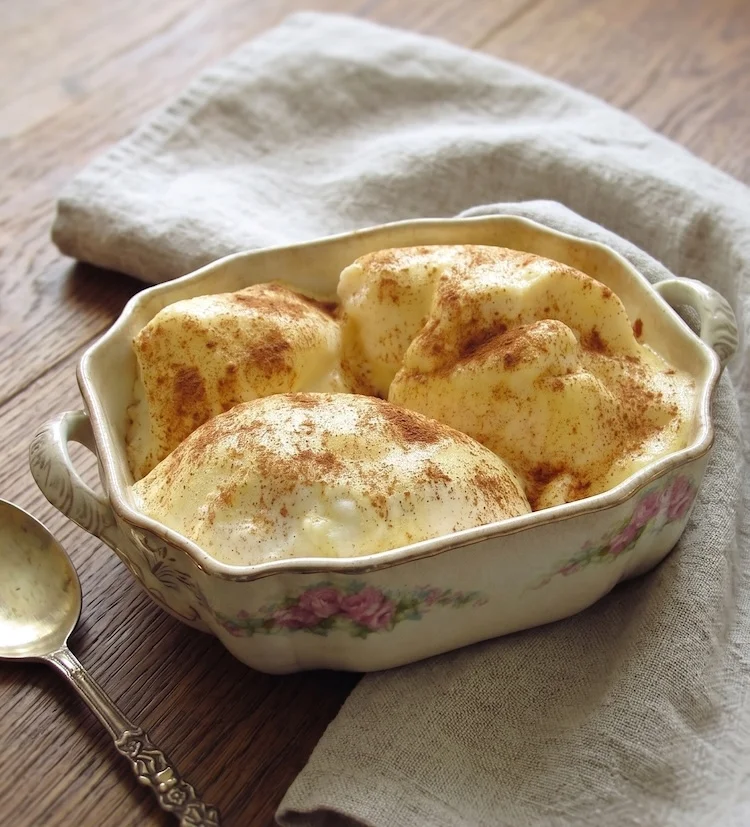
Traditional Farófias (Portuguese Floating Islands), a light dessert made with fluffy poached egg whites, creamy custard, sugar, and cinnamon.
Ingredients
- 4 medium eggs
- 650 ml (3 cups) milk
- 100 grams (1/2 cup) granulated sugar
- 1 cinnamon stick
- Ground cinnamon (to taste)
- Lemon peel
- 1 tablespoon cornstarch
Instructions
- 1
Separate the egg yolks from the whites. Beat the egg whites until stiff peaks form. Cover and refrigerate until ready to use.
- 2
In a small bowl, whisk the cornstarch with 50 ml (¼ cup) of the milk until you obtain a completely smooth and lump-free mixture. Set aside until ready to use.
- 3
Pour the remaining milk into a saucepan and add the lemon peel and cinnamon stick. Bring to a boil over medium-high heat. Once the milk starts boiling, reduce the heat to low and remove the cinnamon stick and lemon peel. Using a spoon, gently add portions of the beaten egg whites to the hot milk. Poach them for a few minutes, turning gently with a spoon so they cook evenly on all sides.
- 4
Once cooked, turn off the heat. Using a slotted spoon, carefully remove the poached egg whites, drain them well, and transfer them to a bowl. Reserve the milk to prepare the cream.
- 5
Using an electric mixer, beat on medium speed the egg yolks and sugar until smooth and creamy. Add the dissolved cornstarch and the egg yolk mixture to the saucepan with the milk, stirring constantly. Return the saucepan to low heat and continue stirring with a wooden spoon until the custard thickens slightly and reaches a smooth, creamy consistency.
- 6
Pour the custard over the poached egg whites and let the dessert cool to room temperature.
- 7
Cover and refrigerate for 1 to 2 hours. Just before serving, sprinkle generously with ground cinnamon and serve cold.
Cook it from the original
This recipe comes from foodfromportugal.com. Their page has the author’s own photos, notes and tips — the best place to cook it from.
Open the recipe on foodfromportugal.com