
Miso Pork
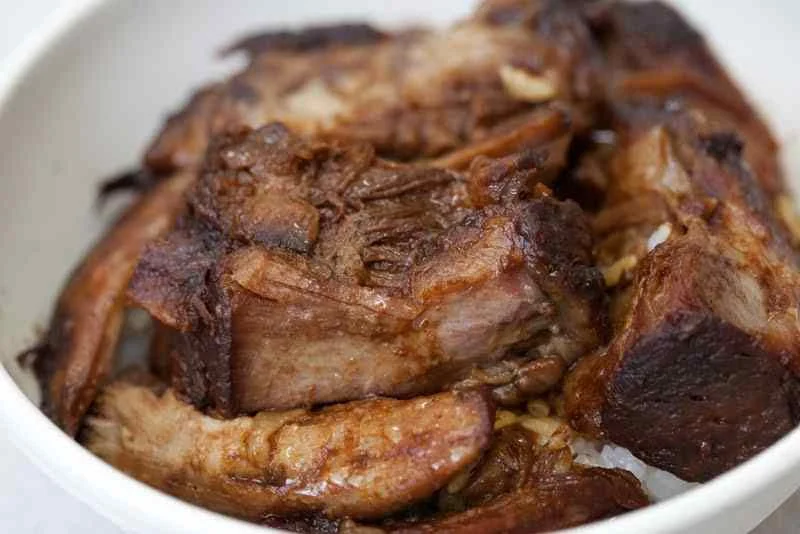
Miso pork is a slow-cooked, savoury-sweet dish made with pork shoulder, miso, shoyu, ginger and garlic. It takes little hands-on effort and can be served on its own, tucked into steamed buns or wrapped in lettuce leaves.
Ingredients
- 1.59 kg (3 1/2 lb)pork shoulder (pork butt)
- 180 ml (3/4 cup)miso paste
- 180 ml (3/4 cup)Aloha shoyu
- 133 g (2/3 cup)sugar
- 2.5 cm (1 inch)fresh ginger, crushed
- 2garlic cloves, crushed
Instructions
- 1
Add ingredients
Put the pork in a Dutch oven with the miso paste, shoyu, sugar, ginger and garlic.
- 2
Cook the pork
Cover and simmer for 3 hours, or until the pork is cooked through and tender. Spoon some of the sauce over it from time to time.
- 3
Slice and serve
Slice the pork and drizzle it with any sauce left in the pot.
- 4
Shorten cooking time
If you prefer, cut the pork into 5–7.5 cm (2–3 inch) cubes before cooking. Prepare as directed and cook for 1 1/2 hours.
- 5
Choose accompaniments
Serve as it is, with Chinese steamed buns, or in lettuce cups. The recipe serves 6.
What is miso pork?
This is a slow-cooked pork dish with a savoury, sweet and deeply seasoned sauce. Miso and shoyu give it a Japanese-inspired flavour, while the recipe’s American classification reflects its source rather than a traditional regional style.
The method is straightforward: the pork and sauce ingredients cook together in one pot. That makes it practical for a relaxed meal, with the option of serving the meat simply or wrapping it in buns or lettuce.
Nutrition and macros by portion
The nutrition label shows one serving as written: 760 calories, 50g protein, 22g carbs, 52g fat.
| Portion | Adjustment | kcal | Protein | Carbs | Fat |
|---|---|---|---|---|---|
| Lighter | Serve in lettuce cups | 532 kcal | 35g | 15g | 36g |
| This serving | As written | 760 kcal | 50g | 22g | 52g |
| Hungry | Add steamed buns | 1140 kcal | 75g | 33g | 78g |
Pork shoulder supplies most of the protein and fat, while the sugar contributes most of the carbohydrates; miso and shoyu add substantial sodium. Serve with lettuce cups and vegetables for a fresh contrast, or use a modest portion of steamed bun alongside the pork.
The key ingredients
Pork shoulder: this cut suits long, gentle cooking and becomes easier to slice or pull apart as it softens. Keep it whole for the longer cook, or cut it into cubes to use the shorter cooking time.
Miso and shoyu: these provide the sauce’s savoury base, so taste the finished sauce before adding anything extra. Aloha shoyu is the specific soy sauce named in the recipe.
Ginger and garlic: crushing them releases their flavour into the cooking liquid. They cook alongside the pork rather than needing a separate sauté.
Keep the pot covered
A covered Dutch oven holds in moisture as the pork simmers. Use a low, steady simmer rather than a vigorous boil, which can make the meat cook unevenly and the sauce reduce too quickly.
The recipe gives no oven temperature, so follow its stated stovetop method: cover the pot and simmer.
Check tenderness, not just time
Whole pork shoulder takes about 3 hours according to the recipe; cubes take about 1 1/2 hours. Treat these as guides and check that the meat is cooked and tender before serving.
Spoon the sauce over the pork occasionally during cooking. This keeps the exposed surface coated and helps distribute the flavour.
Serving options
Sliced pork and sauce can be served straight from the pot for a simple plate. For a hands-on meal, set out Chinese steamed buns or crisp lettuce leaves for wrapping.
If using buns or lettuce cups, offer the sauce alongside so diners can add it as they assemble each serving.
Plan the timing
The listed total time is 195 minutes, which allows for the longer whole-piece cooking method. The cubed option reduces the stated cooking time to 1 1/2 hours.
Allow a little flexibility at the end: the useful cue is tender, cooked pork, rather than the clock alone.
Recipe notes & tips
- Use a Dutch oven with a well-fitting lid to keep the cooking liquid from evaporating too quickly.
- Keep the heat low enough for a gentle simmer throughout the covered cook.
- Spoon sauce over the pork occasionally, as directed, rather than leaving the surface dry.
- Cut the pork into evenly sized 5–7.5 cm cubes if using the shorter cooking option.
- Slice the cooked pork across the grain for easier-to-eat pieces.
- Taste the sauce before serving, as the miso and shoyu already bring saltiness.
Variations
- Lettuce cups: serve the pork in lettuce leaves for a crisp, fresh wrapper.
- Steamed buns: tuck sliced pork and a little sauce into Chinese steamed buns.
- Cubed pork: cut the shoulder into 5–7.5 cm pieces and use the recipe’s 1 1/2-hour cooking time.
- Pulled texture: cook until very tender and break the pork into smaller pieces before serving.
- Sauce on the side: spoon the remaining sauce into a serving dish so everyone can add their preferred amount.
Common mistakes to avoid
- Boiling hard: a rolling boil can reduce the sauce too quickly; keep it at a gentle simmer.
- Lifting the lid often: frequent opening lets heat and moisture escape; check only occasionally.
- Skipping the sauce basting: spoon sauce over the pork from time to time as it cooks.
- Using the shorter time for a whole roast: the 1 1/2-hour option is for pork cut into cubes.
- Serving before it is tender: check the meat at the end of cooking and continue simmering if needed.
How to store
Refrigerate leftover pork and sauce in a covered container within 2 hours, and use within 3–4 days. Reheat gently in a covered pan with some sauce until hot throughout.
Frequently asked questions
Can I cook the pork in the oven?
The supplied method says to cover the Dutch oven and simmer, and does not give an oven temperature. For this version, follow the stovetop simmering method.
Can I cut the pork into cubes?
Yes. Cut it into 5–7.5 cm (2–3 inch) cubes, then prepare it as directed and cook for 1 1/2 hours.
How do I know the pork is done?
The recipe says to cook until done. Check that the pork is cooked through and tender before slicing or serving.
What can I serve with miso pork?
It can be served on its own, with Chinese steamed buns, or in lettuce cups, as suggested in the recipe.
Can I make it ahead?
You can cook it ahead and refrigerate it with the sauce. Reheat gently in a covered pan, adding some sauce to keep the pork moist.
Why spoon sauce over the pork during cooking?
The method calls for occasional spooning so the pork is coated with the cooking sauce as it simmers.
Cook it from the original
This recipe comes from cookinghawaiianstyle.com. Their page has the author’s own photos, notes and tips — the best place to cook it from.
Open the recipe on cookinghawaiianstyle.com