
Bone Broth Ramen
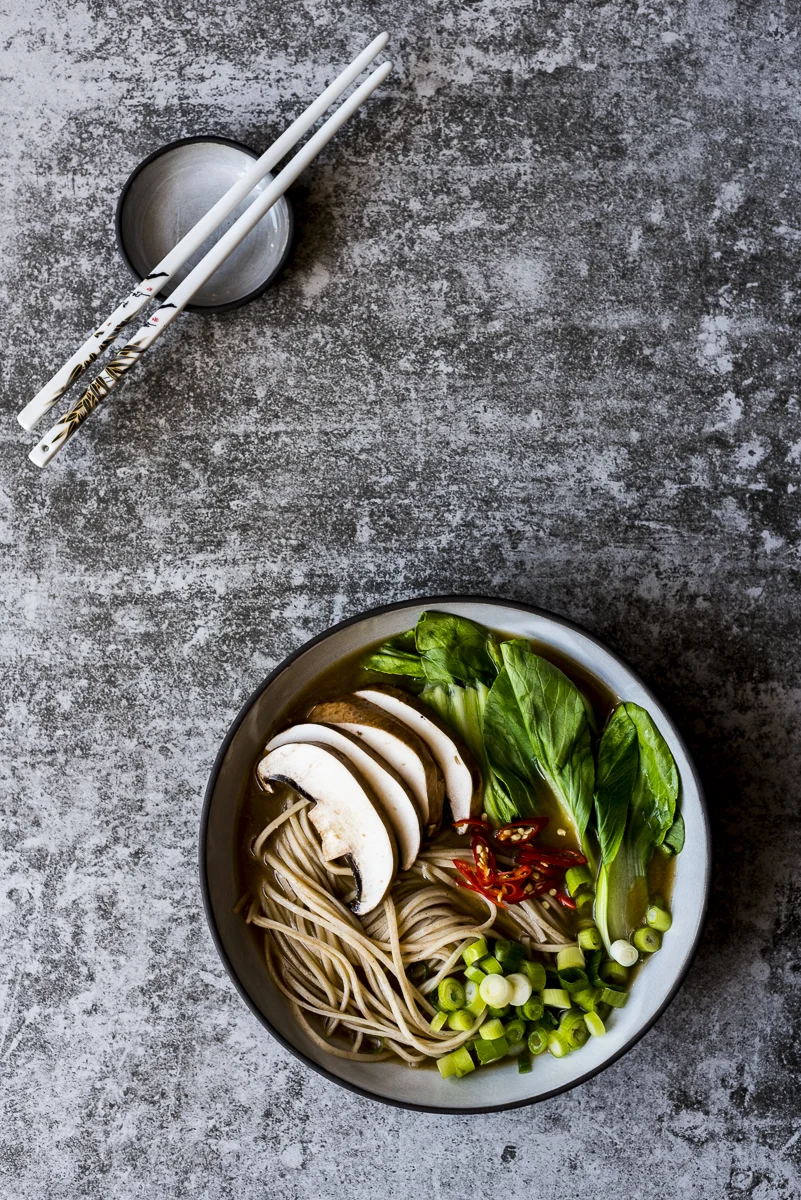
This ramen brings a slow-cooked pork and beef bone broth together with egg noodles, pak choi and fresh toppings. Roasting the bones first gives the broth a deeper flavour, while the long, gentle cook draws out a rich base for the bowls.
Ingredients
- 2 kgbones, a mix of pork and beef (marrow, knuckle, short ribs and neck bones)
- 2 tbspcider vinegar
- 2bay leaves
- 60 ml (¼ cup)red miso, or salt for seasoning
- to tastemedium egg noodles
- to tastebaby pak choi
- to tastesliced raw mushrooms
- to tastesliced spring onions
- to tastesliced chilli
- to tasteboiled egg
- to taste, optionalmeat removed from the bones
- to taste, optionalother vegetables
- enough to cover the bones by a few centimetreswater
Instructions
- 1
Preheat the oven
Heat the oven to 200°C.
- 2
Roast the bones
Arrange the bones in one layer on a baking sheet. Roast for 1 hour, turning them once, until browned and caramelised.
- 3
Transfer the bones
Put the roasted bones and all the browned bits from the tray into a large lidded, ovenproof dish.
- 4
Lower the temperature
Reduce the oven temperature to 95°C.
- 5
Add water and aromatics
Pour in enough water to cover the bones by a few centimetres, then add the cider vinegar and bay leaves.
- 6
Cook the broth
Cover the dish and simmer the broth in the oven for 24 hours.
- 7
Cool the broth
After 24 hours, take the dish out of the oven and let the broth cool until it is easier to handle.
- 8
Strain the broth
When it has cooled enough to handle, pour it through a fine sieve.
- 9
Season the broth
Take the cooked marrow out of the marrow bones and add it to the broth with 60 ml (¼ cup) red miso, or salt to taste. Whisk to combine.
- 10
Chill and skim
Refrigerate the broth until completely cold, then remove the layer of fat from the top.
- 11
Save the meat
While the broth chills, pick the meat from the bones and set it aside or freeze it for later.
- 12
Reheat or freeze
Reheat the broth to serve as it is or use it as a base for soups and stews. Freeze it if you are not using it straight away.
- 13
Prepare the ramen
Continue with the steps below when you are ready to make the ramen.
- 14
Reheat the broth
Heat enough broth for the amount of ramen you are making.
- 15
Soften the noodles
Take the broth off the heat and add the noodles, letting them soften in the hot liquid.
- 16
Add the toppings
When the noodles are soft, add the remaining vegetables and serve.
What is bone broth ramen?
Ramen is a Japanese noodle soup, usually served with broth and toppings. This version centres on a homemade broth made from pork and beef bones rather than a quick stock.
Roasting the bones before their long oven simmer builds a browned, savoury flavour. Miso and the cooked marrow are whisked in after straining, then the chilled broth is skimmed before serving.
Nutrition and macros by portion
The nutrition label shows one serving as written: 520 calories, 28g protein, 55g carbs, 20g fat.
| Portion | Adjustment | kcal | Protein | Carbs | Fat |
|---|---|---|---|---|---|
| Lighter | More vegetables, fewer noodles | 364 kcal | 20g | 39g | 14g |
| This serving | As written | 520 kcal | 28g | 55g | 20g |
| Hungry | Add meat and noodles | 780 kcal | 42g | 83g | 30g |
The noodles provide most of the carbohydrates, while the bones and marrow contribute fat and some protein; any meat and egg added to a bowl provide further protein. Serve with plenty of pak choi and other vegetables, and use a moderate amount of noodles to balance the bowl.
Why use a mix of bones?
Bone mix: marrow, knuckle, short ribs and neck bones each bring something different to the pot. The recipe combines pork and beef bones for a full-flavoured base.
Roasting: spread the bones in one layer so they brown rather than steam. Turning them once during the hour helps expose more surfaces to the heat.
The long, gentle simmer
Temperature: after roasting, the broth cooks at 95°C for 24 hours in a covered ovenproof dish. Keep the lid on during cooking and make sure the water covers the bones by a few centimetres at the start.
Vinegar: the cider vinegar goes in with the water and bay leaves before the simmer. It adds a little acidity to the broth as it cooks.
Straining and seasoning
Straining: let the broth cool enough to handle before pouring it through a fine sieve. This separates the liquid from the bones and roasted pieces.
Miso and marrow: add the cooked marrow and red miso after straining, then whisk to combine. Salt can be used instead, but add it gradually and taste as you go.
Chilling the broth
Skimming: cool the broth completely in the fridge before removing the solid layer of fat from the surface. The recipe does not specify a chilling time, so allow enough time for it to become fully cold.
Meat: pick any meat from the bones while the broth chills. Set it aside to add to a bowl, or freeze it for another meal.
Finishing each bowl
Noodles: reheat only as much broth as you need, then take it off the heat before adding the egg noodles. They soften in the hot broth, so check them as they sit and serve once tender.
Toppings: add pak choi, raw sliced mushrooms, spring onions and chilli after the noodles soften. A boiled egg and any reserved meat are optional additions.
What to serve alongside
The ramen can be a meal on its own, with noodles, broth and vegetables in each bowl. Add the reserved bone meat or a boiled egg if you would like a more substantial serving.
Keep extra vegetables on the side or add them to the bowls to taste. The recipe does not specify quantities for the noodles or toppings, so adjust them to the number of bowls you are making.
Recipe notes & tips
- Use a tray large enough to keep the bones in a single layer for roasting.
- Scrape the browned bits from the baking sheet into the cooking dish with the bones.
- Let the broth cool enough to handle before straining it.
- Chill the broth completely before skimming off the fat.
- Pick the meat from the bones while it is easier to handle, and save it for topping the ramen.
- Add the noodles only after taking the reheated broth off the heat.
Variations
- Use salt: season the strained broth with salt instead of red miso, adding it to taste.
- Add the reserved meat: top each bowl with meat picked from the cooked bones.
- Include a boiled egg: halve an egg and add it to the finished bowl.
- Change the vegetables: use other vegetables to taste alongside or instead of the listed toppings.
- Adjust the chilli: add more or less sliced chilli to suit the heat you want.
Common mistakes to avoid
- Crowding the roasting tray: the bones may not brown evenly; arrange them in a single layer.
- Skipping the turn: one side can brown more than the other; turn the bones once during the hour.
- Straining while too hot to handle: wait until the broth has cooled down enough to handle safely.
- Seasoning without tasting: miso and salt can make the broth quite savoury; add salt gradually and taste.
- Adding noodles to boiling broth: they may soften too much; take the broth off the heat before adding them.
- Forgetting to skim: chill the broth completely first, then remove the top layer of fat.
How to store
Refrigerate the broth until completely cold, then keep it covered and use within 3–4 days. Freeze broth you will not use straight away, and thaw it in the fridge before reheating. Store cooked noodles and toppings separately where possible, and reheat broth until hot before assembling the bowls.
Frequently asked questions
Can I make the broth ahead?
Yes. The recipe chills the broth before skimming, and it can be frozen if you are not using it immediately. Reheat the amount you need when you are ready to make ramen.
Can I use only pork or only beef bones?
The recipe calls for a mix, but it does not specify a required ratio. You can use the kinds of bones you have, keeping the total at 2 kg.
Can I use salt instead of miso?
Yes. The recipe gives salt as an alternative; add it to the strained broth to taste.
How do I know when the noodles are ready?
They are ready when soft. Since the noodles sit in hot broth off the heat, check their texture as they soften.
Do I have to add the meat picked from the bones?
No. It is optional; set it aside or freeze it for future use, or add it to the ramen as a topping.
Can I use this broth for something other than ramen?
Yes. The method suggests reheating it to serve as it is or using it as a base for soups and stews.
Cook it from the original
This recipe comes from heinstirred.com. Their page has the author’s own photos, notes and tips — the best place to cook it from.
Open the recipe on heinstirred.com