
Stir Fried Rice Noodles and Pork
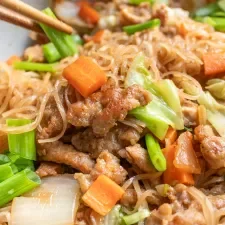
Fresh flat rice noodles, tender pork and vegetables are tossed in a savoury, lightly spiced sauce for a quick Vietnamese-inspired stir-fry. It is a handy way to turn leftover phở noodles into a substantial one-wok meal.
Ingredients
- 60 ml (1/4 cup)light soy sauce
- 60 ml (1/4 cup)oyster sauce
- 1 teaspoonchicken bouillon powder or mushroom seasoning powder (optional)
- 1 teaspoonground ginger
- 1/2 teaspoonfive-spice powder
- 1 tablespoongranulated sugar
- 120 ml (1/2 cup)water
- 454 g (1 lb)pork shoulder, butt or loin
- 1 teaspoonsalt
- 1/2 teaspoonground black pepper
- 1/4 teaspoonfive-spice powder
- 1 tablespoonminced garlic
- 60 ml (1/4 cup)water
- 1egg, beaten
- 40 g (1/3 cup)cornflour
- 1 smallcarrot, peeled and cut into small pieces
- 1/4cabbage, cut into large squares
- 1 smallyellow onion, peeled and cut into small squares
- 2spring onions, sliced, whites and greens separated
- 1 tablespoonminced garlic
- 45 ml (3 tablespoons)oil, animal fat or neutral oil
- 454 g (1 lb)fresh flat rice noodles (phở noodles)
Instructions
- 1
Marinate the pork
Slice the pork across the grain into bite-sized pieces. Mix with the salt, black pepper, 1/4 teaspoon five-spice powder, 1 tablespoon minced garlic, beaten egg, cornflour and 60 ml water. Leave to marinate for at least 15 minutes.
- 2
Mix the sauce
Stir the soy sauce, oyster sauce, optional bouillon or mushroom seasoning, ground ginger, 1/2 teaspoon five-spice powder, sugar and 120 ml water together in a small bowl. Whisk firmly to combine, then set aside.
- 3
Fry the pork
Heat the oil in a pan over medium-high heat. Fry the pork in batches, spacing out the pieces, until browned, about 2 minutes per side. Transfer each batch to a paper-towel-lined plate to drain, then repeat until all the pork is cooked.
- 4
Toast the aromatics
Leave a thin layer of oil in the pan, adding more if needed. Fry the onion until lightly caramelised, about 2 minutes, then add the white parts of the spring onions and cook for about 30 seconds.
- 5
Cook the vegetables
Add the carrot and cabbage and sauté for about 5 minutes, until softened and just wilted.
- 6
Combine the noodles
Return the cooked pork to the pan. Add the uncooked noodles and prepared sauce, then toss until everything is evenly combined.
- 7
Finish and serve
Scatter over the green parts of the spring onions and serve. Add chilli oil or sriracha on top if you like.
What are phở noodles?
Phở noodles are flat rice noodles commonly served in the Vietnamese soup of the same name. In this stir-fry, they are paired with pork and vegetables rather than broth, making a quick, filling meal.
Fresh noodles and a mix of soy, oyster sauce and five-spice give this version its character. The pork is coated before frying, then tossed with the sauce and vegetables at the end.
Nutrition and macros by portion
The nutrition label shows one serving as written: 550 calories, 29g protein, 59g carbs, 22g fat.
| Portion | Adjustment | kcal | Protein | Carbs | Fat |
|---|---|---|---|---|---|
| Lighter | Use less oil | 385 kcal | 20g | 41g | 15g |
| This serving | As written | 550 kcal | 29g | 59g | 22g |
| Hungry | Add more noodles | 825 kcal | 44g | 89g | 33g |
The rice noodles and cornflour provide most of the carbohydrates, while the pork contributes much of the protein and fat. The frying oil and sauces add further fat and sodium. To balance the plate, serve a portion with extra fresh vegetables or a simple salad.
The pork marinade
Cut across the grain: slicing the pork this way helps keep each bite tender. Aim for similar-sized pieces so they cook at roughly the same pace.
Give it time: the recipe calls for at least 15 minutes of marinating. The egg, water and cornflour coat the pieces before they go into the pan.
Building the sauce
Whisk well: the ground spices may not blend smoothly at first, so stir the sauce thoroughly before setting it aside. This helps distribute the seasoning when it is added to the noodles.
Taste comes from the mix: soy and oyster sauces bring savoury depth, while a little sugar rounds them out. The optional bouillon or mushroom seasoning adds another savoury note.
Frying in batches
Leave space: fry the pork in batches rather than crowding the pan. The method calls for about 2 minutes per side, until the pieces are browned.
Drain after frying: transfer each cooked batch to a plate lined with kitchen paper while you cook the rest. Keep a thin layer of oil in the pan for the onion.
Vegetable texture and timing
Start with onion: cook it for about 2 minutes until lightly caramelised, then fry the spring onion whites for about 30 seconds. This lays down the aromatic base before the vegetables go in.
Soften, don't overcook: sauté the carrot and cabbage for about 5 minutes, until softened and just wilted. The noodles, pork and sauce are added afterwards.
Tossing the noodles
Add them uncooked: the recipe adds the fresh noodles directly to the pan along with the cooked pork and sauce. Toss everything together until evenly combined.
Serve once combined: finish with the spring onion greens. Chilli oil or sriracha is an optional topping for anyone who wants extra heat.
What to serve alongside
This is designed as a one-wok meal, with noodles, pork and vegetables in each portion. You can serve it on its own or alongside a simple, crisp salad.
If you add a side, keep it light and fresh to contrast with the savoury sauce and soft noodles. Extra chilli oil or sriracha can be offered at the table.
Recipe notes & tips
- Slice the pork against the grain for more tender bites.
- Whisk the sauce thoroughly so the ground spices are evenly distributed.
- Fry the pork in batches and leave space between pieces so they brown.
- Keep a thin layer of oil in the pan when you cook the onion.
- Have the vegetables, sauce and noodles ready before you start stir-frying.
Variations
- Use mushroom seasoning: choose it instead of chicken bouillon powder for the optional seasoning.
- Add more heat: finish with chilli oil or sriracha, as suggested in the method.
- Choose pork loin: use loin in place of shoulder or butt, as listed in the ingredients.
- Use animal fat: swap it for the neutral oil when frying, as allowed by the recipe.
Common mistakes to avoid
- Crowding the pan: the pork may not brown evenly; fry it in batches and leave space between pieces.
- Slicing with the grain: the pork can seem tougher; cut across the grain instead.
- Skipping the sauce whisk: the spices may stay unevenly mixed; whisk until combined before setting it aside.
- Overcooking the vegetables: they can lose their just-wilted texture; sauté for about 5 minutes and stop once softened.
- Adding the green spring onion tops too early: they are intended as a garnish; scatter them over the finished dish.
How to store
Refrigerate leftovers in a sealed container and eat within 3 days. Reheat in a pan until piping hot, stirring to warm the noodles and pork evenly.
Frequently asked questions
Can I use leftover phở noodles?
Yes. The recipe is intended for fresh flat rice noodles, including leftover phở noodles. Add them uncooked to the pan with the pork and sauce.
How long should I marinate the pork?
Marinate it for at least 15 minutes, as directed. The recipe does not specify a longer marinating time.
Why fry the pork in batches?
Spacing out the pieces helps them brown and keeps them from sticking together. Use two batches or more if your pan is small.
Can I leave out the bouillon powder?
Yes. It is optional, and the ingredient list gives mushroom seasoning powder as an alternative.
How can I make it spicy?
Drizzle chilli oil or sriracha over the finished dish, as suggested in the method.
Can I use a different cut of pork?
The recipe lists shoulder, butt or loin. Whichever you choose, slice it across the grain into bite-sized pieces.
Cook it from the original
This recipe comes from vickypham.com. Their page has the author’s own photos, notes and tips — the best place to cook it from.
Open the recipe on vickypham.com