
Pisto with egg
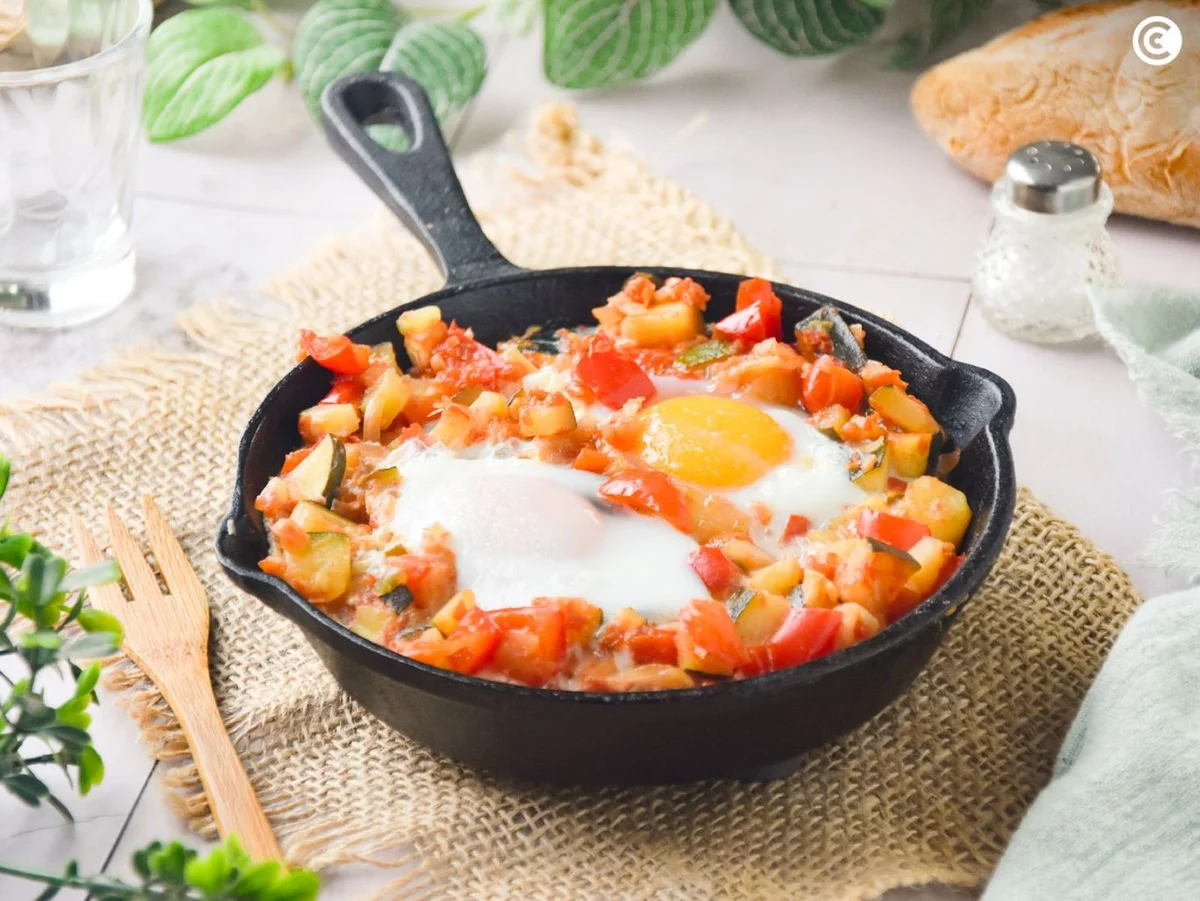
Pisto is a slow-cooked Spanish vegetable dish, served here with eggs cooked directly in the pan. It makes a warming lunch or supper, with soft vegetables and runny yolks to bring the plate together.
Ingredients
- 1 tablespoonextra-virgin olive oil
- 1onion
- to tastesalt
- 1red pepper
- 1courgette
- 3ripe tomatoes
- 4medium eggs
Instructions
- 1
Soften the onion
Heat 1 tablespoon of oil in a frying pan. Add the finely chopped onion and a little salt, then cook over a medium-low heat for 10 minutes, stirring occasionally, until translucent and lightly golden.
- 2
Cook the pepper
Remove the seeds from the red pepper and dice it. Stir it into the onion and cook for a further 10 minutes, until it starts to soften without browning too much.
- 3
Add the courgette
Wash and finely chop the courgette. Add it to the pan and cook with the other vegetables for 5 minutes, stirring so it is well mixed in.
- 4
Simmer the pisto
Wash and chop the 3 tomatoes, then add them to the pan. Turn the heat down and cook gently for 1 hour, stirring occasionally to prevent the mixture catching. Taste and add salt as needed; if the tomatoes are too sharp, the method suggests correcting the acidity with a pinch of sugar.
- 5
Cook the eggs
Divide the pisto between individual frying pans and make a well in each. Put 2 medium eggs in each well, cover and cook for 2–3 minutes, until the whites are set but the yolks are still slightly runny.
- 6
Season and serve
Season the eggs with salt and serve the pisto with egg straight away.
What is pisto?
Pisto is a Spanish dish of vegetables cooked slowly until tender and melded together, often compared with other Mediterranean vegetable stews. It is associated with several regions of Spain, including La Mancha, where this version is rooted.
This recipe layers onion, pepper, courgette and tomato, then tops the finished vegetables with eggs. The long, gentle simmer gives the tomatoes time to soften into a rich base.
Nutrition and macros by portion
The nutrition label shows one serving as written: 205 calories, 11g protein, 14g carbs, 13g fat.
| Portion | Adjustment | kcal | Protein | Carbs | Fat |
|---|---|---|---|---|---|
| Lighter | Use less olive oil | 144 kcal | 8g | 10g | 9g |
| This serving | As written | 205 kcal | 11g | 14g | 13g |
| Hungry | Add crusty bread | 308 kcal | 17g | 21g | 19g |
The vegetables and tomatoes provide most of the carbohydrates, while the olive oil and eggs contribute much of the fat; the eggs also provide the protein. Pair a serving with a generous side of greens, or add bread if you want a more substantial meal.
Build the vegetable base
Onion first: cooking it slowly with a little salt helps it turn soft and lightly golden before the other vegetables go in.
Pepper and courgette: the pepper gets a longer head start, while the courgette needs only 5 minutes before the tomatoes are added.
Why the tomatoes simmer slowly
Tomatoes: once chopped and added, they release moisture and help the vegetables cook together. Keep the heat low and stir now and then during the 1-hour simmer so the pisto does not catch on the bottom.
Seasoning: taste near the end and add salt if needed. The method mentions a pinch of sugar as an optional way to temper sharp-tasting tomatoes.
Check the texture
Vegetables: the finished pisto should be tender and cohesive, with no watery pool around it. If the tomatoes still seem loose, continue simmering gently while keeping an eye on the pan.
Eggs: cover the pan for 2–3 minutes and look for set whites with yolks that remain slightly liquid. They will continue to cook a little from the heat of the pisto.
Plan the egg portions
The ingredients list gives 4 eggs for 4 servings, but the method says to add 2 medium eggs to each individual pan. Those instructions do not match, so check the number of eggs available and portion them accordingly.
If dividing the listed 4 eggs evenly, use 1 egg per serving. For the method’s 2 eggs per pan, you would need 8 eggs in total.
Serve it simply
Bread: serve the pisto hot with crusty bread to scoop up the vegetables and yolk.
A side salad or simply cooked greens can add freshness alongside the soft, slow-cooked vegetables.
Recipe notes & tips
- Chop the onion and vegetables to a similar small size so they cook evenly.
- Keep the heat low once the tomatoes go in, and stir occasionally during the long simmer.
- Use a lid while cooking the eggs so the whites set without needing to cook the yolks for too long.
- Serve as soon as the eggs are ready, while the yolks are still soft.
- Check the egg quantity before portioning, as the ingredient list and method give different amounts.
Variations
- Add aubergine: replace some of the courgette with diced aubergine and cook until tender.
- Use seasonal vegetables: swap in a similar amount of another quick-cooking vegetable.
- Make it spicier: add a little chopped chilli with the pepper.
- Add herbs: finish with chopped parsley for a fresh note.
- Serve with bread: offer crusty bread alongside to catch the soft yolk and vegetable juices.
Common mistakes to avoid
- Cooking the onion too fast: keep the heat medium-low so it softens without burning.
- Browning the pepper heavily: cook it until it starts to soften, as directed, rather than letting it darken.
- Skipping the occasional stir: check the pan during the 1-hour simmer to stop the vegetables catching.
- Overcooking the eggs: remove the pan when the whites are set and the yolks are still slightly runny.
- Assuming the egg quantities match: the list says 4 eggs but the method calls for 2 per individual pan; clarify portions before cooking.
How to store
Refrigerate leftover pisto in a covered container for up to 3 days. Reheat the vegetables gently in a pan; eggs are best cooked fresh, as reheating them can set the yolks.
Frequently asked questions
Can I make the pisto ahead?
Yes. Cook the vegetable mixture ahead and refrigerate it, then reheat it gently and cook the eggs just before serving.
How many eggs should I use?
The ingredient list gives 4 eggs, while the method specifies 2 eggs per individual pan. For 4 servings, those directions conflict: 4 eggs gives 1 per serving, while 2 per serving requires 8.
How do I know when the pisto is ready?
After the 1-hour simmer, the vegetables should be soft and combined rather than watery. Stir occasionally as it cooks and check that it is not sticking.
Can I use tinned tomatoes?
The recipe calls for 3 fresh tomatoes. Tinned tomatoes can be used as a substitute, though the texture and cooking time may differ.
What should I serve with pisto?
Crusty bread is a natural accompaniment, and a simple salad or greens can round out the meal.
Cook it from the original
This recipe comes from cocinatis.com. Their page has the author’s own photos, notes and tips — the best place to cook it from.
Open the recipe on cocinatis.com