
Easy Thai Peanut Sauce (with Peanut Butter)
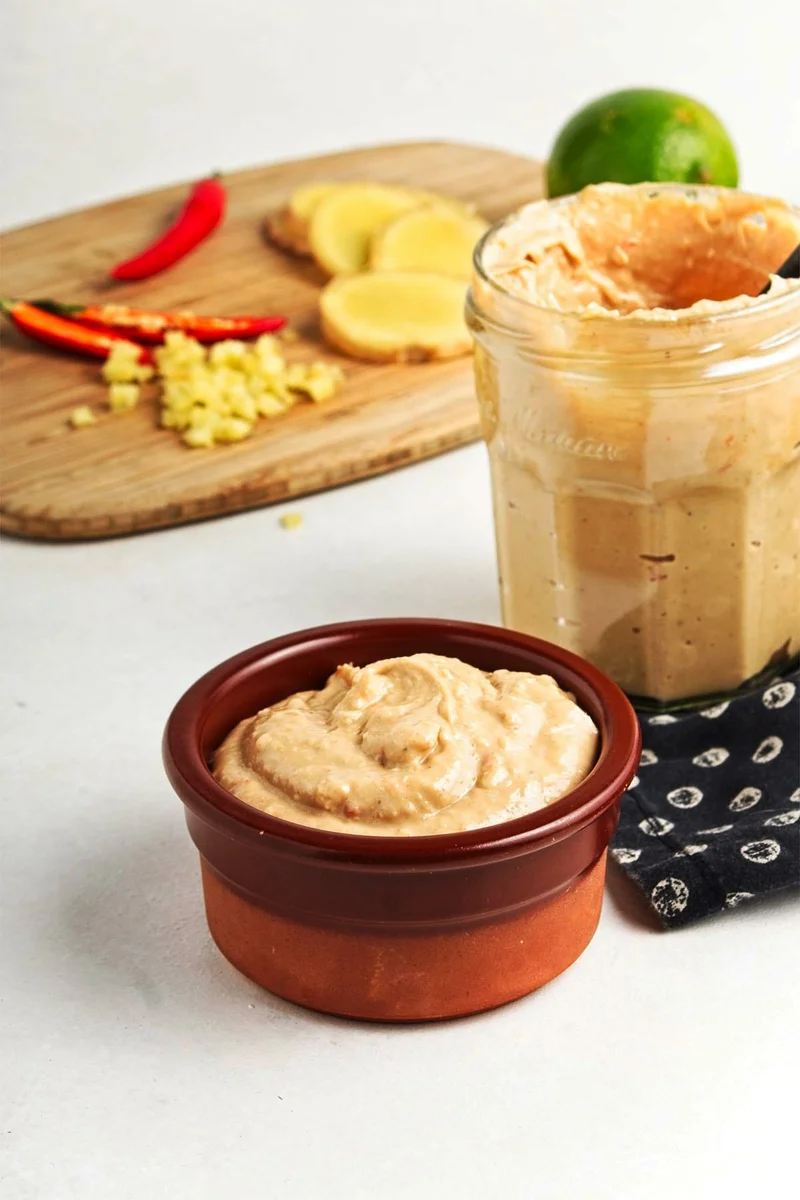
This creamy peanut sauce combines peanut butter and coconut milk with softened shallot, ginger, chilli and lime. Make it for dipping, spooning over stir-fries or serving alongside other savoury dishes.
Ingredients
- 315 g (1¼ cups)unsalted peanut butter, creamy or crunchy
- 45 g (1 shallot)shallot, minced
- 4 g (1 bird’s eye chilli), optionalbird’s eye chilli, minced
- 20 g (2 tbsp; about 2.5 cm/1 inch)fresh ginger, peeled and minced
- 180 ml (¾ cup), plus more as neededfull-fat coconut milk
- 5 ml (1 tsp)sesame oil
- 6 g (1 tsp)salt
- 30 ml (2 tbsp)lime juice
- 10 ml (2 tsp)neutral-flavoured oil, such as grapeseed or peanut oil
Instructions
- 1
Prepare the aromatics
Peel and mince the shallot and ginger. Remove the chilli stem and mince it finely; for a milder sauce, scrape out some of the seeds first.
- 2
Heat the oil
Warm the neutral-flavoured oil in a medium saucepan over medium heat. Add the shallot, ginger and chilli.
- 3
Soften the mixture
Cook for 3–5 minutes, stirring regularly, until the aromatics have softened and smell fragrant.
- 4
Simmer coconut milk
Pour in the coconut milk and simmer over medium-low heat for 3 minutes. Take the pan off the heat and leave the mixture to cool for 15–20 minutes.
- 5
Add to blender
Put the peanut butter, salt and sesame oil in a blender. Add the coconut mixture, including the cooked aromatics.
- 6
Blend until smooth
Blend at medium speed for 2–3 minutes, pausing to scrape down the sides and stir as needed. Add the lime juice and pulse to combine.
- 7
Adjust the consistency
If needed, blend in 30–60 ml (2–4 tbsp) cold or room-temperature coconut milk until the sauce reaches your preferred consistency.
- 8
Rest before serving
For the best flavour, leave the sauce to sit for at least 1 hour so the flavours can mingle. Serve it slightly warm.
What is Thai peanut sauce?
Peanut sauce is a rich, savoury-sweet style of sauce found in many versions across Southeast Asian cooking. Recipes and uses vary, and this version takes its cue from Thai-style flavours with lime, chilli and aromatic ginger.
Here, peanut butter gives the sauce its body, while coconut milk loosens it and softens its intensity. Cooking the aromatics first helps them blend into the sauce rather than leaving sharp raw pieces.
Nutrition and macros by portion
The nutrition label shows one serving as written: 2397 calories, 75g protein, 79g carbs, 214g fat.
| Portion | Adjustment | kcal | Protein | Carbs | Fat |
|---|---|---|---|---|---|
| Lighter | Use less sauce | 1678 kcal | 53g | 55g | 150g |
| This serving | As written | 2397 kcal | 75g | 79g | 214g |
| Hungry | Serve with rice and tofu | 3596 kcal | 113g | 119g | 321g |
The listed serving is rich in fat from the peanut butter, coconut milk and oils; the peanut butter also supplies much of the protein. Carbohydrate comes mainly from the peanut butter and shallot. Serve a modest amount alongside vegetables and a lean protein, with rice or noodles as needed.
The ingredients that shape the flavour
Peanut butter: Unsalted peanut butter lets you control the seasoning, and either creamy or crunchy will work. A blender makes either type smoother, though crunchy peanut butter may retain a little texture.
Coconut and lime: Full-fat coconut milk brings a thick, mellow quality; lime juice adds a bright contrast. Add extra coconut milk gradually if you want a thinner sauce.
Soften the aromatics gently
Shallot, ginger and chilli: Keep the saucepan at medium heat and stir regularly for the 3–5 minutes of cooking. Aim for softened, fragrant aromatics rather than browned ones, which can make their flavour more pronounced.
Chilli seeds: Scrape some out before mincing if you prefer less heat. You can also leave the optional chilli out altogether.
Blend for the texture you want
Blending: Let the coconut mixture cool for 15–20 minutes before adding it to the blender. Pause to scrape down the sides so the peanut butter and aromatics combine evenly.
Consistency: The sauce will be thick, so add the extra coconut milk in small amounts, blending between additions. Stop when it is easy to dip into or drizzle, depending on how you plan to serve it.
Allow time for the flavours to mingle
The active cooking and blending are brief, but the method includes a 15–20 minute cooling period and recommends resting the finished sauce for at least 1 hour. That gives the flavours time to come together before serving.
If the sauce has cooled more than you would like, warm it gently and stir before serving. Avoid heating it rapidly, as a thick peanut sauce can catch on the bottom of a pan.
Ways to serve it
Dipping: Serve the sauce with raw or cooked vegetables, tofu or other suitable bites. For a thinner dip, stir in coconut milk a little at a time.
Stir-fries: Spoon it over a cooked stir-fry or serve it alongside so everyone can add as much as they like. Rice or noodles make a simple accompaniment when you want a more substantial meal.
Recipe notes & tips
- Measure the extra coconut milk separately so you can add it gradually.
- Mince the shallot, ginger and chilli finely so they blend more easily.
- Use a blender with enough capacity for the ingredients, and scrape the sides during blending.
- Taste the finished sauce before serving and adjust its consistency with small additions of coconut milk.
- Warm the sauce gently and stir it well if it has cooled before serving.
Variations
- Milder sauce: Omit the bird’s eye chilli or remove its seeds before mincing.
- Thinner dip: Blend in extra coconut milk a little at a time.
- More lime: Add a small extra squeeze of lime juice for a brighter finish.
- Crunchy finish: Scatter chopped peanuts over the sauce just before serving.
- Fresh herbs: Add chopped coriander at the table for a fresh herbal note.
Common mistakes to avoid
- Browning the aromatics: Keep the heat at medium and stir regularly so they soften without taking on colour.
- Adding all the extra coconut milk: Add it in small amounts and stop when the sauce reaches the consistency you want.
- Blending while the mixture is very hot: Let it cool for 15–20 minutes before blending.
- Skipping the blender pauses: Scrape down the sides so the ingredients combine evenly.
- Serving straight away: Rest the sauce for at least 1 hour if you have time for the flavours to mingle.
How to store
Refrigerate leftover sauce in a covered container and use within 3–4 days. Reheat gently in a saucepan, stirring; loosen with a little coconut milk if it has thickened. Do not leave it at room temperature for extended periods.
Frequently asked questions
Can I make this sauce without a blender?
A blender gives the smoothest result, but you can whisk the ingredients together in a bowl. Mince the aromatics very finely and expect a more textured sauce.
How can I make the sauce less spicy?
Leave out the optional bird’s eye chilli or scrape out some of its seeds before mincing. The sauce will still have flavour from the ginger and shallot.
How do I thin the sauce?
Blend in cold or room-temperature coconut milk a little at a time, using up to the additional 30–60 ml suggested in the method or adding more if needed.
Can I use crunchy peanut butter?
Yes. The recipe allows either creamy or crunchy peanut butter; blend thoroughly for a smoother result, or keep some texture if you prefer.
Why does the method say to rest the sauce?
The recipe recommends resting it for at least 1 hour so the flavours can mingle. It also suggests serving the sauce slightly warm.
Cook it from the original
This recipe comes from joyfuldumplings.com. Their page has the author’s own photos, notes and tips — the best place to cook it from.
Open the recipe on joyfuldumplings.com