
Vietnamese Stir-Fried Flat Rice Noodles with Beef (Phở Xào Bò)
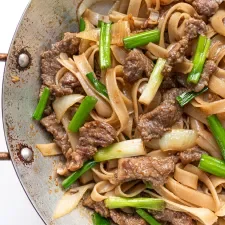
Phở xào bò is a Vietnamese stir-fry of flat rice noodles, tender beef and savoury sauce. It brings the familiar flavours of beef phở to a quicker, saucy noodle dish suited to a weeknight meal.
Ingredients
- 60 ml (¼ cup)light soy sauce
- 60 ml (¼ cup)oyster sauce
- 1 teaspoonchicken bouillon powder or mushroom seasoning powder (optional)
- 1 teaspoonground ginger
- ½ teaspoonfive-spice powder
- 1 tablespoongranulated sugar
- 120 ml (½ cup)water or unsalted stock
- 454 g (1 lb)beef (flank, strip or sirloin steak)
- 1 teaspoonsalt
- ½ teaspoonground black pepper
- ¼ teaspoonfive-spice powder
- 1 tablespoonminced garlic
- ⅛ teaspoonbicarbonate of soda
- 60 ml (¼ cup)water
- 1 wholeegg, beaten
- 40 g (⅓ cup)cornflour
- 454 g (1 lb)bok choy/green onions
- 1 smallyellow onion, peeled and cut into wedges
- 1 tablespoonminced garlic
- for fryingneutral oil
- 397 g (14 oz) dried flat rice noodles or 907 g (2 lb) fresh rice noodlesflat rice noodles
Instructions
- 1
Mix the sauce
In a small bowl, stir together the light soy sauce, oyster sauce, bouillon or mushroom seasoning powder if using, ground ginger, ½ teaspoon five-spice powder, sugar and 120 ml water or stock. Taste and adjust if needed, then set aside.
- 2
Marinate the beef
Slice the beef thinly against the grain into bite-sized pieces. Mix with the salt, black pepper, remaining ¼ teaspoon five-spice powder, 1 tablespoon garlic, bicarbonate of soda, 60 ml water, beaten egg and cornflour; leave to marinate for at least 20 minutes.
- 3
Separate fresh noodles
If using fresh rice noodles, warm them in the microwave and gently separate the strands by hand. Set aside.
- 4
Blanch vegetables
In a large wok or frying pan, bring 5–8 cm of water to a rolling boil. If using bulky vegetables such as bok choy, separate the leaves and blanch for 30 seconds to 1 minute, until dark green; remove and set aside. In the same water, blanch dried noodles for about 5 minutes, until a noodle separates when pressed between your fingers but still offers some resistance. Drain, rinse well and toss with a little neutral or sesame oil to prevent sticking.
- 5
Fry the beef
If reusing the pan, drain away the blanching water and dry the pan completely. Add oil to a depth of about 6 mm and heat to 175°C (350°F). Fry the marinated beef until just browned, working in batches if the pan is small. Transfer to a wire rack or a plate lined with paper towels to drain.
- 6
Cook the aromatics
Pour off most of the oil, leaving a thin layer of about 3 tablespoons in the wok. Heat over medium-high heat, add the yellow onion and sauté for about 5 minutes, until lightly charred on the outside. Add the white parts of the green onions and the remaining tablespoon of garlic.
- 7
Toss and finish
Add the noodles and sauce, adding the sauce gradually if you prefer. Toss to combine, then add the cooked beef, vegetables if using, and green parts of the green onions. Stir-fry for 1–2 minutes until everything is well combined, then serve.
What is phở xào bò?
Phở xào bò is a Vietnamese dish of stir-fried rice noodles with beef. Instead of serving phở noodles in broth, this version coats them in a savoury sauce and cooks them with aromatics.
The balance of soft noodles, browned beef and crisp-edged onion makes it satisfying without the longer process of preparing traditional beef phở. Bok choy or green onions add freshness and colour.
Nutrition and macros by portion
The nutrition label shows one serving as written: 760 calories, 42g protein, 91g carbs, 24g fat.
| Portion | Adjustment | kcal | Protein | Carbs | Fat |
|---|---|---|---|---|---|
| Lighter | More bok choy, less noodles | 532 kcal | 29g | 64g | 17g |
| This serving | As written | 760 kcal | 42g | 91g | 24g |
| Hungry | Larger noodle portion | 1140 kcal | 63g | 137g | 36g |
The rice noodles and sugar provide most of the carbohydrates, while the beef and egg contribute protein. Oil, beef and egg account for much of the fat; serve with extra fresh vegetables alongside if you want a more balanced plate.
Build a balanced sauce
Sauce base: Light soy and oyster sauce bring saltiness and savoury depth, while sugar rounds them out. Water or unsalted stock loosens the mixture so it can coat the noodles.
Seasoning: Ground ginger and five-spice give the sauce its warm, aromatic edge. Add the optional bouillon or mushroom seasoning only if you want an extra savoury note.
Slice and marinate the beef
Against the grain: Cut across the visible muscle fibres and keep the slices thin. This helps the beef remain easier to bite after a quick fry.
Coating: The egg, cornflour, water and small amount of bicarbonate of soda make a coating around the beef. Give it at least 20 minutes to marinate, as directed, while you prepare the other components.
Get the noodles ready
Fresh noodles: Warm them just enough to loosen the strands, then separate gently by hand so they are easier to toss without breaking.
Dried noodles: Blanch until they bend and begin to separate but still resist pressure. They will cook further in the wok, so draining and rinsing them at this stage helps avoid a soft, overdone finish.
Fry without crowding
Pan temperature: Heat the oil to 175°C before adding the beef so the pieces brown rather than sit in cooling oil. Fry in batches if necessary and let each batch drain after cooking.
Dry pan: If you use the blanching pan for frying, empty and dry it fully first. Water in hot oil can spit, and a dry pan makes it easier to control the fry.
Finish in the wok
Onions first: Give the yellow onion about 5 minutes over medium-high heat to develop lightly charred edges before adding the green onion whites and garlic.
Final toss: Add the noodles and sauce, then return the beef and vegetables to the pan. Stir-fry only for 1–2 minutes at the end, just long enough to mix everything and warm it through.
What to serve alongside
The noodles, beef and vegetables make this a complete main dish. For a lighter contrast, serve it with a simple side of fresh, crunchy vegetables.
Keep extra sauce modest when serving: the noodles should be coated and savoury, not sitting in a pool of liquid.
Recipe notes & tips
- Slice the beef against the grain so the cooked pieces are easier to chew.
- Keep the sauce bowl close by, as the final stir-fry moves quickly.
- Blanch dried noodles only until they still have a little resistance.
- Separate fresh rice noodles gently to avoid tearing them.
- Fry the beef in batches if the pan is small.
- Add sauce gradually and stop when the noodles are evenly coated.
Variations
- Use sirloin: Choose it instead of flank or strip steak and slice it thinly against the grain.
- Choose fresh noodles: Use 907 g fresh rice noodles and warm them before separating the strands.
- Use unsalted stock: Swap it for the water in the sauce for a fuller savoury flavour.
- Add bok choy: Blanch the separated leaves until dark green, then stir them in at the end.
- Make it vegetarian: Replace beef with mushrooms and use mushroom seasoning instead of chicken bouillon.
- Adjust the sauce: Add it a little at a time to suit how strongly seasoned you like the noodles.
Common mistakes to avoid
- Thick beef slices: They can be less tender; slice thinly across the grain.
- Overcooked noodles: They soften further in the wok; blanch dried noodles until they still resist pressure.
- Crowded frying pan: The beef may brown unevenly; cook it in batches.
- Wet pan: Water can make hot oil spit; dry the pan completely before frying.
- Burnt garlic: It can turn bitter; add it after the onion has sautéed.
- Too much sauce at once: The noodles may become overly wet; add it gradually and toss as you go.
How to store
Cool leftovers promptly and store in an airtight container in the fridge for up to 3 days. Reheat in a frying pan over medium heat until piping hot, stirring gently; add a small splash of water if the noodles seem dry.
Frequently asked questions
Can I use fresh rice noodles instead of dried?
Yes. Use 907 g fresh rice noodles, warm them in the microwave and gently separate the strands before stir-frying.
How do I know when dried noodles are ready to stir-fry?
They should separate when pressed between your fingers but still offer some resistance. The final stir-fry will cook them further.
Can I prepare the beef ahead?
You can slice and marinate it ahead, keeping it covered in the fridge. Cook it thoroughly when you are ready to make the dish.
Do I have to use bok choy?
No. The method describes the bulky vegetables as optional, and green onions are also listed. If using bok choy, blanch the separated leaves until dark green.
Why fry the beef separately?
Frying it before the noodles helps it brown without overcrowding the pan. It is added back near the end to finish with the sauce and vegetables.
Can I make the dish less salty?
Use unsalted stock or water and add the sauce gradually, tasting as you go. The soy and oyster sauces are already savoury.
Cook it from the original
This recipe comes from vickypham.com. Their page has the author’s own photos, notes and tips — the best place to cook it from.
Open the recipe on vickypham.com