
Chicken Cordon Bleu
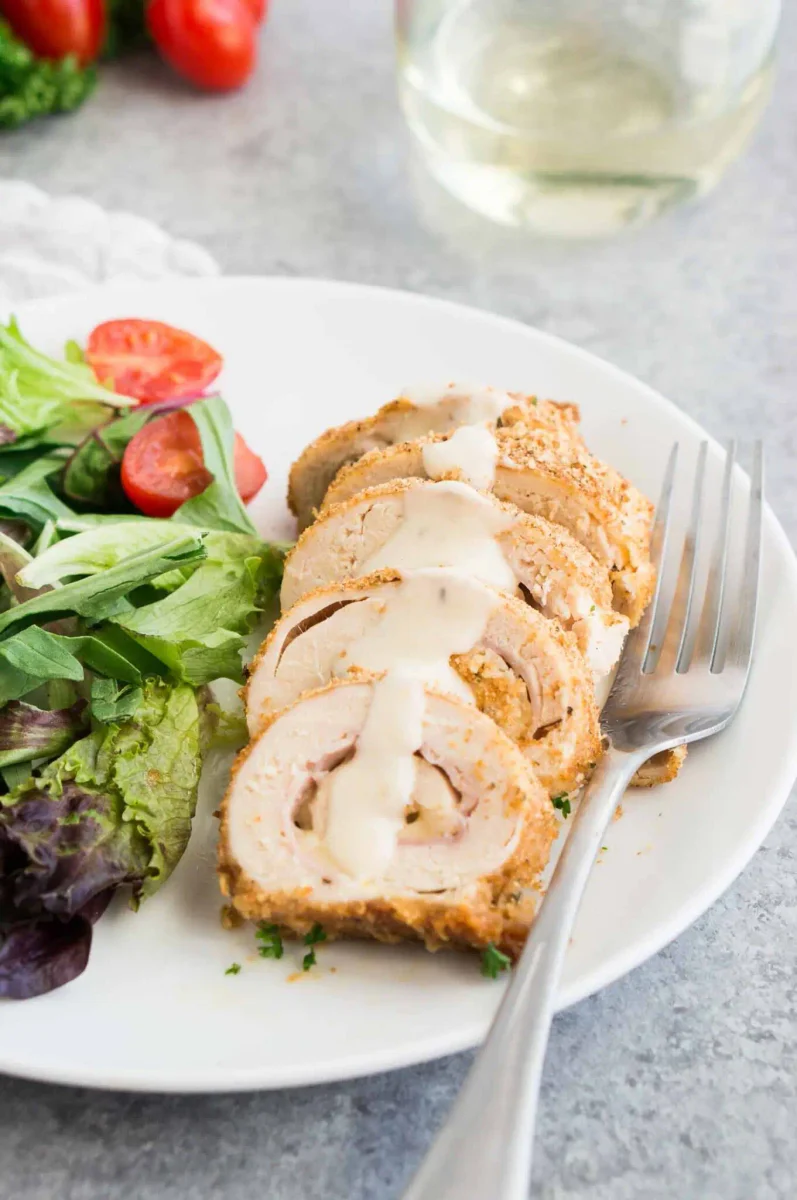
Chicken cordon bleu wraps ham and Swiss or Gruyère cheese inside chicken breast, then coats it in Parmesan breadcrumbs and bakes it until golden. A creamy Dijon sauce makes this French-inspired dish a satisfying centrepiece for a special meal that is still straightforward to prepare.
Ingredients
- 2chicken breasts, boneless and skinless, cut in half horizontally
- to tastesalt and pepper
- 4 slicesham
- 113 g (4 oz)Swiss cheese or Gruyère cheese
- 1egg
- 30 g (¼ cup)shredded Parmesan cheese
- 30 g (¼ cup)seasoned breadcrumbs, gluten-free
- ¼ teaspoonthyme
- 28 g (2 tablespoons)butter
- 16 g (2 tablespoons)flour
- 180 ml (¾ cup)milk
- 2 teaspoonsDijon mustard
- ½ teaspoonWorcestershire sauce
- 2 tablespoonsgrated Parmesan cheese
- to tastesalt and pepper
Instructions
- 1
Prepare the oven
Heat the oven to 190°C (375°F) and line a baking sheet with baking parchment.
- 2
Toast breadcrumbs
Roast the breadcrumbs for 5 minutes. Take them out and leave them to cool, then heat the oven to 204°C (400°F).
- 3
Flatten the chicken
Cover the chicken cutlets with cling film and pound them with a meat mallet until they are an even 6–13 mm (¼–½ inch) thick. Season both sides lightly with salt and pepper.
- 4
Roll with filling
Put one slice of ham and about 28 g (1 oz) of cheese on each chicken piece. Roll each one tightly and set it seam-side down.
- 5
Coat the rolls
Coat each chicken roll in the egg, then transfer it to the Parmesan breadcrumbs mixed with thyme. Turn to coat evenly.
- 6
Bake the chicken
Arrange the rolls on the prepared baking sheet and bake at 204°C (400°F) for 20–25 minutes, or until the chicken reaches 74°C (165°F).
- 7
Start the sauce
Melt the butter in a small saucepan. Add the flour and cook for 1 minute, stirring constantly.
- 8
Whisk in milk
Add the milk a little at a time, stirring after each addition until smooth. Stir in the Dijon mustard and Worcestershire sauce. Bring to the boil while whisking, then lower the heat and simmer for 1 minute.
- 9
Finish the sauce
Take the pan off the heat and stir in the grated Parmesan. Season with salt and pepper to taste, then serve the sauce over the chicken.
What is chicken cordon bleu?
Cordon bleu is a dish of meat wrapped around ham and cheese, then coated in breadcrumbs and cooked. Its name is French, and chicken is a popular take on the broader European tradition of filled, breaded cutlets.
Here, the rolled chicken is oven-baked rather than fried, with Parmesan and thyme in the coating. A creamy Dijon sauce adds a tangy finish to the savoury filling.
Nutrition and macros by portion
The nutrition label shows one serving as written: 481 calories, 45g protein, 12g carbs, 27g fat.
| Portion | Adjustment | kcal | Protein | Carbs | Fat |
|---|---|---|---|---|---|
| Lighter | Less sauce, extra vegetables | 337 kcal | 31g | 8g | 19g |
| This serving | As written | 481 kcal | 45g | 12g | 27g |
| Hungry | Larger chicken portion | 722 kcal | 68g | 18g | 41g |
The chicken provides most of the protein, while the breadcrumbs and flour contribute carbohydrates. Cheese, butter and milk account for much of the fat; pair a serving with vegetables, and add potatoes or rice if you want a more substantial plate.
Choosing the filling
Chicken: Cutting each breast horizontally makes thinner pieces that are easier to roll. Pound them to an even thickness so they cook at a similar rate.
Cheese: Swiss cheese gives a mild, nutty flavour, while Gruyère is a good alternative. Keep the filling centred and leave room at the edges to help the rolls close.
Getting an even coating
Breadcrumbs: Toasting them first dries and colours the crumbs, so keep an eye on them and let them cool before coating the chicken.
Egg: Coat each roll thoroughly so the Parmesan breadcrumb mixture has something to cling to. Set each piece seam-side down on the tray to help it stay rolled as it bakes.
Checking when it is done
Chicken: The recipe gives a baking time of 20–25 minutes, but thickness and ovens can affect how quickly the rolls cook. Check the thickest part with a food thermometer; it should reach 74°C (165°F).
Filling: Some cheese may escape as it melts, but a snug roll and an even cutlet help keep most of it inside. Let the chicken rest briefly before serving so it is easier to handle.
Making the Dijon sauce
Flour and butter: Stir them together for 1 minute to make the base of the sauce. Keep stirring so the mixture cooks evenly without catching.
Milk: Add it gradually and stir smooth after each addition to help avoid lumps. Once the sauce has simmered for 1 minute, take it off the heat before stirring in the Parmesan.
Planning the timing
The method begins by heating the oven to 190°C (375°F) to toast the breadcrumbs, then raises it to 204°C (400°F) for baking the chicken. Prepare the rolls while the crumbs cool and the oven heats to the higher temperature.
The sauce can be made while the chicken bakes. Serve as soon as the chicken is cooked and the sauce is ready.
What to serve alongside
Serve the chicken with green vegetables, such as broccoli or green beans, for freshness alongside the rich cheese and sauce. A simple salad also makes a crisp contrast.
For a more filling plate, add potatoes or rice to catch any extra Dijon sauce. Spoon the sauce over the chicken just before serving to keep the crumb coating from softening too soon.
Recipe notes & tips
- Pound the chicken between sheets of cling film to keep it from tearing.
- Let the toasted breadcrumbs cool before mixing them with the Parmesan and thyme.
- Keep the cheese away from the edges of each cutlet to make rolling easier.
- Place the rolls seam-side down on the baking sheet before they go into the oven.
- Use a thermometer to check the thickest part of the chicken for 74°C (165°F).
- Whisk continuously as you add the milk to help the sauce turn out smooth.
Variations
- Use Gruyère: Swap it for the Swiss cheese for a more pronounced, nutty flavour.
- Change the ham: Use another thinly sliced cooked ham that fits neatly over the chicken.
- Adjust the mustard: Add a little more Dijon for a sharper sauce, tasting as you go.
- Use gluten-free crumbs: Choose seasoned gluten-free breadcrumbs as specified in the recipe.
- Serve with greens: Add steamed broccoli or green beans for a fresh side.
Common mistakes to avoid
- Uneven chicken pieces: Pound the cutlets to an even thickness so they cook consistently.
- Overfilling the rolls: Keep the ham and cheese centred, with a clear edge to help seal each roll.
- Warm breadcrumbs: Let them cool before coating so the egg and crumb layers are easier to handle.
- Lumpy sauce: Add the milk in small amounts and stir smooth after each addition.
- Guessing doneness: Check the thickest section of chicken reaches 74°C (165°F).
How to store
Refrigerate leftover chicken and sauce in separate airtight containers for up to 3 days. Reheat the chicken in an oven until hot throughout, and warm the sauce gently in a saucepan, stirring it smooth.
Frequently asked questions
Can I prepare the chicken rolls ahead?
You can assemble and coat the rolls ahead, then cover and refrigerate them until ready to bake. Bake until the chicken reaches 74°C (165°F).
Can I use Gruyère instead of Swiss cheese?
Yes. The recipe lists Gruyère as an alternative to Swiss cheese.
Why are the breadcrumbs toasted first?
The method roasts them for 5 minutes before coating the chicken. Let them cool before mixing with the Parmesan and thyme.
How do I stop the rolls unravelling?
Roll the chicken tightly and place each piece seam-side down on the baking sheet. Keep the filling centred rather than letting it reach the edges.
Can I make the sauce without lumps?
Add the milk a little at a time, stirring after each addition until smooth. Whisk as it comes to the boil.
What temperature should the chicken reach?
Check the thickest part with a food thermometer; it should reach 74°C (165°F).
Cook it from the original
This recipe comes from deliciousmeetshealthy.com. Their page has the author’s own photos, notes and tips — the best place to cook it from.
Open the recipe on deliciousmeetshealthy.com