
Peruvian Chupe with Shrimp or Langoustines
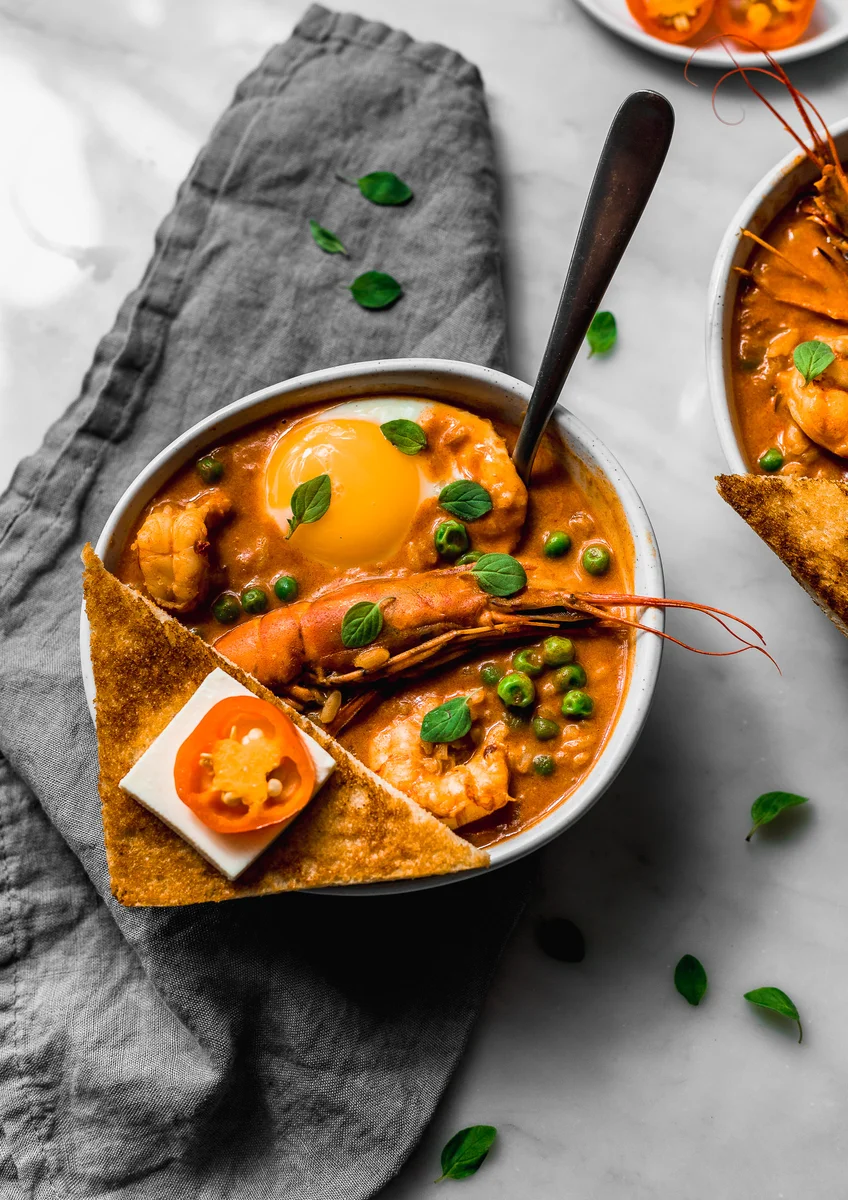
Peruvian chupe is a hearty, seafood-rich soup built on a deeply flavoured stock, with potatoes, rice, peas and evaporated milk. Making the stock from scratch takes time, but it gives the finished bowl a savoury depth that suits a special lunch or supper.
Ingredients
- 150 gcarrots, chopped into medium-sized pieces
- 150 gbrown onion, chopped into medium-sized pieces
- 150 gcelery, chopped into medium-sized pieces
- 1bay leaf
- 4 litreswater
- 500 gshrimps or langoustines
- 400 gpotatoes
- 1 tbspolive oil (or vegetable or rapeseed oil)
- 150 gred onion, cut into small cubes
- 2garlic cloves, puréed, minced or finely grated
- 1 1/2 tbsp Peruvian panca chilli paste (or 3/4 tbsp dried)Peruvian panca chilli
- 1 tbspshrimp coral (see the recipe note for a substitute)
- 1 sprigoregano, leaves only (or 1/4 tsp dried oregano)
- 4 (optional), extra to the 500 g abovewhole shrimps or langoustines
- 100 glong-grain rice
- 50 gpeas, fresh or frozen
- 50 mlevaporated milk
- to tastesalt and pepper
- to tastetoasts
- to tastequeso fresco
- to taste (optional)Peruvian yellow chilli slices
- to tastefried egg
Instructions
- 1
Simmer the vegetables
For the vegetable stock, put the carrots, brown onion, celery, bay leaf and water in a large pot. Bring to the boil over a medium heat, then lower the heat, cover and simmer for 30 minutes.
- 2
Strain the stock
Strain the stock through a colander and keep the liquid for the seafood stock. The cooked vegetables can be used to make another soup.
- 3
Prepare the seafood
Separate the heads from the tails and peel the tails. Cut shallowly along the back of each tail, remove the vein, and keep the tails and shells separate.
- 4
Sort the heads
Remove and discard the sand-filled black sac from each head. If using Peruvian shrimp, collect the coral sac from the head for the recipe; it can stain your hands red.
- 5
Rinse the heads
Rinse the heads before using them to make the seafood stock.
- 6
Toast the shells
Heat a pot over a high heat. Add the heads and shells and toast them for a few minutes, stirring constantly.
- 7
Simmer the stock
Pour in the vegetable stock and cover the pot. Reduce the heat to low and simmer for 30 minutes.
- 8
Strain the stock
Put the stock, heads and shells in a blender and pulse 3–4 times to release more flavour. Strain through a fine sieve and discard the heads and shells.
- 9
Cook the potatoes
Peel the potatoes and cut them into slices 2 cm thick. Put them in cold, well-salted water over a medium heat. Once the water boils, reduce the heat to a gentle simmer and cook until tender.
- 10
Soften the onion
Cook the red onion in the olive oil over a medium heat until translucent and sweet-smelling.
- 11
Add the aromatics
Rub the oregano leaves between your hands to release their flavour, then add them to the onion; rub dried oregano too if using. Sauté for a few seconds, add the garlic and cook for 1 minute.
- 12
Stir in the chilli
Add the shrimp coral and panca chilli and mix for 1 minute, allowing the mixture to thicken.
- 13
Reduce the stock
Add the seafood stock and simmer until it has reduced to two-thirds of its original volume. Taste it: the flavour should be concentrated enough to enjoy as soup already.
- 14
Cook the rice
Add the rice and cook for 20 minutes, stirring occasionally so it does not stick to the bottom of the pot.
- 15
Add seafood and peas
After the rice has cooked for 15 minutes, add the peeled tails and the optional whole shrimps or langoustines; they need 5 minutes to cook. After 4 minutes, add the peas and cooked potatoes for their final minute in the stock.
- 16
Finish the chupe
Stir in the evaporated milk and adjust the salt and pepper to taste.
- 17
Serve with toppings
Serve with a fried egg, toast topped with queso fresco and, if using, a slice of Peruvian yellow chilli.
What is Peruvian chupe?
Chupe is a filling Peruvian soup, often made with seafood and enriched with milk. This version builds flavour in stages, starting with a vegetable stock and then steeping toasted shrimp or langoustine shells in it.
The rice, potatoes, peas and seafood make it substantial, while the panca chilli and oregano add warmth and aroma. A fried egg and toast with queso fresco are served alongside.
Nutrition and macros by portion
The nutrition label shows one serving as written: 400 calories, 25g protein, 45g carbs, 12g fat.
| Portion | Adjustment | kcal | Protein | Carbs | Fat |
|---|---|---|---|---|---|
| Lighter | Less toast and cheese | 280 kcal | 18g | 31g | 8g |
| This serving | As written | 400 kcal | 25g | 45g | 12g |
| Hungry | Add an extra egg | 600 kcal | 38g | 68g | 18g |
The rice and potatoes provide most of the carbohydrate, while the oil and evaporated milk contribute fat; shrimp or langoustines and the optional egg provide protein. For a more balanced plate, serve a portion with a crisp salad and choose either the fried egg or extra cheese-topped toast rather than piling on every topping.
Build flavour with the stock
Vegetable base: simmering the carrots, brown onion and celery gives the stock a gentle savoury foundation. Strain it before using it with the seafood shells.
Shells and heads: toast them while stirring to bring out their flavour, then simmer them in the vegetable stock for 30 minutes. Blending briefly before straining helps extract more flavour; strain carefully through a fine sieve.
Handle the shrimp carefully
Cleaning: remove the vein from each peeled tail and discard the black sac in the head. If using Peruvian shrimp, save the coral from the head for the soup.
Timing: keep the tails aside until the rice has cooked for 15 minutes, then cook them for 5 minutes. This helps prevent the seafood from becoming tough.
Get the potatoes tender
Start the potato slices in cold, well-salted water, then bring it to the boil and lower it to a gentle simmer. Cook until tender before adding them to the chupe.
Their final minute in the soup warms them through without asking them to cook from raw in the broth. Cut the slices evenly so they reach tenderness at about the same time.
Mind the rice and reduction
Concentrate first: simmer the seafood stock until it reaches two-thirds of its original volume, then taste it before adding the rice. The finished broth should already taste full and savoury.
Rice: cook it for 20 minutes, stirring now and then to stop it sticking. Add the seafood at the 15-minute mark, then the peas and potatoes after another 4 minutes.
Finish gently
Evaporated milk: stir it in at the end, once the seafood and vegetables are cooked. Taste and adjust the salt and pepper before serving.
The recipe does not specify how to fry the egg or prepare the toast, so make those while the chupe finishes. Serve them alongside, with queso fresco and optional yellow chilli.
Serve it as a meal
The rice and potatoes make this soup filling on its own, while the shrimp or langoustines contribute savoury flavour and protein. The fried egg and cheese-topped toast make the meal more substantial.
For a lighter accompaniment, serve a simple crisp salad alongside instead of adding extra toast. Keep the toppings separate so each person can choose what to add.
Recipe notes & tips
- Keep the vegetable stock for the seafood stock after straining it.
- Stir constantly while toasting the heads and shells to help them brown evenly.
- Use a fine sieve to catch shell fragments after blending the stock.
- Rub the oregano between your hands just before adding it to the pan.
- Check the stock's flavour after it reduces and before adding the rice.
- Add the seafood only for its final 5 minutes of cooking.
Variations
- Use langoustines: swap them for the shrimp, following the same shell-stock and cooking steps.
- Use dried oregano: replace the fresh sprig with 1/4 tsp dried oregano.
- Choose another oil: use vegetable or rapeseed oil instead of olive oil.
- Add yellow chilli: serve with slices for a sharper, spicier finish.
- Skip the optional whole seafood: use the peeled tails from the 500 g instead.
Common mistakes to avoid
- Boiling the stock hard: lower the heat after it boils so it simmers gently for the stated 30 minutes.
- Leaving the vein in: make a shallow cut along the tail's back and remove it before cooking.
- Discarding the coral: collect it from Peruvian shrimp heads if using it in the recipe.
- Blending too long: pulse the shells and stock only 3–4 times before straining.
- Adding seafood too early: wait until the rice has cooked for 15 minutes, then give the seafood 5 minutes.
- Skipping the stirring: stir the rice occasionally to stop it sticking to the base of the pot.
How to store
Refrigerate leftovers in a covered container and use within 2 days. Reheat gently in a pan until piping hot, stirring carefully; the rice will continue to absorb liquid, so add a splash of water if the chupe has thickened.
Frequently asked questions
Can I use frozen shrimp?
Yes, thaw them safely and drain them before peeling and preparing them. The recipe relies on the heads and shells for stock, so peeled shrimp alone will give a less rich seafood base.
Can I make the stock ahead?
Yes. Make and strain the stock ahead, cool it promptly and refrigerate it in a covered container. Prepare the rice, seafood and final soup close to serving.
What if I cannot find shrimp coral?
The recipe refers to a note for a substitute, but that note is not included here. You can leave the coral out rather than guessing at a replacement.
Can I use dried oregano?
Yes. Use 1/4 tsp in place of the fresh sprig, rubbing it between your hands before adding it as directed.
How do I know the shrimp are cooked?
They need 5 minutes in the simmering soup, as given in the method. Avoid extending the cooking time, which can make them tough.
What should I serve with chupe?
Serve it with a fried egg and toast topped with queso fresco. Peruvian yellow chilli slices are an optional garnish.
Cook it from the original
This recipe comes from cravingsjournal.com. Their page has the author’s own photos, notes and tips — the best place to cook it from.
Open the recipe on cravingsjournal.com