
Olive, Caper and Tomato Pasta
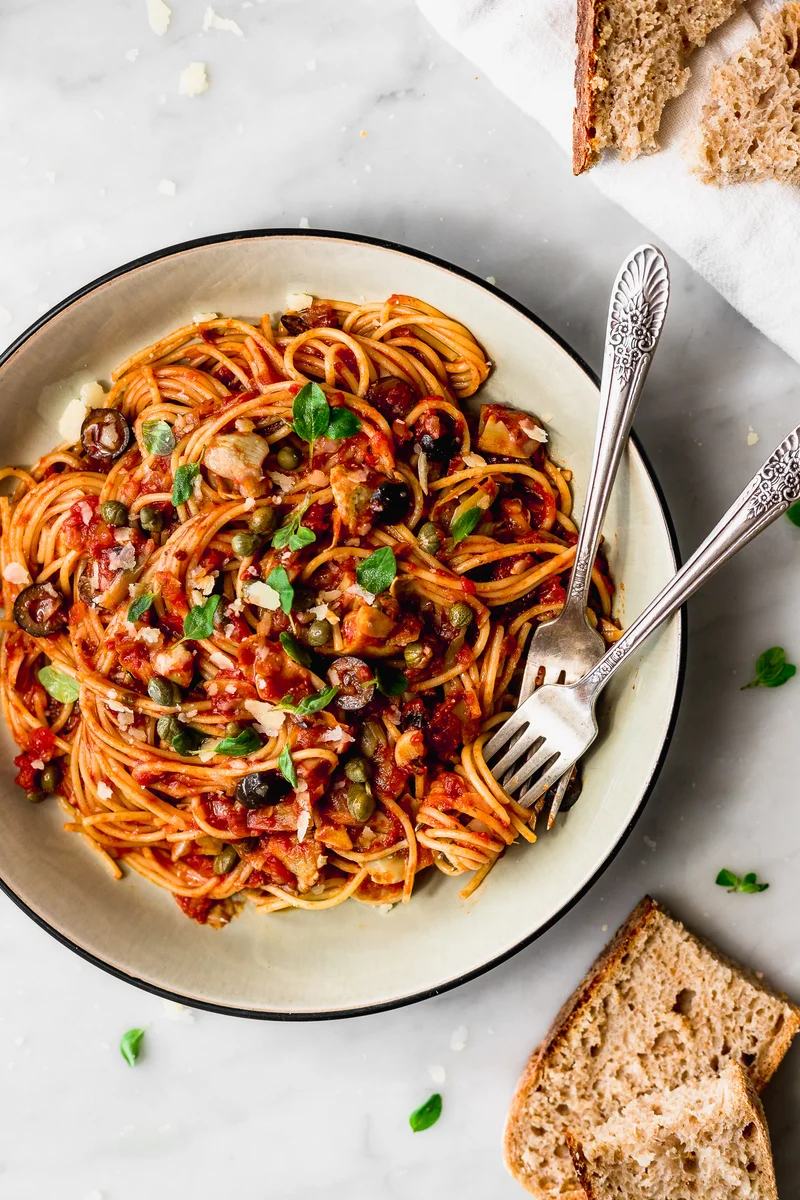
Spaghetti is tossed with a savoury tomato sauce featuring black olives, capers and artichoke hearts. It makes a flavour-packed meal from pantry staples, with white wine adding depth to the sauce.
Ingredients
- 2 tbspolive oil
- 1/2 mediumbrown onion, diced small
- 1bay leaf
- 2 clovesgarlic, thinly sliced
- 8canned artichoke hearts
- 2 tbsptomato paste
- 100 mlwhite wine
- 300 gpassata
- 100 gblack olives, sliced
- to tastesalt and pepper
- 40 gcapers
- 300 gspaghetti, or another pasta of your choice
Instructions
- 1
Start the sauce
Set a pan over medium heat and add the olive oil, onion and bay leaf. Cook until the onion is translucent and smells sweet.
- 2
Cook the garlic
Add the sliced garlic and cook for 1 minute.
- 3
Add artichokes
Stir in the artichoke hearts and cook for 1 minute.
- 4
Reduce the wine
Add the tomato paste and white wine, then stir. Let the liquid evaporate completely.
- 5
Thicken the sauce
Add the passata and sliced olives. Turn the heat down to low and cook until the sauce thickens, about 5 minutes.
- 6
Season the sauce
Taste and adjust the salt and pepper.
- 7
Stir in capers
Just before serving, add the capers and mix them through the sauce.
- 8
Cook the pasta
Boil the pasta in plenty of salted water. It should take about 7–8 minutes to reach al dente; check the packet instructions as well.
- 9
Combine and serve
Lift the pasta out of the water and transfer it to the pan with the sauce. Toss together and serve.
What is olive, caper and tomato pasta?
This is a tomato-based pasta dish built around olives, capers and artichoke hearts, ingredients often associated with Mediterranean cooking. The recipe pairs their salty, tangy flavours with sweet onion and passata.
The combination works because the sauce is cooked briefly while the pasta boils, so the meal comes together in about 35 minutes without a long simmer.
Nutrition and macros by portion
The nutrition label shows one serving as written: 600 calories, 19g protein, 93g carbs, 18g fat.
| Portion | Adjustment | kcal | Protein | Carbs | Fat |
|---|---|---|---|---|---|
| Lighter | Smaller pasta portion | 420 kcal | 13g | 65g | 13g |
| This serving | As written | 600 kcal | 19g | 93g | 18g |
| Hungry | Larger pasta portion | 900 kcal | 29g | 140g | 27g |
Most of the carbohydrates come from the spaghetti, while olive oil and olives contribute much of the fat; the pasta and artichokes provide some protein, though this is not a particularly protein-rich meal. Serve it with a generous green salad or add a protein-rich side such as beans to balance the plate.
Building the sauce
Onion and bay leaf: cooking the onion until translucent softens its flavour and gives the oil a savoury base. Add the garlic after that, as it needs only a minute and can scorch if left in the pan too long.
Tomato paste and wine: stir them together and let the wine evaporate completely before adding passata. This concentrates the sauce rather than leaving it thin and wine-forward.
Choosing the ingredients
Artichokes: canned hearts are convenient here; drain them before adding so excess liquid does not loosen the sauce. Keep them in generous pieces for a distinct bite.
Olives and capers: both bring plenty of savoury, briny flavour. Add the capers at the end, as the method directs, to keep their flavour bright.
Getting the texture right
Sauce: after adding passata and olives, keep the heat low and cook for about 5 minutes, until it has thickened. A gentle simmer is enough; vigorous boiling can make it splatter.
Pasta: cook until al dente, using the stated 7–8 minutes as a guide and checking the pasta itself. It should be cooked through but still have a little firmness.
Timing the pasta and sauce
Start the sauce first, then bring the pasta water to the boil while it cooks. The sauce can finish thickening as the pasta cooks, helping both parts be ready around the same time.
Transfer the pasta straight from the water to the sauce, as instructed. Toss it well so the sauce coats the strands.
What to serve alongside
A crisp green salad or simply dressed leaves make a fresh contrast to the salty, rich sauce. You could also serve bread at the table to scoop up any sauce left on the plate.
The pasta is substantial on its own, so keep additional sides simple and avoid adding more salty components if the olives and capers are particularly briny.
Recipe notes & tips
- Drain the canned artichoke hearts well before adding them to the pan.
- Taste the sauce before adding much salt, since olives and capers can be salty.
- Slice the olives evenly so they distribute through the sauce.
- Keep the sauce at a gentle simmer while it thickens.
- Check the pasta a minute before the suggested cooking time is up.
Variations
- Use another pasta: Choose a shape such as penne or fusilli that holds the tomato sauce.
- Add chilli: Stir in a pinch of chilli flakes with the garlic for gentle heat.
- Include fresh herbs: Finish with chopped parsley or basil for a fresh note.
- Use green olives: Swap them for the black olives for a sharper, tangier flavour.
- Add beans: Stir in drained butter beans near the end for a more filling variation.
Common mistakes to avoid
- Burning the garlic: Add it only after the onion is softened and cook it for just 1 minute.
- Leaving wine in the sauce: Wait for the liquid to evaporate completely before adding passata.
- Overcooking the sauce: Keep it on low heat and stop when it has thickened, after about 5 minutes.
- Overcooking the pasta: Check it around 7 minutes and drain when it is al dente.
- Oversalting: Taste after adding olives and capers before adjusting the seasoning.
How to store
Refrigerate leftovers in a covered container for up to 3 days. Reheat gently in a pan or microwave, adding a splash of water if the pasta seems dry.
Frequently asked questions
Can I use a different type of pasta?
Yes. The recipe allows for another pasta of your choice; use the packet timing as a guide and cook it until al dente.
Do I need to rinse the capers?
The recipe does not specify rinsing them. If yours are especially salty, rinse and drain them before adding, then taste the sauce before seasoning.
Can I leave out the white wine?
You can omit it, though the sauce will lose some of its depth. Add the passata after the tomato paste and continue with the method.
How do I know when the sauce is ready?
After about 5 minutes on low heat, it should look thicker than when the passata was first added. Keep it at a gentle simmer.
Can I make the sauce ahead?
Yes. Make the sauce ahead and refrigerate it, then reheat it gently while the pasta cooks. Add the capers near the end.
Cook it from the original
This recipe comes from cravingsjournal.com. Their page has the author’s own photos, notes and tips — the best place to cook it from.
Open the recipe on cravingsjournal.com