
Waakye
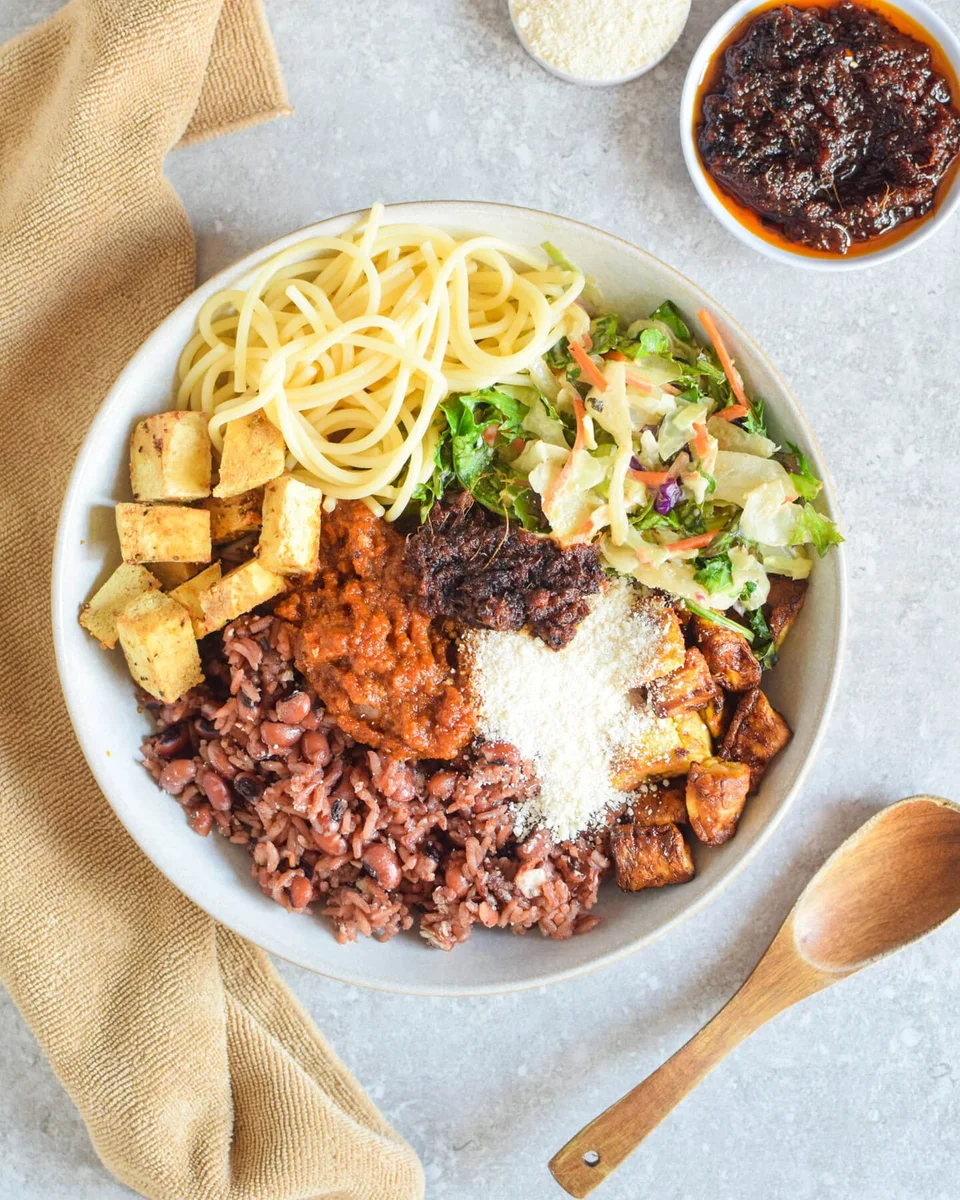
Waakye is a Ghanaian one-pot dish of rice and beans, coloured and flavoured with sorghum leaves or stems. This version cooks the beans first, then simmers them with rice until tender and evenly tinted.
Ingredients
- 1 cupdried black-eyed peas
- 3 cupsdried white rice
- 6¼ cupswater, divided
- A pinchsalt
- ½ tsp if using sorghum stems; about 2 tsp without thembicarbonate of soda
- 6sorghum stems
- 2 tbsp (optional)coconut oil
Instructions
- 1
Soak the beans
Cover the black-eyed peas with water and leave them to soak overnight.
- 2
Rinse the beans
The next day, wash and drain the soaked peas.
- 3
Start the beans
For the version with sorghum stems, put the beans, sorghum stems and 4 cups of water in a large pot. Cook over medium-low heat, leaving the lid slightly ajar to help prevent the water boiling over.
- 4
Add bicarbonate
After about 10 minutes, stir in ½ tsp of bicarbonate of soda and cook the beans for another 10 minutes.
- 5
Add the rice
Add the rice and the remaining 2¼ cups of water, then mix evenly.
- 6
Bring to boil
Let the pot come to a boil.
- 7
Cook gently
Turn the heat to low, cover the pot with aluminium foil and cook for about 30 minutes.
- 8
Check the rice
Check how well the rice has cooked. Add coconut oil if you like, cover the pot again and cook until the rice is done, about another 15–20 minutes.
- 9
Cook without stems
For the version without sorghum stems, cook the soaked beans with 4 cups of water over medium-low heat for 10 minutes.
- 10
Add bicarbonate
After 10 minutes, stir in about 2 tsp of bicarbonate of soda and cook for another 10 minutes.
- 11
Add the rice
Add the rice and the remaining 2¼ cups of water, then mix evenly.
- 12
Bring to boil
Let the pot come to a boil.
- 13
Cook gently
Turn the heat to low, cover the pot with aluminium foil and cook for about 30 minutes.
- 14
Check the rice
Check how well the rice has cooked. Add coconut oil if you like, cover the pot again and cook until the rice is done, about another 15–20 minutes.
What is waakye?
Waakye is a Ghanaian rice-and-bean dish, traditionally coloured with waakye leaves or sorghum stems. It is often served as part of a larger meal, with accompaniments chosen to taste.
Here, the beans begin cooking before the rice, giving them time to soften. The rice then cooks in the same pot and takes on colour from the stems; bicarbonate of soda is used in both versions.
Nutrition and macros by portion
The nutrition label shows one serving as written: 365 calories, 10g protein, 71g carbs, 4g fat.
| Portion | Adjustment | kcal | Protein | Carbs | Fat |
|---|---|---|---|---|---|
| Lighter | Skip the coconut oil | 255 kcal | 7g | 50g | 3g |
| This serving | As written | 365 kcal | 10g | 71g | 4g |
| Hungry | Serve a larger portion | 548 kcal | 15g | 107g | 6g |
Most of each serving’s energy and carbohydrates come from the rice, while the black-eyed peas contribute protein, fibre and additional carbohydrates. Coconut oil adds fat if used; serve a portion with vegetables and a protein-rich side for a more balanced plate.
Choosing the ingredients
Sorghum stems: They provide the characteristic colour and are used with a smaller amount of bicarbonate of soda. If you leave them out, the recipe calls for about 2 tsp of bicarbonate instead.
Rice and beans: Dried black-eyed peas and white rice form the hearty base. Soaking the peas overnight gives them a head start before the rice goes into the pot.
Getting the beans ready
Soaking: Leave the beans in water overnight, then wash and drain them before cooking. This is the longest hands-off part of the recipe.
First simmer: Start the beans in 4 cups of water over medium-low heat. Keep the lid slightly ajar as directed, since the water can boil over.
Cooking the rice evenly
Mixing: Once the beans have had their first 20 minutes of cooking, add the rice and remaining water. Stir so the grains and beans are distributed through the pot.
Low heat: After the mixture boils, cover it with aluminium foil and cook on low. The foil helps keep the pot covered while the rice absorbs the liquid.
Checking for doneness
Texture: Start checking after the first 30 minutes of covered cooking. The rice should be cooked through, and the beans should be tender.
Finishing: If the rice needs more time, cover the pot again and continue cooking for about 15–20 minutes. The recipe gives this as an approximate finishing time, so check the grains rather than relying only on the clock.
Serving waakye
The rice and beans can be served as the centre of a meal, with vegetables or a protein alongside. A fresh, crisp accompaniment can balance the soft, starchy texture.
The optional coconut oil is stirred in near the end of cooking. Leave it out for a less rich result, or include it for added aroma and a fuller mouthfeel.
Recipe notes & tips
- Soak the black-eyed peas overnight so they are ready to cook the next day.
- Keep the pot slightly ajar during the initial bean cooking to reduce the chance of water boiling over.
- Use ½ tsp of bicarbonate of soda with the sorghum stems, or about 2 tsp if cooking without them.
- Mix the rice through the beans and water evenly before bringing the pot to a boil.
- Check the rice after 30 minutes on low, then give it the stated additional 15–20 minutes if needed.
Variations
- Use sorghum stems: Cook them with the beans for the coloured version and use ½ tsp of bicarbonate of soda.
- Leave out the stems: Use about 2 tsp of bicarbonate of soda instead.
- Add coconut oil: Stir it in when checking the rice for a richer finish.
- Serve with vegetables: Add a fresh or cooked vegetable side to round out the meal.
Common mistakes to avoid
- Skipping the soak: The beans need their overnight soak before the cooking stages begin.
- Closing the lid fully: Leave a crack during the initial bean simmer to help prevent boiling over.
- Using the wrong bicarbonate amount: Use ½ tsp with sorghum stems and about 2 tsp without them.
- Cooking on high after boiling: Lower the heat before covering the pot so the rice cooks gently.
- Stopping by the clock: Check the rice after 30 minutes and continue cooking until it is done.
How to store
Refrigerate leftovers in a covered container and use within 3–4 days. Reheat until piping hot, adding a splash of water if the rice has dried out.
Frequently asked questions
Can I make waakye without sorghum stems?
Yes. The recipe gives a stem-free method using about 2 tsp of bicarbonate of soda instead of ½ tsp.
Why do the beans need to soak overnight?
The recipe calls for an overnight soak before they are cooked. Drain and wash them the next day before starting.
When should I add the rice?
Add it after the beans have cooked for 20 minutes in total: 10 minutes before the bicarbonate is added, then another 10 minutes afterwards.
How do I know when the waakye is done?
Check the rice after about 30 minutes on low. If it is not cooked through, cover the pot again and cook for another 15–20 minutes, checking for tenderness.
Is the coconut oil essential?
No. It is optional and is added when you check the rice near the end of cooking.
Cook it from the original
This recipe comes from eatwithafia.com. Their page has the author’s own photos, notes and tips — the best place to cook it from.
Open the recipe on eatwithafia.com