
Beef and barley stew
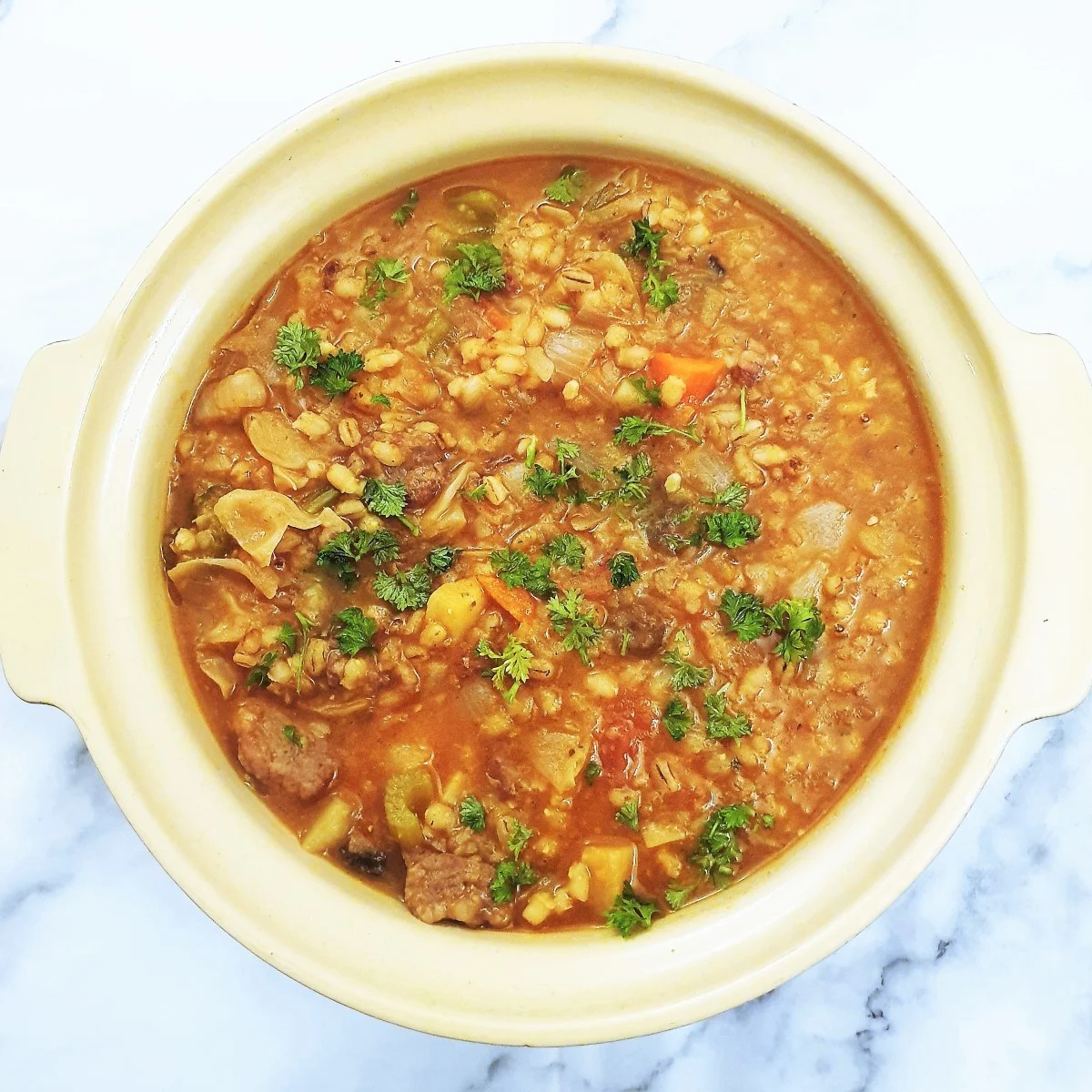
This hearty British-style beef and barley stew combines tender beef, vegetables and pearl barley in a warming, substantial bowl. A pressure cooker helps bring it together in about an hour, making it a practical choice for a comforting batch meal.
Ingredients
- 450 g (1 lb)stewing beef (chuck or diced topside)
- 150 g (¾ cup)barley
- 75 g (1 cup)white cabbage, shredded
- 160 g (1 cup)onions, diced
- 450 g (1 lb)potatoes, diced, plus 1 medium potato, grated
- 60 g (½ cup)carrots, diced
- 50 g (½ cup)celery, diced
- 75 g (½ cup)parsnips, diced
- 1 teaspoondried thyme
- 1 teaspoongarlic, fresh or from a jar
- 1 teaspoonpaprika
- 1 tablespoonflour
- 1 tablespoontomato purée
- 2 tablespoonsWorcestershire sauce
- 30 ml (2 tablespoons)sunflower or olive oil, for frying the meat and onions
- 1 beef stock cube, dissolved in 360 ml (1½ cups) boiling waterbeef stock
- ½ teaspoonsalt, or to taste
- ¼ teaspoonground black pepper
Instructions
- 1
Prepare the beef
Trim off any visible fat and cut the beef into bite-sized pieces. Season the flour with salt and paprika, then coat the beef in it.
- 2
Chop the vegetables
Peel the onions, carrots and parsnips, then cut them into pieces about 1 cm (½ inch) across.
- 3
Prepare the potatoes
Peel the potatoes and cut them into 2 cm (1 inch) pieces. Set one medium potato aside and coarsely grate it.
- 4
Prepare the cabbage
Shred the cabbage and cut the celery into large dice.
- 5
Mix the stock
Dissolve the stock cube in 240 ml (1 cup) of water, then stir in the tomato purée and Worcestershire sauce.
- 6
Brown the beef
Heat the oil in a frying pan and fry the beef until browned on all sides. Lift it out of the pan and set it aside.
- 7
Soften the vegetables
Add a little more oil if needed, then fry the garlic, onions, celery and carrots until they begin to soften without browning. Stir regularly, scraping up any beef stuck to the pan.
- 8
Load the cooker
Transfer the beef to the pressure cooker and add the barley, cabbage and grated potato.
- 9
Add the stock
Pour in the prepared stock mixture and stir well.
- 10
Season the stew
Add the thyme and black pepper.
- 11
Pressure cook
Secure the lid, select the stew setting and cook for 30 minutes.
- 12
Release the steam
Release the steam, open the pressure cooker and add the remaining vegetables.
- 13
Finish cooking
Replace the lid, select the stew setting and cook for a further 10 minutes.
What is beef and barley stew?
Beef and barley stew is a filling, slow-cooked-style dish built around beef, grains and vegetables. Barley has long been used in British cooking, especially in soups and stews, where it thickens the liquid and adds a pleasantly chewy texture.
This version combines the beef with familiar root vegetables, cabbage and a pressure-cooker method. Grated potato helps give the broth a thicker, more cohesive finish.
Nutrition and macros by portion
The nutrition label shows one serving as written: 531 calories, 42g protein, 56g carbs, 16g fat.
| Portion | Adjustment | kcal | Protein | Carbs | Fat |
|---|---|---|---|---|---|
| Lighter | Use less oil | 372 kcal | 29g | 39g | 11g |
| This serving | As written | 531 kcal | 42g | 56g | 16g |
| Hungry | Serve a larger bowl | 797 kcal | 63g | 84g | 24g |
The potatoes, barley and vegetables provide most of the carbohydrates, while the beef is the main source of protein. The oil contributes much of the fat. For a balanced plate, serve a measured bowl with extra greens on the side.
The ingredients that build flavour
Beef: Chuck or topside both suit a stew, and browning the pieces first adds savoury depth to the cooking juices.
Barley: It brings a tender, lightly chewy bite and absorbs some of the stock as it cooks.
Vegetables: Onion, carrot, celery and parsnip make a sweet, savoury base, while cabbage adds a softer, earthy note.
Why brown the beef first?
Browning the beef before pressure cooking gives the meat a deeper flavour. Avoid crowding the pan if the pieces are not browning evenly; work in batches if needed.
When softening the vegetables, stir and scrape the pan so the browned bits loosen rather than burn. The recipe asks for the vegetables to soften without taking on colour.
Getting the texture right
Grated potato breaks down more quickly than the diced pieces, helping thicken the broth. Keep the diced potato pieces fairly even so they cook at a similar rate.
The barley should be tender but still have a little chew, and the beef should be easy to cut with a spoon. Pressure cookers can vary, so check the texture after the stated cooking time.
Two stages in the pressure cooker
The first 30-minute cook brings the beef and barley along with the cabbage and grated potato. The remaining vegetables go in after the steam is released, followed by another 10 minutes of cooking.
Follow your pressure cooker's instructions when releasing steam and opening the lid. Do not try to open it while it remains pressurised.
What to serve with it
This stew is substantial enough to serve on its own, with the barley and potatoes providing plenty of body. For a fresher contrast, add a simple green salad or a side of steamed greens.
If you like bread with stew, serve a modest piece alongside for dipping into the broth.
Recipe notes & tips
- Cut the beef and vegetables into even-sized pieces so they cook consistently.
- Brown the beef in batches if necessary to avoid steaming it in a crowded pan.
- Stir the frying vegetables often and keep them from browning, as directed.
- Coarsely grate the potato so it can soften into the broth during cooking.
- Check that the cooker is fully depressurised before opening the lid.
- Taste the stew before serving and adjust the salt if needed.
Variations
- Herb change: Swap the thyme for dried rosemary for a different savoury note.
- More greens: Add extra shredded cabbage at the second cooking stage.
- Peppery finish: Add more ground black pepper to taste before serving.
- Oil choice: Use either sunflower oil or olive oil for frying, as listed.
- Chunkier texture: Keep the diced vegetables in larger, even pieces.
Common mistakes to avoid
- Crowding the pan: The beef may steam instead of brown; fry it in batches if needed.
- Browning the vegetables: They can take on a stronger, more toasted flavour; stir and cook only until softened.
- Uneven chopping: Pieces may cook at different rates; aim for similar sizes, especially for the potatoes.
- Opening under pressure: The lid may not be safe to open; release the steam fully first.
- Skipping the grated potato: The broth may be less thick; include the reserved grated potato with the barley and cabbage.
How to store
Cool leftovers promptly and store them in a covered container in the fridge for up to 3 days. Reheat gently in a saucepan until steaming hot throughout, stirring occasionally; add a splash of water if the stew has thickened.
Frequently asked questions
Can I use pearl barley?
Pearl barley is suitable for this stew. Follow the recipe's stated cooking times, then check that the barley is tender to your liking.
Can I make this without a pressure cooker?
This method is written for a pressure cooker, so a hob version will need different cooking times and enough liquid to simmer the beef and barley until tender. Use a suitable lidded pot and check the stew as it cooks.
Why is one potato grated?
The grated potato softens into the cooking liquid and helps give the stew a thicker texture, while the diced potato remains in pieces.
When do the remaining vegetables go in?
They are added after the first 30-minute pressure-cooking stage, once the steam has been released. The stew then cooks under pressure for another 10 minutes.
Can I prepare the vegetables ahead?
Yes. Chop them ahead and keep them covered in the fridge until you are ready to cook. Keep the grated potato separate and grate it close to cooking if convenient.
Cook it from the original
This recipe comes from foodleclub.com. Their page has the author’s own photos, notes and tips — the best place to cook it from.
Open the recipe on foodleclub.com