
Creamy pan-fried pork with pears and onions
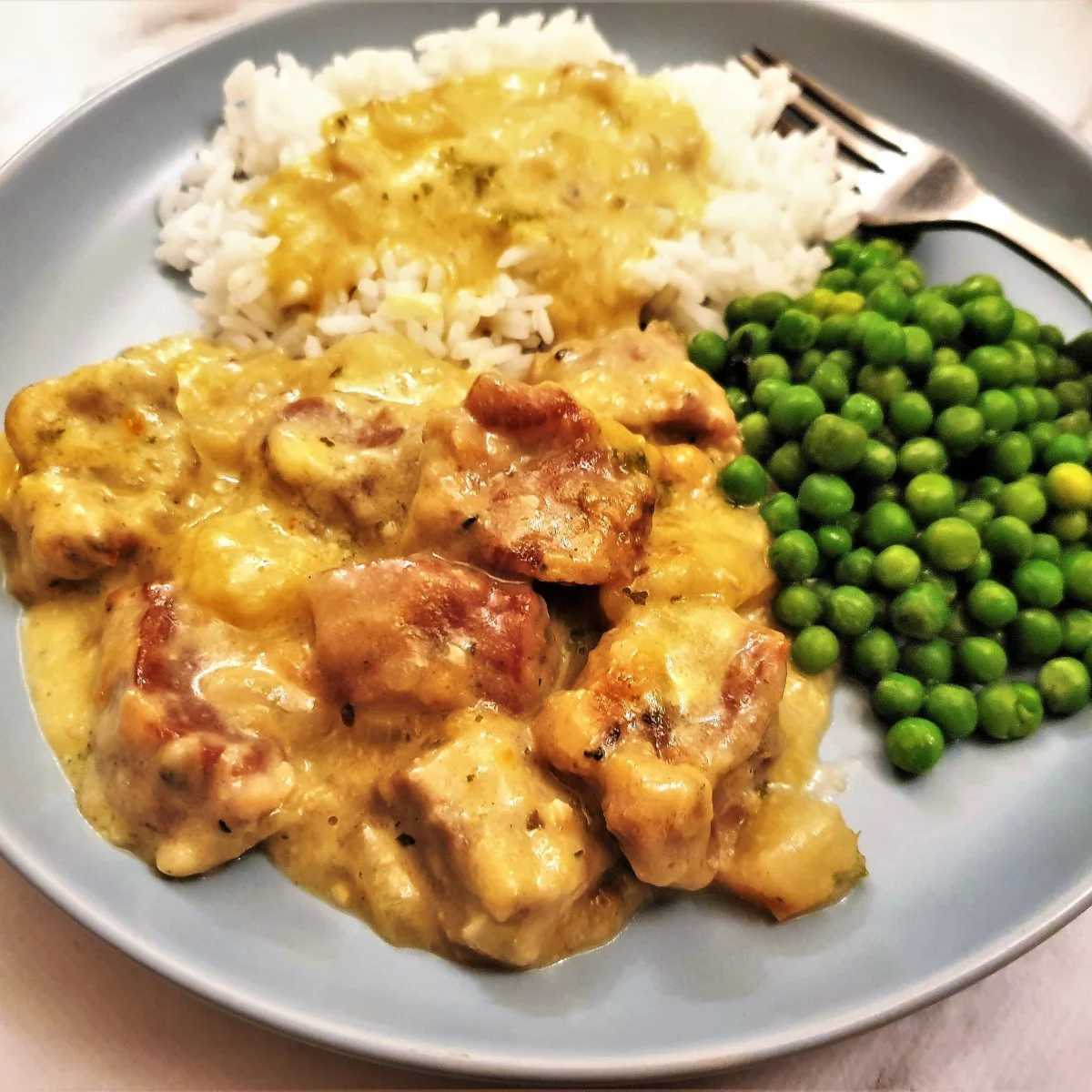
Tender sage-coated pork is browned in a pan, then simmered with onions, pears and a creamy stock-based sauce. It makes a quick, comforting supper with a sweet-fruity twist, especially served with rice and vegetables.
Ingredients
- 570 g (1 1/4 lb)pork leg steaks, cubed
- 1 largeonion, finely sliced
- 2 mediumpears, peeled and roughly chopped
- 120 ml (1/2 cup)single or double cream
- 2 vegetable stock cubes dissolved in 475 ml (2 cups) boiling watervegetable stock
- 3 tablespoonsflour
- 1 teaspoondried sage
- 1 teaspooncrushed garlic
- 1/2 teaspoon, or to tastesalt
- 2–3 tablespoonssunflower oil, for frying
Instructions
- 1
Trim the pork
Cut the pork into bite-sized pieces, removing any excess fat and sinews.
- 2
Season the pork
Put the pork in a bowl with half the flour, the dried sage and the salt. Mix well to coat, then leave it while you prepare the other ingredients.
- 3
Prepare the produce
Peel the onion and pears. Slice the onion thinly and cut the pears into small chunks; set them aside.
- 4
Mix the stock
Dissolve the 2 stock cubes in 475 ml (2 cups) of boiling water and set aside.
- 5
Brown the pork
Heat 2 tablespoons of oil in a large frying pan over a medium heat. Fry the pork in batches, stirring as it cooks so it browns on all sides.
- 6
Set meat aside
Transfer the browned pork to a plate while you cook the onions.
- 7
Soften the onions
Add the onion and garlic to the same pan and lower the heat. Sauté for about 5 minutes, until the onion is translucent and beginning to brown; add a little more oil if needed.
- 8
Stir in flour
Once the onion has softened, stir in the remaining flour, breaking up any lumps.
- 9
Thicken the stock
Pour in the stock and keep stirring until it begins to thicken.
- 10
Simmer the pork
Return the pork to the pan, cover with a lid and simmer for 10 minutes.
- 11
Add the pears
Add the pears and cover the pan again. Simmer for a further 10 minutes. If the sauce is too thin, remove the lid for the final 5 minutes.
- 12
Finish the sauce
Stir in the cream, taste the sauce and adjust the seasoning if needed.
- 13
Serve the supper
Serve with rice and a side of your favourite vegetables.
What is pan-fried pork with pears?
This is a British-style pork supper built around browned pieces of meat and a pan gravy, with pears bringing a gentle sweetness. Pork and fruit are a familiar pairing in British cooking, and here the pears soften into the sauce rather than being served separately.
Sage gives the flour coating a savoury, aromatic note, while onion, stock and cream make the sauce hearty. The method keeps everything in one pan after the pork is browned, making it practical for a weeknight.
Nutrition and macros by portion
The nutrition label shows one serving as written: 379 calories, 29g protein, 24g carbs, 19g fat.
| Portion | Adjustment | kcal | Protein | Carbs | Fat |
|---|---|---|---|---|---|
| Lighter | Use single cream, less oil | 265 kcal | 20g | 17g | 14g |
| This serving | As written | 379 kcal | 29g | 24g | 19g |
| Hungry | Serve with extra rice | 569 kcal | 43g | 35g | 29g |
The pork supplies most of the protein, while the flour and rice served alongside contribute carbohydrates. Cream and sunflower oil provide much of the fat; pair a measured serving with plenty of vegetables for a balanced plate.
Why coat the pork in sage flour
Flour coating: Half the flour clings to the pork along with the sage and salt, helping the pieces brown and giving the finished sauce a little more body.
Batch frying: Cook the pork in batches so the pieces have room to brown rather than releasing moisture and steaming. Keep the heat at medium and turn the pieces for colour on all sides.
Building the onion gravy
Soft onions: Give the sliced onion and garlic about 5 minutes over a lower heat. The onion should turn translucent and begin to brown before you add the remaining flour.
Smooth sauce: Stir the flour into the onion carefully, then add the stock while stirring. This gradual mixing helps prevent floury lumps and lets the stock thicken before the pork goes back in.
When the pork and pears are ready
Pork simmer: After 10 minutes covered in the stock, the pork has time to cook through and absorb some of the sauce. Keep the simmer gentle rather than letting the pan boil vigorously.
Pear texture: The pears simmer for a further 10 minutes, becoming tender while retaining some shape. If the sauce seems thin, remove the lid for the final 5 minutes as directed.
Choosing pears and cream
Pears: Use ripe but still-firm pears so they soften without disappearing completely into the sauce. Peel them and cut them into small chunks for even cooking.
Cream: Single cream gives a lighter, thinner finish, while double cream makes the sauce richer. Stir it in at the end, after the simmering, and avoid a prolonged boil.
What to serve with it
Rice: Serve the pork and sauce over rice or alongside it, so the grains catch the creamy gravy.
Vegetables: Add a simple side of your preferred vegetables. Green vegetables or lightly cooked carrots bring colour and contrast to the soft pork, pears and sauce.
Recipe notes & tips
- Pat the pork dry before coating it if the surface is wet, so it browns more readily.
- Brown the pork in batches and add a little more oil only if the pan needs it.
- Stir continuously as you add the stock to help keep the gravy smooth.
- Taste the sauce after adding the cream before adjusting the salt, as the stock cubes are already seasoned.
- Cut the pears into similarly sized chunks so they soften at roughly the same rate.
Variations
- Add thyme: Use a little thyme alongside the sage for another savoury herbal note.
- Use apple: Swap the pears for peeled, chopped apple for a different fruit pairing.
- Add mustard: Stir a small spoonful of mustard into the sauce at the end for a sharper finish.
- Choose double cream: Use double cream for a richer, more substantial sauce.
- Serve with mash: Replace rice with mashed potatoes to catch the gravy.
Common mistakes to avoid
- Crowding the pan: The pork can steam instead of brown; fry it in batches.
- High heat for onions: They may scorch before softening; lower the heat and give them about 5 minutes.
- Adding flour in a clump: It can leave lumps in the gravy; stir it evenly into the softened onion first.
- Pouring in stock without stirring: Flour may settle into lumps; add the stock while stirring.
- Overcooking the pears: They can lose their shape; simmer them for the specified further 10 minutes and check their tenderness.
How to store
Cool leftovers promptly and store them in a covered container in the fridge for up to 2 days. Reheat gently in a pan until piping hot throughout, adding a splash of water if the sauce has thickened.
Frequently asked questions
Can I use pork loin instead of pork leg steaks?
Yes, cut pork loin into bite-sized pieces and follow the same method. Check that it is cooked through during the simmering stage, as the exact timing can vary with the size of the pieces.
Can I make the sauce with single cream?
Yes. Single cream is listed as an option and will give a lighter, thinner sauce than double cream.
How can I tell when the pork is cooked?
Cut into one of the larger pieces to check that it is cooked through, with no raw-looking centre. Keep the pan at a gentle simmer while it cooks.
What should I do if the gravy is too thin?
Remove the lid for the final 5 minutes of simmering, as the method suggests, so some liquid can evaporate.
Can I prepare the ingredients ahead?
You can measure out the flour, sage and stock in advance. Peel and cut the pears close to cooking time to help prevent them discolouring.
Cook it from the original
This recipe comes from foodleclub.com. Their page has the author’s own photos, notes and tips — the best place to cook it from.
Open the recipe on foodleclub.com