
Buttery garlic naan bread with 2 ingredient dough
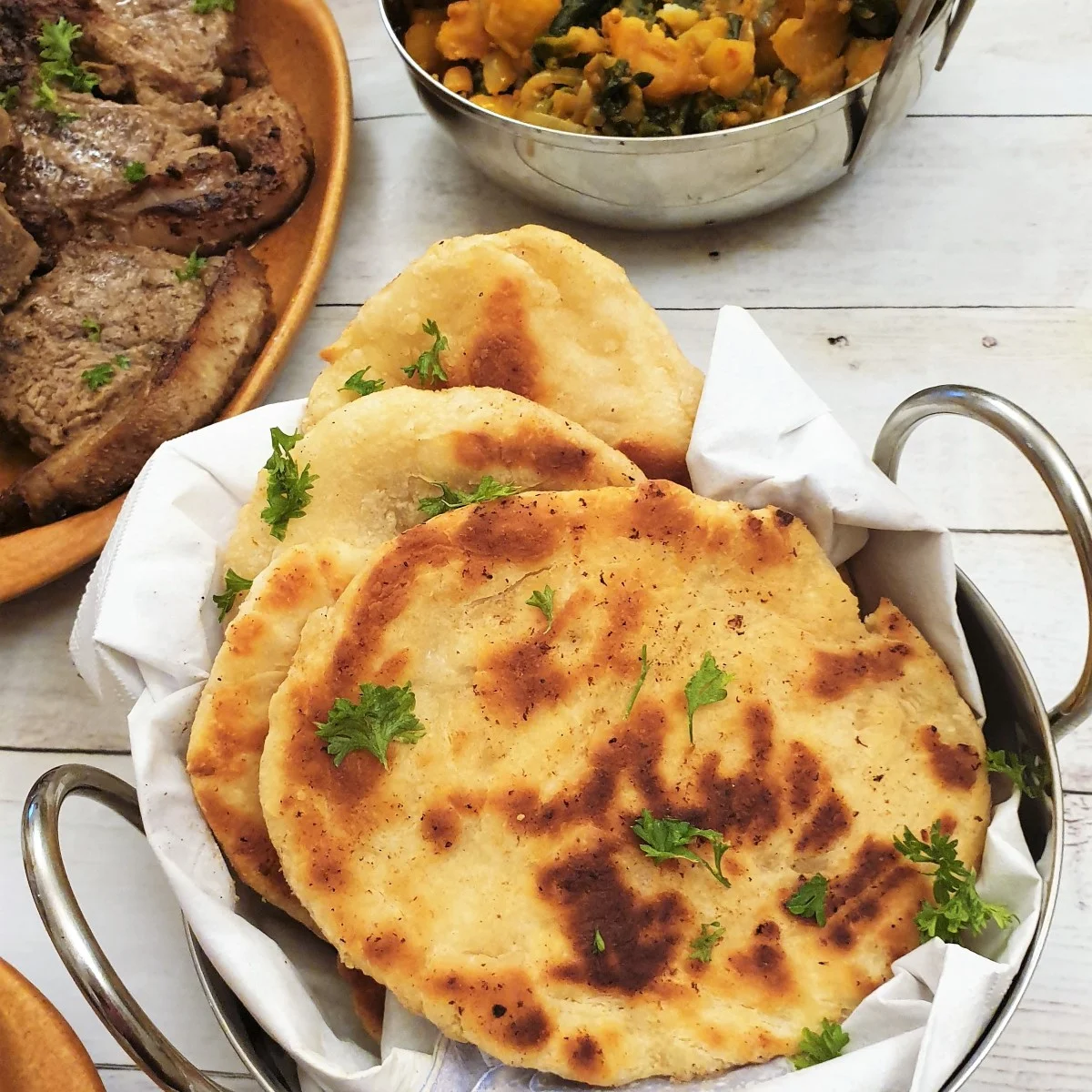
These Indian-inspired naan breads use a quick yoghurt-and-self-raising-flour dough, then fry in butter with garlic until golden. They make a soft, savoury accompaniment when you want fresh naan without a long rise.
Ingredients
- 4 heaped tablespoonsself-raising flour
- 4 rounded tablespoonsunflavoured Greek yoghurt
- 1 teaspoon, or more or less to tastecrushed garlic
- ½ teaspoon, to tastesalt
- 25 g (1 ounce)butter, for frying
- 1 tablespoonchopped fresh coriander, to garnish
Instructions
- 1
Mix the dough
Measure the flour, yoghurt, garlic and salt into a mixing bowl. Stir and bring the mixture together into a soft ball of dough.
- 2
Shape the naan
Divide the dough into 4 equal pieces. Flatten each piece into an oval about 6 mm (¼ inch) thick.
- 3
Heat the butter
Melt the butter in a frying pan and heat it until it starts to sizzle.
- 4
Fry the breads
Add the naan breads and fry for about 3 minutes on each side, until golden.
- 5
Garnish and serve
Serve the naan warm, sprinkled with chopped fresh coriander.
What is naan?
Naan is a leavened flatbread associated with Indian cooking, often served alongside curries and other dishes. This quick version takes inspiration from that style rather than using a traditional yeast-raised dough.
Two-ingredient dough: self-raising flour and Greek yoghurt form the base, while garlic and salt season it. Frying the shaped breads in butter gives them a golden surface and a rich finish.
Nutrition and macros by portion
The nutrition label shows one serving as written: 121 calories, 3g protein, 10g carbs, 8g fat.
| Portion | Adjustment | kcal | Protein | Carbs | Fat |
|---|---|---|---|---|---|
| Lighter | Use less frying butter | 85 kcal | 2g | 7g | 5g |
| This serving | As written | 121 kcal | 3g | 10g | 8g |
| Hungry | Make a larger portion | 182 kcal | 5g | 15g | 12g |
The flour provides most of the carbohydrates, while butter supplies much of the fat; the yoghurt contributes some protein. Pair one naan with a protein-rich main and plenty of vegetables for a more balanced plate.
Why the dough works
Self-raising flour: its raising agents help the breads puff as they cook, so there is no separate rising stage in this method.
Greek yoghurt: it brings moisture and tang to the dough. The recipe uses spoon measures, so bring the mixture together gently and aim for a soft ball rather than adding extra flour by default.
Shaping the breads
Equal pieces: divide the dough into 4 similar portions so the naan cook at roughly the same rate.
Oval shape: flatten each portion to about 6 mm thick. Keeping the breads close to this thickness helps them cook through while their surfaces turn golden.
Frying and doneness
Sizzling butter: wait until the melted butter starts to sizzle before adding the dough. This is the cue given in the method to begin frying.
Golden surface: cook for about 3 minutes per side, checking the colour as you go. If one side colours quickly, turn it and adjust the heat so the bread has time to cook through.
Garlic and coriander
Garlic: the listed teaspoon gives the dough a clear savoury note; use more or less to suit your taste.
Fresh coriander: sprinkle it over the naan just before serving. Adding it at the end keeps its fresh flavour distinct from the buttery, fried bread.
What to serve with naan
These breads work well alongside a curry, stew or dhal, where they can be used to scoop up the sauce. They also make a useful side for a meal built around vegetables or pulses.
Serve them warm for the softest texture. Put the naan on the table soon after frying, with the coriander scattered over the top.
Recipe notes & tips
- Measure the yoghurt and flour consistently so the dough stays soft and manageable.
- Add the garlic to the dough before shaping so its flavour is spread through the breads.
- Divide the dough into 4 equal pieces for more even cooking.
- Flatten the breads to about 6 mm thick rather than leaving thick centres.
- Wait for the butter to sizzle before adding the naan.
- Serve the breads warm with the coriander added just before eating.
Variations
- More garlic: increase the crushed garlic to taste for a stronger savoury flavour.
- Milder garlic: use less crushed garlic for a gentler flavour.
- Extra herbs: add more chopped coriander as a finishing garnish.
- Salt to taste: adjust the salt in the dough to suit the rest of the meal.
Common mistakes to avoid
- Uneven portions: divide the dough into 4 equal pieces so they cook at a similar pace.
- Thick centres: flatten each piece to about 6 mm so the bread cooks more evenly.
- Butter not sizzling: wait for it to start sizzling before frying the naan.
- Overcooking one side: turn after about 3 minutes and check for a golden surface.
- Adding coriander too early: garnish after frying to preserve its fresh taste.
How to store
Store cooled naan in an airtight container in the fridge and use within 2 days. Reheat briefly in a frying pan until warm, or use a microwave; serve soon after reheating for the softest texture.
Frequently asked questions
Can I make the dough ahead?
The method is designed for quick preparation and gives no resting time. For the intended texture, shape and fry the naan after mixing.
How thick should I make each naan?
Flatten each piece to approximately 6 mm (¼ inch) thick, as directed in the recipe.
How do I know when the naan is cooked?
Fry for about 3 minutes per side and look for a golden surface. The breads should be cooked through rather than doughy in the middle.
Can I change the amount of garlic?
Yes. The recipe suggests 1 teaspoon but says to use more or less to taste.
Can I use dried coriander instead of fresh?
The recipe calls for chopped fresh coriander as a garnish. Dried coriander will not give the same fresh finishing flavour.
Can I freeze the cooked naan?
The recipe does not specify freezing. For the best texture, serve them freshly cooked or refrigerate leftovers and reheat briefly.
Cook it from the original
This recipe comes from foodleclub.com. Their page has the author’s own photos, notes and tips — the best place to cook it from.
Open the recipe on foodleclub.com