
Oven-baked hake with Spanish-style potatoes
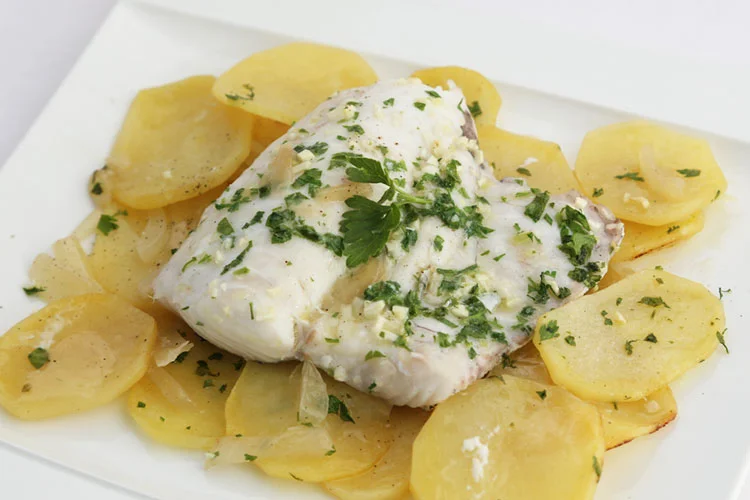
Oven-baked hake is served on a bed of tender potatoes and onion, with white wine, garlic and parsley adding flavour. The fish cooks quickly after the vegetables soften, making this a comforting one-tray meal.
Ingredients
- 1 kgcleaned hake, cut into fillets
- 3 or 4potatoes
- 1 largeonion
- 600 mlwhite wine (or cider or fish stock)
- 2garlic cloves
- 1 bunchparsley
- to tasteextra-virgin olive oil
- to tastepepper
- to tastesalt
Instructions
- 1
Preheat the oven
Heat the oven to about 180°C.
- 2
Slice the potatoes
Wash and peel the potatoes, then cut them into thin slices. Use a mandoline if you have one, or a knife.
- 3
Slice the onion
Peel the onion and cut it into thin strips.
- 4
Arrange the vegetables
Spread the potatoes and onion over the baking tray so they cover its surface. Add a generous drizzle of extra-virgin olive oil, salt and pepper to taste, then pour over the white wine to cover the ingredients.
- 5
Bake the vegetables
Place the tray on the middle shelf and bake for about 15 minutes.
- 6
Turn and soften
Carefully take out the tray and turn over the potatoes. Bake for another 15 minutes, or until the potatoes and onion are very soft.
- 7
Chop the herbs
Meanwhile, finely chop the parsley and garlic.
- 8
Add the hake
When the potatoes are ready, lay the hake fillets on top. Add a little salt, scatter over the chopped garlic and parsley, and drizzle with a little more olive oil.
- 9
Cook the fish
Bake the hake at 200°C for about 10 minutes. Keep an eye on the thickness of the fillets so they do not overcook and dry out.
What is hake with Spanish-style potatoes?
This is a Spanish-inspired baked fish dish in which hake sits on a bed of thinly sliced potatoes and onion. The vegetables cook first with white wine, then the fish is added for a shorter bake.
The method suits hake’s mild flavour: it picks up the garlic, parsley and cooking juices without needing a complicated sauce. The potatoes make the dish substantial enough to serve as a one-tray main.
Nutrition and macros by portion
The nutrition label shows one serving as written: 500 calories, 48g protein, 35g carbs, 18g fat.
| Portion | Adjustment | kcal | Protein | Carbs | Fat |
|---|---|---|---|---|---|
| Lighter | Use less olive oil | 350 kcal | 34g | 25g | 13g |
| This serving | As written | 500 kcal | 48g | 35g | 18g |
| Hungry | Add another potato | 750 kcal | 72g | 53g | 27g |
Hake supplies most of the protein, while the potatoes contribute most of the carbohydrates. Olive oil adds much of the fat, and the exact amount depends on how generously it is poured; serve with a green salad or vegetables to round out the plate.
Why the vegetables go in first
Potatoes and onion: Thin slices help them soften in the oven before the fish is added. Cutting them to a similar thickness makes their cooking more even.
White wine: The liquid helps the vegetables cook and leaves juices in the tray. Cider or fish stock can be used instead, as the ingredient list suggests.
Getting the potatoes tender
Give the potatoes and onion their two stages of baking before adding the hake. Turn the potatoes after the first 15 minutes, then check that both vegetables feel soft before moving on.
If the tray looks dry, check that the vegetables are still sitting in some liquid. The recipe calls for the wine to cover the ingredients, so use a tray that keeps the liquid around them.
Keep an eye on the hake
Hake fillets vary in thickness, so the stated 10 minutes is a guide rather than a guarantee. Check the thickest part as the cooking time approaches its end.
The fish is ready when it has turned opaque and separates easily into flakes. Take it out promptly once cooked; leaving it in the hot oven can make it dry.
Garlic and parsley for a fresh finish
Chop the garlic and parsley finely so they spread across the fillets rather than landing in large pieces. They go on just before the fish’s final bake, where their aroma mingles with the olive oil.
A final drizzle of olive oil adds richness to the topping and the juices. Season the fish lightly, since the vegetables have already been salted.
Serving the tray
Serve each portion with some of the soft potatoes and onion, and spoon over a little of the tray’s cooking liquid. A simple green salad or steamed green vegetables make a fresh contrast.
Bring the tray to the table while the fish is hot and the potatoes are still tender. If the cooking juices are plentiful, crusty bread is useful for soaking them up.
Recipe notes & tips
- Slice the potatoes evenly so they soften at roughly the same rate.
- Use a tray deep enough to hold the wine and vegetable juices.
- Turn the potatoes carefully so they stay in an even layer.
- Check that the potatoes and onion are soft before adding the fish.
- Start checking the hake before the full 10 minutes if the fillets are thin.
- Spoon the tray juices over the fish when serving.
Variations
- Use cider: Replace the white wine with cider, as suggested in the ingredient list.
- Use fish stock: Swap the wine for fish stock for a savoury alternative.
- Add lemon: Serve with lemon wedges for a bright, citrusy accent.
- Add vegetables: Tuck sliced peppers into the tray with the potatoes and onion.
- Change the herbs: Use a little thyme alongside the parsley for a different herbal note.
Common mistakes to avoid
- Uneven potato slices: Cut them to a similar thickness so they soften together.
- Adding fish too soon: Wait until the potatoes and onion are tender before placing the hake on top.
- Overcooking the hake: Check the thickest fillet and remove the tray as soon as the fish flakes easily.
- Using a shallow tray: Choose one that can hold the wine without spilling.
- Too much salt: Season the fish lightly, since the vegetables are already salted.
How to store
Refrigerate leftovers in a covered container and eat within 1–2 days. Reheat gently in a covered ovenproof dish until hot throughout; avoid prolonged heating, which can dry out the hake.
Frequently asked questions
Can I use frozen hake?
Yes, but thaw it fully in the fridge and pat it dry before adding it to the tray. Excess water can dilute the cooking juices.
Can I use a different cooking liquid?
Yes. The recipe gives cider or fish stock as alternatives to white wine. Keep the same stated volume.
How do I know the potatoes are ready for the fish?
They should feel very soft when pierced, and the onion should also be tender after the two baking stages.
How can I tell when the hake is cooked?
The flesh should be opaque and flake apart easily. Check the thickest part, as thinner fillets may cook sooner.
Can I prepare the vegetables ahead?
You can slice the potatoes and onion shortly beforehand, but keep the potatoes covered in water to limit browning, then drain and dry them before baking.
What can I serve with it?
A green salad or simply cooked green vegetables pair well with the rich potatoes and fish. Crusty bread can also be served to mop up the tray juices.
Cook it from the original
This recipe comes from codigococina.com. Their page has the author’s own photos, notes and tips — the best place to cook it from.
Open the recipe on codigococina.com