
chicken chukka recipe
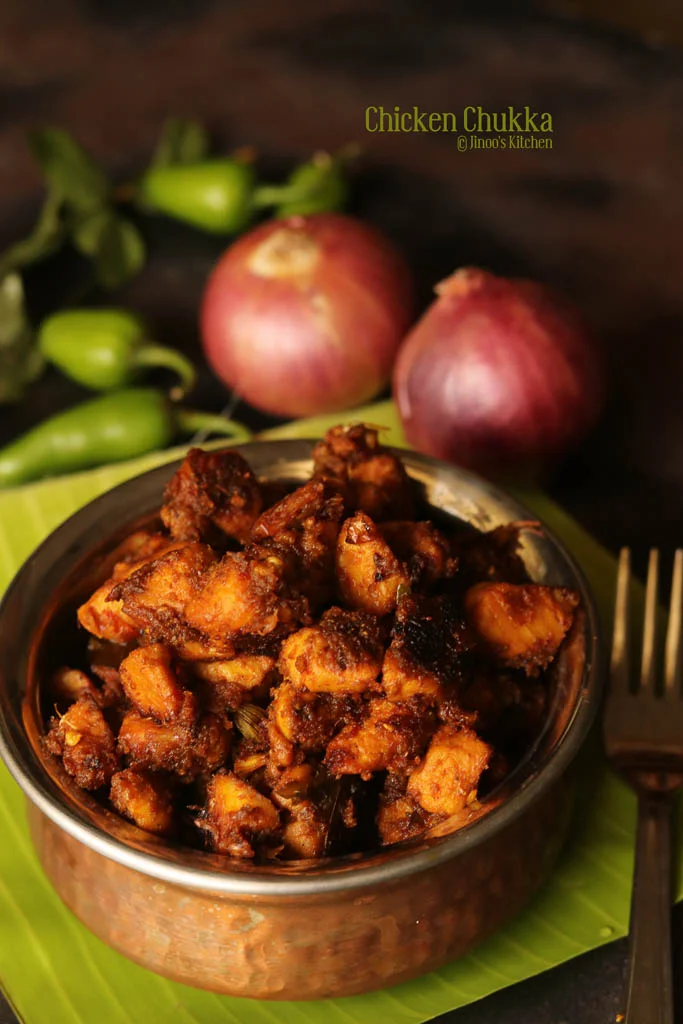
Chicken chukka, also called chicken sukka or varuval, is a South Indian chicken dish cooked with a fragrant, freshly ground spice paste until the sauce reduces and the meat takes on a roasted finish. It is a good choice when you want bold spices and a relatively dry, deeply flavoured curry.
Ingredients
- 500 gchicken, chopped into bite-sized pieces
- 2 tbspcoconut oil
- 1bay leaf
- 1/4 tspcumin seeds
- 3–4cardamom pods
- 1/2 inchcinnamon
- 2 sprigscurry leaves
- 3–4 clovesgarlic, crushed
- 80 g (1/2 cup)small onions, sliced
- 1tomato, chopped
- to tastesalt
- 1/4 tspturmeric powder
- 2 tbspcoriander seeds
- 1/2 tsppeppercorns
- 1 tspcumin seeds
- 1/2 tspfennel seeds
- 6–7dried red chillies
- 11–12small onions
- 3–4 clovesgarlic
- 1 inchginger
- 1green chilli
- 1 sprigcurry leaves
Instructions
- 1
Roast the spices
Dry-roast the coriander seeds, peppercorns, cumin seeds, fennel seeds and dried red chillies until they smell fragrant and are slightly smoky.
- 2
Grind the paste
Blend the roasted spices with the small onions, garlic, ginger, green chilli and curry leaves to make a coarse paste.
- 3
Temper the aromatics
Heat the coconut oil in the same pan. Add the cumin seeds, bay leaf, cinnamon, cardamom, curry leaves and crushed garlic, and let them crackle.
- 4
Fry the onions
Fry the aromatics for a minute, then add the sliced onions.
- 5
Cook the tomato
Sauté the onions until brown. Add the chopped tomato and fry until it softens to a mushy consistency.
- 6
Add the chicken
Stir in the chicken, turmeric and salt. Mix well and cook for a minute, until the chicken pieces begin to firm up.
- 7
Simmer with masala
Add the prepared masala with a little water. Cover and cook until the chicken is completely cooked, stirring occasionally if needed.
- 8
Reduce and roast
Remove the lid and cook over a low heat until the remaining liquid dries and the chicken roasts in the pan.
- 9
Serve hot
Serve the chicken chukka hot and freshly cooked.
What is chicken chukka?
Chicken chukka, known in some places as chicken sukka or varuval, is a South Indian preparation in which spiced chicken is cooked down to a fairly dry finish. The name and exact method vary across regions and households.
This version builds flavour by dry-roasting whole spices, grinding them with aromatics and reducing the chicken in the resulting paste. The final uncovered cooking helps the masala cling to the meat rather than leaving it in a thin gravy.
Nutrition and macros by portion
The nutrition label shows one serving as written: 13 calories, 1g protein, 1g carbs, 1g fat.
| Portion | Adjustment | kcal | Protein | Carbs | Fat |
|---|---|---|---|---|---|
| Lighter | Use less coconut oil | 9 kcal | 1g | 0g | 1g |
| This serving | As written | 13 kcal | 1g | 1g | 1g |
| Hungry | Serve with extra rice | 20 kcal | 2g | 1g | 1g |
Most of the protein comes from the chicken, while the chicken and coconut oil provide most of the fat; onions, tomato and spices contribute some carbohydrate. The stated yield of 100 portions does not appear to match the 500 g of chicken, so the nutrition estimate is divided across 100 as listed and should be treated cautiously. Pair a practical portion with vegetables and rice or flatbread to make a more balanced plate.
The freshly ground masala
Roasted spices: coriander, cumin, fennel, pepper and dried chillies form the base of the paste. Roast them just until aromatic and slightly smoky; blackened spices can taste bitter.
Aromatics: small onions, garlic, ginger, green chilli and curry leaves are blended with the roasted spices. Keep the paste coarse, as directed, for a more textured finish.
Build flavour in the pan
Whole spices: let the cumin, bay leaf, cinnamon, cardamom and curry leaves crackle briefly in the coconut oil to release their aroma. Watch the garlic closely so it flavours the oil without burning.
Onion and tomato: cook the sliced onions until brown before adding the tomato. Let the tomato turn soft and mushy so it combines readily with the later masala.
Cook the chicken through
Firming the pieces: the brief first fry gives the chicken a little structure before it simmers. Stir to coat the pieces evenly with the onion and tomato mixture.
Doneness: cook covered until the chicken is completely cooked, checking a larger piece if you are unsure. The recipe does not give a fixed simmering time, so use doneness rather than the clock as your guide.
Get the dry finish
Covered simmer: add only a little water with the paste, since the aim is a thick coating rather than a pool of sauce. Stir during cooking if the masala catches on the bottom.
Uncovered reduction: once the chicken is cooked, remove the lid and keep the heat low. Stir as the liquid evaporates, stopping when the masala clings to the chicken and the pieces begin to roast.
Serving ideas
Serve chicken chukka hot with steamed rice, flatbreads or another simple starch that can take up the spiced coating. A cooling accompaniment such as plain yoghurt or sliced cucumber can contrast with the heat.
For a fuller meal, add a vegetable side and adjust the amount of rice or bread to suit the appetite. Since the listed yield is unusually large for the ingredient quantities, check the intended number of portions before planning a meal.
Recipe notes & tips
- Keep the roasted spices moving in the pan so they toast evenly without scorching.
- Grind the masala coarsely rather than blending it until completely smooth.
- Brown the sliced onions properly before adding the tomato for a deeper base flavour.
- Add just a little water with the paste and more only if the pan begins to catch.
- Stir occasionally during the covered cook, especially towards the bottom of the pan.
- Reduce the sauce over a low heat so the chicken can roast without burning the masala.
Variations
- Milder heat: use fewer dried red chillies and remove the seeds from the green chilli.
- More heat: retain the chilli seeds or add an extra green chilli to the paste.
- Boneless chicken: use bite-sized boneless pieces and check them for doneness early.
- Extra curry leaves: add a few more leaves while tempering for a stronger herbal aroma.
- More sauce: add a little extra water during the covered cook and stop reducing while some gravy remains.
Common mistakes to avoid
- Scorching the spices: roast over moderate heat and take them off as soon as they smell fragrant.
- Burning the garlic: add it with the tempering spices and watch it closely as it cooks.
- Pale onions: keep sautéing until browned before adding the tomato.
- Adding too much water: start with a little so the finished dish can reduce to a dry coating.
- Leaving the pan unstirred: stir now and then during cooking to stop the masala sticking.
- Cooking on high while reducing: use a low heat so the sauce dries without burning.
How to store
Cool leftovers promptly, store in an airtight container in the fridge and use within 3 days. Reheat gently in a pan until piping hot, adding a splash of water if the masala is too dry; avoid reheating more than once.
Frequently asked questions
How spicy is chicken chukka?
The 6–7 dried red chillies and green chilli give this version a noticeable heat. Reduce the chillies to make it milder.
Can I use boneless chicken?
Yes. Cut it into bite-sized pieces and check it earlier, as boneless pieces may cook faster than bone-in pieces.
How do I know when the chicken is cooked?
Check a larger piece: it should be cooked through with no raw-looking centre. The recipe does not specify a cooking time, so use this cue rather than a fixed number of minutes.
Why is my chicken chukka watery?
It may need more uncovered cooking over a low heat. Stir regularly until the excess liquid has evaporated and the masala coats the chicken.
Can I make the masala ahead?
You can roast and grind the spice mixture ahead and refrigerate it in a covered container. For the freshest flavour, use it within a day or two.
Does this recipe really serve 100?
The stated yield is 100, but 500 g of chicken and the other listed quantities look inconsistent with that many portions. Check the original recipe's intended yield before scaling or serving.
Cook it from the original
This recipe comes from jinooskitchen.com. Their page has the author’s own photos, notes and tips — the best place to cook it from.
Open the recipe on jinooskitchen.com