
Easy Spaghetti Bolognese
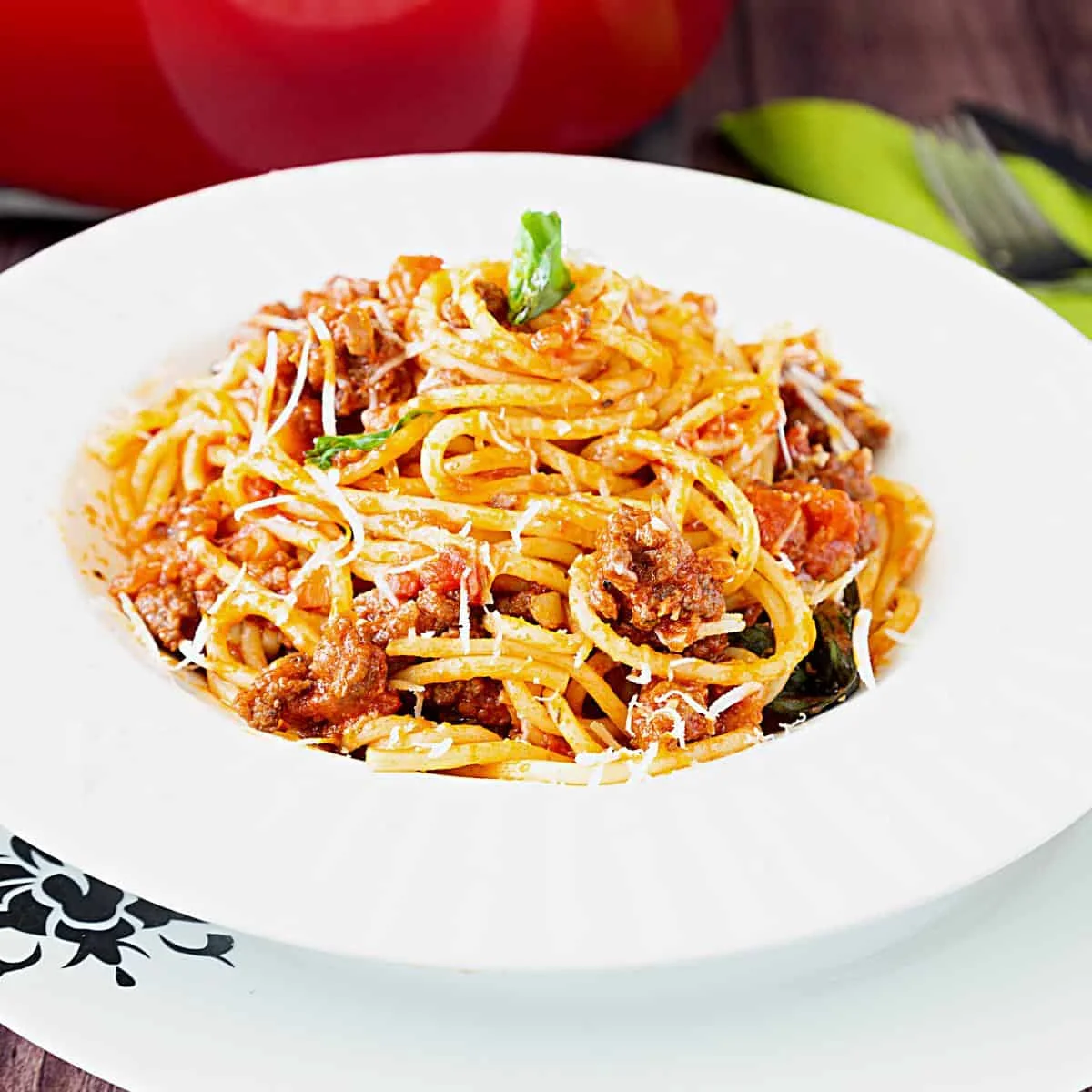
This family-style spaghetti Bolognese pairs pasta with a slowly simmered sauce of beef, pork, tomatoes and finely chopped vegetables. The gentle cooking gives the sauce time to develop flavour, making it a comforting choice for a weeknight or a relaxed weekend meal.
Ingredients
- 680 gcarne picada de ternera (20 % de grasa)
- 113–170 gcarne picada de cerdo (o panceta)
- 2 cucharadasaceite de oliva
- 1 grandecebolla, picada fina
- 2 medianostallos de apio, picados finos
- 2 medianaszanahorias, picadas finas
- 3 grandesdientes de ajo, cortados en láminas finas
- 2 cucharaditascondimento italiano
- 2 latas de 425 gtomates triturados
- 2 medianashojas de laurel
- 4 cucharadasconcentrado de tomate
- 2 cucharadas (o 12 cucharaditas si es seco)tomillo fresco
- 2 cucharadas (o 1/2 cucharadita si es seco)albahaca fresca
- 4 cucharadasqueso parmesano, recién rallado
- 120 mlcaldo de ternera (o agua)
- 180 mlvino tinto o blanco
- 1/2 cucharaditasal kosher
- 1/2 cucharaditapimienta negra molida
- 120 mlleche entera (opcional)
- 454 gespaguetis (o pasta similar)
Instructions
- 1
Sofríe las verduras
Calienta el aceite de oliva en una olla holandesa grande o una sartén honda a fuego medio. Añade la cebolla, la zanahoria y el apio con una pizca pequeña de sal. Cocina durante 6–8 minutos, hasta que estén tiernos y desprendan aroma. Incorpora el ajo y cocina 30 segundos.
- 2
Dora la carne
Añade la ternera y el cerdo picados. Extiéndelos por la olla y deja que se cocinen un momento antes de desmenuzarlos. Cocina hasta que ya no estén rosados y comiencen a dorarse. Agrega el condimento italiano y las hojas de laurel.
- 3
Cuece la salsa
Añade el concentrado de tomate y cocínalo durante 1 minuto. Vierte los tomates triturados, el vino y el caldo. Salpimienta y mezcla el tomillo y la albahaca. Lleva la salsa a un hervor suave, tápala y cocina a fuego bajo durante aproximadamente 1 hora, removiendo cada 15 minutos.
- 4
Termina la salsa
Apaga el fuego y añade la leche, si la usas. Prueba la salsa y ajusta el condimento si hace falta. Retira las hojas de laurel.
- 5
Cuece los espaguetis
Pon a hervir una olla grande con agua bien salada. Cuece los espaguetis hasta que queden al dente, siguiendo las instrucciones del paquete. Reserva un poco del agua de cocción y escurre la pasta.
- 6
Mezcla y sirve
Añade los espaguetis cocidos directamente a la salsa y remueve con suavidad para cubrirlos. Si la salsa está demasiado espesa, agrega un chorrito del agua de cocción reservada. Sirve caliente con parmesano rallado y hierbas frescas.
What is spaghetti Bolognese?
Spaghetti Bolognese is a familiar pasta dish built around a meat-and-tomato sauce. Its name refers to Bologna, though the pairing of the sauce with spaghetti is a popular interpretation rather than the only way to serve a Bolognese-style ragù.
This version combines beef and pork with finely chopped onion, celery and carrot, then simmers them with tomatoes, wine and herbs. The slow, covered cook helps the flavours come together without complicated preparation.
Nutrition and macros by portion
The nutrition label shows one serving as written: 560 calories, 27g protein, 50g carbs, 26g fat.
| Portion | Adjustment | kcal | Protein | Carbs | Fat |
|---|---|---|---|---|---|
| Lighter | Use leaner mince | 392 kcal | 19g | 35g | 18g |
| This serving | As written | 560 kcal | 27g | 50g | 26g |
| Hungry | Larger pasta portion | 840 kcal | 41g | 75g | 39g |
The spaghetti and vegetables supply most of the carbohydrates, while the beef and pork contribute protein and much of the fat. To balance the plate, serve the pasta with a generous side of green vegetables or salad.
Build flavour with the vegetables
Soffritto: onion, celery and carrot form the aromatic base. Chop them finely so they soften evenly and blend into the finished sauce.
Garlic: add it after the vegetables have softened and cook it briefly. This brings out its aroma without leaving it in the pan long enough to burn.
Choose and brown the meat
Beef and pork: the beef provides the main body, while pork or pancetta adds another savoury note. Spread the meat across the pan and give it a moment to cook before breaking it up.
Browning: cook until the meat is no longer pink and has taken on a little colour. Avoid stirring constantly at the start, which can prevent it from browning.
Let the sauce simmer gently
Low heat: once the tomatoes, wine, broth and herbs are in, bring the sauce to a gentle simmer, cover it and cook for about an hour. A steady, quiet simmer is the aim, rather than a vigorous boil.
Regular stirring: stir every 15 minutes, as directed, to keep the sauce from catching on the bottom of the pan. If it becomes very thick before the hour is up, check the heat and stir well.
Check the sauce and pasta
Sauce: the meat should be cooked through and the vegetables tender after the simmer. Add the optional milk off the heat, then taste and adjust the seasoning.
Spaghetti: use the packet timing as a guide and test for a slight firmness at the centre. Reserve some pasta water before draining; its starch can help loosen the sauce as you toss everything together.
Serve it at the table
Tossing: combining the pasta and sauce in the pan helps coat the strands evenly. Add reserved pasta water a little at a time if the mixture seems too thick.
Pairings: serve with grated Parmesan and fresh herbs, as suggested in the method. A simple green salad or steamed vegetables make an easy side.
Recipe notes & tips
- Chop the onion, celery and carrots to a similar fine size so they soften at roughly the same rate.
- Let the meat sit briefly in the pan before breaking it apart to encourage some browning.
- Keep the sauce at a gentle simmer and stir it every 15 minutes.
- Reserve pasta water before you drain the spaghetti, even if you do not end up needing it.
- Add the optional milk after turning off the heat, then taste before adding more salt.
- Grate the Parmesan just before serving for the freshest flavour.
Variations
- Use pancetta: replace the pork mince with pancetta for a saltier, savoury note.
- Choose dried herbs: use the recipe's listed dried-herb alternatives if fresh thyme or basil is unavailable.
- Skip the milk: leave it out for a sauce without the optional creamy finish.
- Change the pasta: use a similar pasta shape if you do not have spaghetti.
- Use water: replace the beef broth with water, as allowed in the ingredient list.
Common mistakes to avoid
- Crowding the meat: spreading it across the pan and letting it cook briefly before breaking it up helps it brown.
- Burning the garlic: add it after the vegetables soften and cook for only 30 seconds.
- Boiling the sauce hard: lower the heat after it reaches a gentle simmer and keep it covered.
- Skipping the stirs: stir every 15 minutes during the hour-long simmer to stop the sauce catching.
- Overcooking the pasta: follow the packet instructions and check for an al dente centre.
- Draining all the pasta water: reserve a little before draining so you can loosen the sauce if needed.
How to store
Refrigerate leftover sauce and pasta in an airtight container and use within 3 days. Reheat gently in a pan or microwave until steaming hot; add a splash of water if the sauce has thickened. For the best texture, store the sauce and pasta separately when possible.
Frequently asked questions
Can I make the sauce ahead?
Yes. Cook the sauce, cool it promptly and refrigerate it in an airtight container. Reheat it gently before serving with freshly cooked spaghetti.
Can I leave out the milk?
Yes, the milk is optional. Stir it in after turning off the heat only if you want to include it.
What can I use instead of beef broth?
Water is listed as an alternative. The sauce will still simmer with the tomatoes, wine, meat and herbs.
How do I know when the sauce is ready?
After about 1 hour of gentle simmering, the vegetables should be tender and the flavours well combined. Keep the heat low and stir every 15 minutes.
Why reserve pasta water?
A splash can loosen the sauce if it feels too thick after tossing it with the spaghetti. Add it gradually so the sauce does not become watery.
Can I use a different pasta?
Yes. The ingredient list allows a similar pasta in place of spaghetti; cook it according to its packet instructions until al dente.
Cook it from the original
This recipe comes from veenaazmanov.com. Their page has the author’s own photos, notes and tips — the best place to cook it from.
Open the recipe on veenaazmanov.com