
Country bread for sandwiches
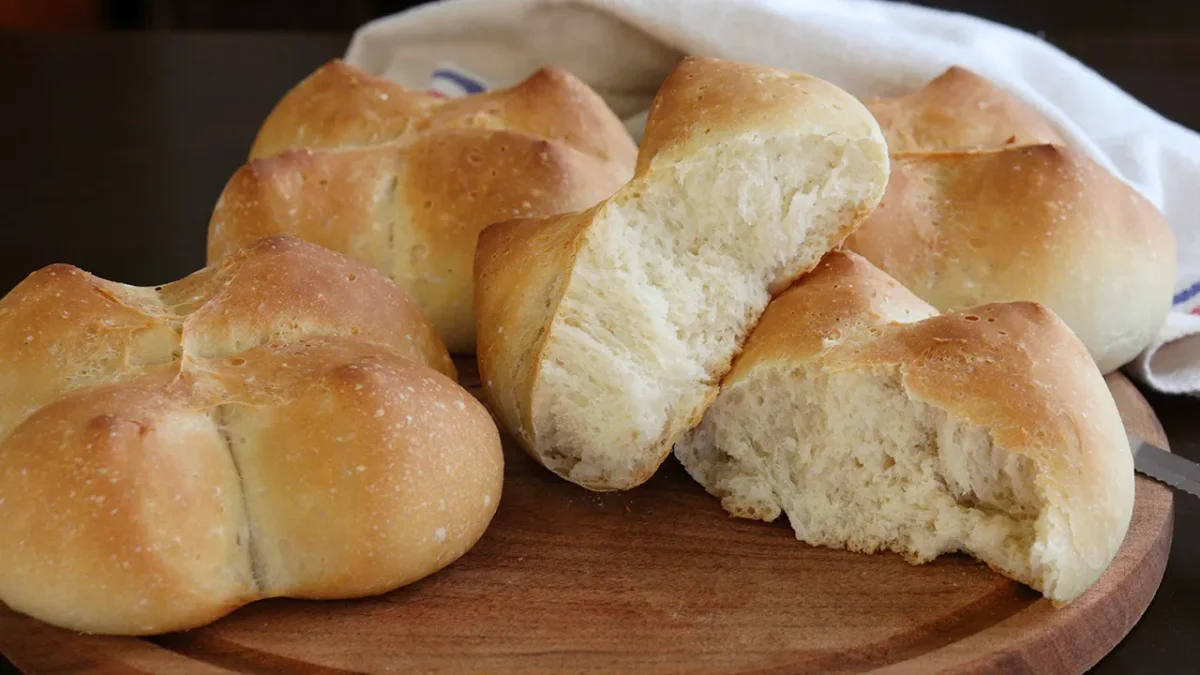
These soft country rolls are enriched with melted beef fat and shaped individually for easy sandwich making. A simple dough and a cross-cut top give them a tender crumb and a rustic finish.
Ingredients
- 500 g“000” wheat flour (strong bread flour or plain flour)
- 260 mlwarm water
- 5 gdried yeast
- 50 gbeef fat
- 10 gsalt
Instructions
- 1
Melt the fat
Before making the dough, put the beef fat in a small pan and warm over a low heat until completely melted. Take it off the heat and let it cool, but do not allow it to set again.
- 2
Mix the dough
Put the flour and salt in a bowl and mix. Add the yeast and warm water, then stir. Add the melted fat and mix until all the ingredients are combined.
- 3
Knead until smooth
Turn the dough out onto a work surface and knead until it forms a smooth, even ball.
- 4
Rest the dough
Put the dough back in the bowl, cover it and leave it at room temperature for 30 minutes.
- 5
Shape the rolls
Take the dough out of the bowl and place it on the work surface. Divide it into 4 equal pieces, about 200–205 g each, shape them into balls and arrange them on a baking tray.
- 6
Score and prove
Dust the dough balls with flour and cut a cross into the top of each one. Cover the tray with a plastic bag and leave the rolls to prove for 1 hour.
- 7
Bake the rolls
Bake in a preheated oven at 200°C for about 20 minutes.
- 8
Cool before serving
Take the rolls out of the oven and leave them to cool before serving.
What is country bread?
Country bread is a rustic-style loaf, often made from a straightforward flour, water, yeast and salt dough. This version uses beef fat for richness and shapes the dough into individual rolls rather than one large loaf.
The recipe’s simple ingredients and cross-cut tops suit everyday sandwiches. The rolls are baked until cooked through, then cooled before slicing.
Nutrition and macros by portion
The nutrition label shows one serving as written: 570 calories, 16g protein, 95g carbs, 14g fat.
| Portion | Adjustment | kcal | Protein | Carbs | Fat |
|---|---|---|---|---|---|
| Lighter | Use a smaller roll | 399 kcal | 11g | 67g | 10g |
| This serving | As written | 570 kcal | 16g | 95g | 14g |
| Hungry | Add a second roll | 855 kcal | 24g | 143g | 21g |
Most of the carbohydrates come from the wheat flour, while the beef fat supplies most of the fat; the flour provides the bulk of the protein. Pair a roll with a filling rich in vegetables and a protein source for a more balanced sandwich.
Choosing the flour and fat
Flour: The recipe calls for “000” wheat flour, with strong bread flour or plain flour offered as alternatives. Strong flour can give the rolls a chewier texture, while plain flour may produce a softer crumb.
Beef fat: Melt it gently and let it cool until it is no longer hot, while keeping it liquid. If it sets before mixing, warm it briefly again so it can blend into the dough.
Kneading and resting
Kneading: Work the dough until it feels smooth and even, as directed. This helps bring the ingredients together into a cohesive dough that can be divided and shaped.
First rest: Cover the dough and leave it at room temperature for 30 minutes. After shaping, allow the rolls to prove for a further hour under a loose cover.
Shaping and scoring
Portions: Divide the dough into 4 equal pieces and shape each into a ball. The method gives an approximate weight of 200–205 g per roll, though the listed ingredient quantities may not yield that weight for each piece.
Cross cuts: Dust the tops with flour, then make a cross in each roll before the final prove. Keep the cuts shallow and use a sharp blade or knife for a neat opening.
How to tell when they are baked
Oven: Bake at 200°C for about 20 minutes, the temperature and time specified in the recipe. Ovens can vary, so check the rolls towards the end of baking.
Cooling: Take the rolls out once baked and let them cool before cutting. Slicing while very hot can compress the soft interior.
Serving the rolls
These rolls are designed to be split and filled as sandwiches. Try them with cheese, sliced vegetables, cooked meat or a spread of your choice.
For a more complete plate, serve a sandwich with a side salad or vegetable soup. The rolls can also be served alongside a meal in place of slices of bread.
Recipe notes & tips
- Keep the beef fat liquid but not hot when you add it to the dough.
- Use warm rather than hot water when mixing in the yeast.
- Knead until the dough is smooth and even before its first rest.
- Cover the shaped rolls loosely so they have room to rise.
- Make the cross cuts just before the one-hour prove.
- Cool the rolls before slicing them for sandwiches.
Variations
- Seeded tops: Sprinkle seeds over the rolls after dusting them with flour.
- Herb dough: Mix dried herbs into the flour before adding the liquids.
- Garlic flavour: Add a little garlic powder to the flour and salt mixture.
- Smaller rolls: Divide the dough into more pieces for smaller sandwiches.
- Plain flour: Use plain flour instead of strong flour for a softer-textured roll.
Common mistakes to avoid
- Fat too hot: Let it cool before mixing so it does not go into the dough hot.
- Fat set solid: Warm it gently until liquid again before adding it.
- Uneven portions: Divide the dough carefully so the rolls bake at a similar rate.
- Tight covering: Leave space around the shaped rolls so the cover does not press on them.
- Deep scoring: Keep the cross cuts shallow so the tops are not cut apart.
- Slicing too soon: Let the rolls cool before cutting to avoid compressing the crumb.
How to store
Once completely cool, store the rolls in an airtight bag or container at room temperature and use within 2 days. Warm them briefly in a low oven to refresh, or freeze them for longer storage and thaw before serving.
Frequently asked questions
Can I use plain flour?
Yes. The recipe lists plain flour as an alternative to strong bread flour; the texture may be softer.
Can I use lard instead of beef fat?
The recipe specifies beef fat. Lard is a different fat, but can be used as a substitute if you are happy to change the flavour.
How warm should the water be?
Use warm water, not hot. The recipe does not specify an exact temperature.
How much dough goes into each roll?
The method says to divide the dough into 4 equal pieces of about 200–205 g each. With the listed ingredient amounts, the total dough weight may not reach that stated portion size.
Can I freeze the rolls?
Yes. Cool them completely, pack them airtight and freeze. Thaw before serving, then warm briefly if you like.
Cook it from the original
This recipe comes from cuk-it.com. Their page has the author’s own photos, notes and tips — the best place to cook it from.
Open the recipe on cuk-it.com