
Wholemeal sandwich loaf with oats and honey
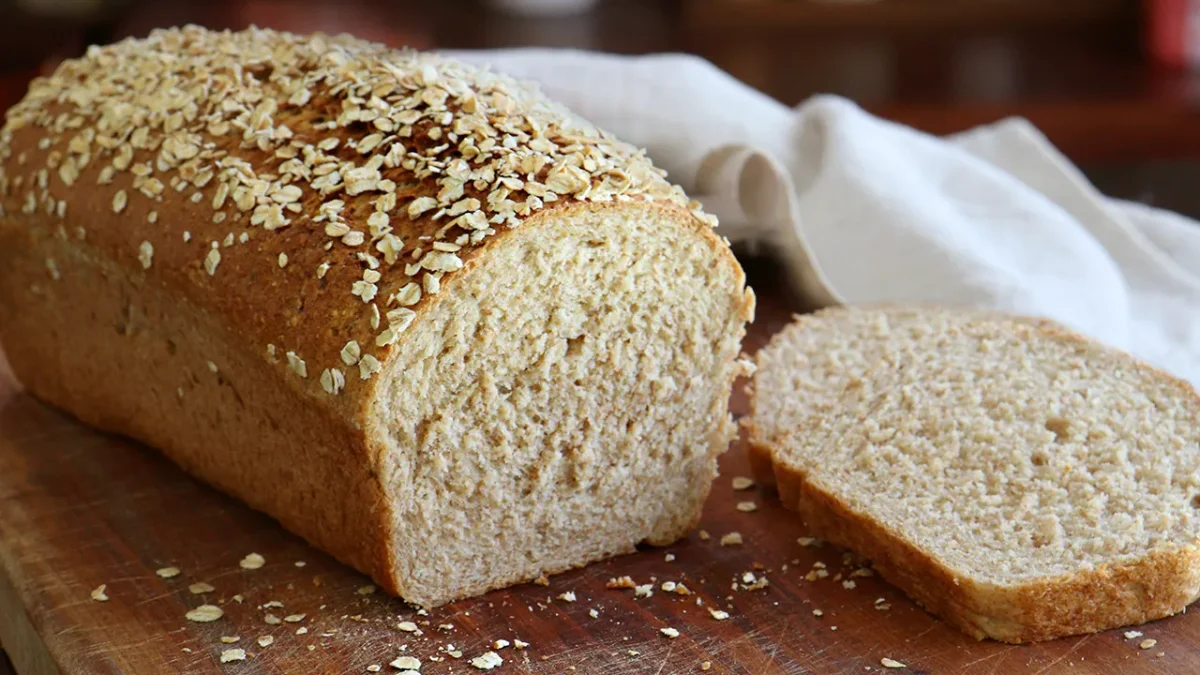
A soft wholemeal sandwich loaf made with oats, milk and honey, with a gently sweet flavour and a hearty crumb. Make it for breakfast toast or sandwiches, and enjoy the satisfaction of shaping and baking a loaf at home.
Ingredients
- 100 grolled oats
- 250 gwholemeal wheat flour
- 150 gwhite wheat flour
- 320 mlmilk
- 20 mlolive oil
- 5 gdried yeast
- 15 ml (1 tbsp)honey
- 7 gsalt
- 1egg, optional, for brushing
Instructions
- 1
Grind the oats
Pulse the oats in a food processor for a few seconds, until they are finely ground into flour.
- 2
Mix the flours
Put the oat flour, wholemeal flour, white flour and salt in a bowl, then mix them together.
- 3
Add wet ingredients
Add the yeast, milk, olive oil and honey. Mix until all the ingredients are incorporated.
- 4
Knead the dough
Turn the dough out onto a work surface and knead until smooth and even.
- 5
Rest the dough
Place the dough in a bowl, cover it and leave it to rest for 30 minutes.
- 6
Shape the loaf
Turn the dough out and press it with your hands to release the air. Stretch or roll it into a rectangle the same length as a 25 × 10 cm loaf tin. Roll it up into a cylinder, applying a little pressure as you go to tighten the dough.
- 7
Place in tin
Put the rolled dough into a greased loaf tin and press it gently to even out its height.
- 8
Prove the loaf
Cover the tin and leave the dough to rise for about 1 hour, until it has risen above the rim.
- 9
Brush with egg
Brush the top with beaten egg, if using, then scatter oats over it.
- 10
Bake the bread
Bake for 30 minutes at 200°C.
- 11
Cool on rack
Remove the loaf from the oven, take it out of the tin and leave it to cool on a wire rack.
- 12
Serve the loaf
Once cool, the bread is ready to enjoy.
What is an oat and wholemeal sandwich loaf?
This is a yeasted loaf combining wholemeal wheat flour, white flour and oats ground into flour. Oat and wheat breads are familiar in home baking traditions in many places; this version pairs the grains with milk and honey for a tender crumb and mild sweetness.
The mix of flours gives the loaf more structure than oats alone, while rolling the dough into a cylinder helps it bake in a useful sandwich shape.
Nutrition and macros by portion
The nutrition label shows one serving as written: 2300 calories, 80g protein, 397g carbs, 43g fat.
| Portion | Adjustment | kcal | Protein | Carbs | Fat |
|---|---|---|---|---|---|
| Lighter | Use less oil | 1610 kcal | 56g | 278g | 30g |
| This serving | As written | 2300 kcal | 80g | 397g | 43g |
| Hungry | Add another slice | 3450 kcal | 120g | 596g | 65g |
Most of the carbohydrates come from the oats and wheat flours, while olive oil and the optional egg contribute fat; milk, flour and egg provide some protein. The estimate treats the single listed serving as the whole loaf, so divide it by the number of slices or portions you actually serve; add fruit or salad alongside for a more balanced plate.
Choosing the ingredients
Oats: Grind the rolled oats briefly, stopping when they look like a fine flour. A few coarser flecks are fine, but very large flakes can make the dough less even.
Flours: The wholemeal flour brings a hearty flavour, while the white flour helps support a softer, more sliceable loaf. Use the specified types if you can, as flour absorption varies.
Milk and honey: Milk adds moisture and a softer feel, and honey lends gentle sweetness. The olive oil contributes tenderness to the dough.
Kneading and shaping
Smooth dough: Knead until the dough looks even and feels cohesive. If it clings slightly to the work surface, keep kneading rather than adding a lot of extra flour.
Tight roll: After the first rest, press out the air and roll the rectangle up firmly into a cylinder. A snug roll helps the loaf hold its shape in the tin.
Getting the rise right
First rest: Cover the dough for 30 minutes as directed. Keep it away from draughts so it can rest without drying out.
Final proof: Allow about 1 hour, using the dough’s height as the cue: it should rise above the edge of the tin. The time can vary with room temperature, so check the dough rather than relying on the clock alone.
Checking the bake
Oven: Bake at 200°C for 30 minutes. The recipe describes this as a medium-high oven, so use the stated temperature rather than estimating by oven dial labels.
Cooling: Lift the loaf out of the tin after baking and cool it on a rack. Letting it cool before slicing gives the crumb time to set and makes neater slices.
How to serve it
Breakfast: Toast a slice and serve it with butter, jam or cheese. Its mild honey note also works well with savoury toppings.
Sandwiches: Once fully cool, slice the loaf and fill it with your preferred sandwich ingredients. Pair a sandwich with fruit or a simple salad for a more balanced plate.
Recipe notes & tips
- Grind the oats just before mixing so they are easy to incorporate.
- Measure the 25 × 10 cm loaf tin before shaping the dough to match its length.
- Grease the tin thoroughly so the loaf releases cleanly after baking.
- Use the dough’s rise above the tin rim as the cue for the final proof.
- Cool the loaf completely before slicing for a tidier crumb.
- Skip the egg wash if you prefer, though the top may be less glossy.
Variations
- Seeded topping: Scatter seeds over the loaf with the oats before baking.
- Cinnamon note: Add a little ground cinnamon to the dry ingredients for a warmer flavour.
- More savoury: Leave out the honey for a less sweet loaf.
- Dairy-free: Use an unsweetened plant-based milk in place of the milk.
- Oil choice: Use another mild-flavoured oil in place of the olive oil.
Common mistakes to avoid
- Coarse oats: Grind them until flour-like so they mix evenly into the dough.
- Too much bench flour: Avoid adding large amounts while kneading, which can make the loaf dry.
- Loose shaping: Roll the dough into a snug cylinder to help it keep its form.
- Under-proofing: Wait until the dough rises above the tin rim before baking.
- Overlooking the temperature: Set the oven to 200°C rather than guessing what medium-high means.
- Slicing while warm: Let the loaf cool on a rack first so the crumb can set.
How to store
Once completely cool, store the loaf in an airtight bag or bread bin at room temperature for about 2–3 days. Toast or warm slices briefly to refresh them; freeze extra slices in a sealed bag and thaw or toast as needed.
Frequently asked questions
Can I make this without a food processor?
Yes. Use oat flour if you have it, or crush the rolled oats as finely as possible using a blender or another grinding tool.
Do I have to brush the loaf with egg?
No, the egg is optional. The loaf will still bake without it, but the top may look less shiny.
How do I know when the dough has finished its final rise?
The recipe’s cue is that the dough should rise above the rim of the tin. The time may be shorter or longer than about 1 hour depending on the room.
Can I use only wholemeal flour?
The recipe uses both wholemeal and white flour. Changing that balance can alter how much liquid the dough needs and how soft the crumb turns out.
Why should I cool the bread before slicing?
Cooling on a rack lets the crumb settle and makes it easier to cut even slices without squashing the loaf.
Can I freeze this loaf?
Yes. Cool it fully, slice it, and freeze the slices in a sealed bag so you can thaw or toast only what you need.
Cook it from the original
This recipe comes from cuk-it.com. Their page has the author’s own photos, notes and tips — the best place to cook it from.
Open the recipe on cuk-it.com