
Galician tripe: traditional step-by-step recipe
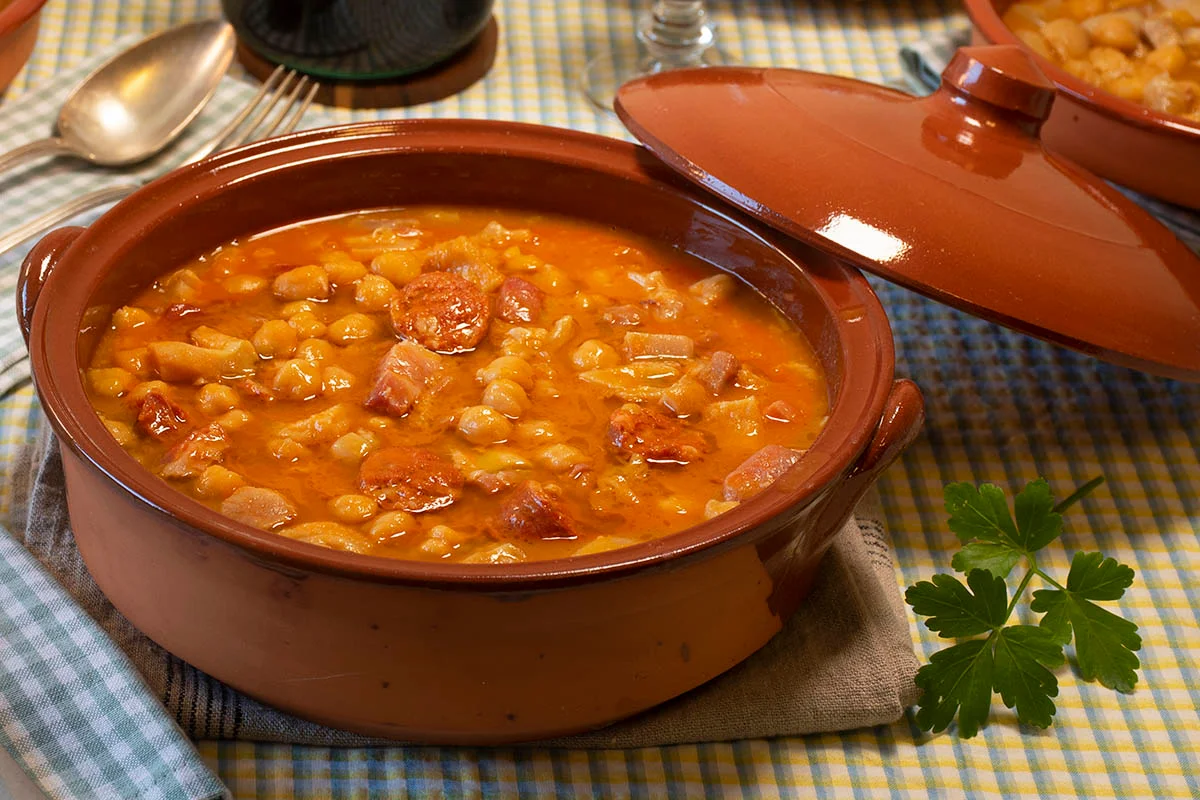
Galician tripe is a slow-cooked stew of chickpeas, beef tripe, trotters, pork, chorizo and warming spices. It takes preparation and a long simmer, but makes a generous, deeply savoury dish for a family table or gathering.
Ingredients
- 1.5 kgdried large chickpeas
- 3 kg in totalbeef tripe and 1 veal foot
- 900 g (3 or 4 feet)pigs’ trotters
- 4chorizos
- 2 headsgarlic
- 500 gstreaky bacon, finely cut into strips
- 700 gair-cured pork shoulder, finely diced
- 2onions
- 1 small bunchfresh parsley, tied with string
- 8 gsweet paprika
- 4 ghot paprika
- 8 gground cumin, or the same amount of tripe seasoning
- to tastesalt
- a splashextra-virgin olive oil
- 2lemons
Instructions
- 1
Soak the chickpeas
About 12 hours ahead, cover the chickpeas with plenty of water and leave them to soak.
- 2
Clean the tripe
Scrub the tripe with a kitchen brush. For a more thorough clean, sprinkle it with coarse salt and brush it over the salt, then rinse with clean water.
- 3
Cut and soak
Cut the tripe into small squares or rectangles, roughly the size of pieces used for a Spanish potato omelette. Put it in a large bowl with water, the juice of one lemon and the second lemon cut into pieces.
- 4
Prepare the feet
Add the veal foot to the same bowl, checking that it is clean and removing any hairs with tweezers or by singeing them with a kitchen torch. Do the same with the pigs’ trotters. Add a little fresh parsley and leave everything to soak for at least 2–3 hours or overnight.
- 5
Cook the tripe
Drain the tripe and both types of feet, then put them in a large pan and cover with water. Cover the pan and cook over a medium heat for 40 minutes, starting the timer when the water comes to the boil.
- 6
Add the ingredients
Add the chickpeas, bacon, finely cut pork shoulder, sliced chorizos, onions halved and garlic heads with a thin slice removed from their tops. Add hot water to cover everything. Bring to the boil over a high heat, then lower the heat and simmer for about 2½ hours. Check that the chickpeas are tender but still hold their shape.
- 7
Remove the feet
Lift the pieces of veal foot out of the pan and set them aside on a plate.
- 8
Squeeze the garlic
Remove the garlic heads and put them on a plate. Press them with a fork to squeeze out the flesh, transfer it to a jug or blender, and discard the skins.
- 9
Make the spice base
Remove the onions. Heat a splash of oil in a frying pan and brown the onions with a pinch of salt, bearing in mind that the pork may already have seasoned the stew. Add the cumin and both paprikas, stir with a wooden spoon, then transfer the mixture to the blender with the garlic. Add 2 ladlefuls of stock, blend, and pour it into the pan. Stir and return the stew to a low heat so the spices combine.
- 10
Debone the foot
Use a fork and knife to separate the meat from the veal foot bones. Cut the meat to roughly the same size as the tripe, discard the bones and return the meat to the pan.
- 11
Finish the stew
Simmer uncovered over a low heat for 8–10 minutes so the spices can meld into the stew.
- 12
Adjust the seasoning
Taste and add salt if needed. At this stage, you can also add more hot paprika or cumin to suit your taste.
- 13
Thicken the sauce
If the sauce is very thin, blend 1 or 2 ladlefuls of chickpeas with some of their stock, then stir the mixture back into the pan. Leave the stew to rest for about 30 minutes before serving; it will also thicken as it stands.
- 14
Serve hot
Serve the stew hot.
What is Galician tripe?
Galician tripe, or callos a la gallega, is a substantial stew associated with traditional home cooking and communal meals in Galicia. Chickpeas simmer with tripe, trotters and cured pork, while paprika and cumin give the broth its distinctive savoury warmth.
This version builds flavour in stages: the meats cook first, then the chickpeas and cured ingredients join them, and a blended garlic, onion and spice mixture enriches the broth near the end.
Nutrition and macros by portion
The nutrition label shows one serving as written: 1250 calories, 75g protein, 93g carbs, 60g fat.
| Portion | Adjustment | kcal | Protein | Carbs | Fat |
|---|---|---|---|---|---|
| Lighter | More greens, less stew | 875 kcal | 53g | 65g | 42g |
| This serving | As written | 1250 kcal | 75g | 93g | 60g |
| Hungry | Larger bowl of stew | 1875 kcal | 113g | 140g | 90g |
The chickpeas provide most of the carbohydrates, while the bacon, pork shoulder, chorizo and trotters contribute much of the fat and protein. The tripe and veal foot add further protein, and the cured meats can make the dish high in salt. Balance a bowl with a generous serving of greens or salad.
The meat and chickpeas
Tripe and feet: the tripe gives the dish its defining texture, while the veal foot and pigs’ trotters add richness to the cooking liquid. Cleaning and soaking them carefully is an important part of the preparation.
Chickpeas: large, dried chickpeas are soaked for 12 hours before cooking. They simmer with the meats until tender, but should keep their shape rather than collapse.
Building the broth
Cured pork: bacon, air-cured pork shoulder and chorizo contribute savoury depth as they cook with the chickpeas. Since these ingredients can be salty, wait until the end to judge how much extra salt the stew needs.
Garlic and onion: the recipe blends the cooked garlic flesh and browned onions with stock, cumin and paprika. Stir this smooth mixture back into the pan to distribute the seasoning through the broth.
Getting the timing right
Initial simmer: cook the drained tripe and feet for 40 minutes from the point the water boils, over a medium heat. Add the chickpeas and remaining main ingredients afterwards, then simmer for about 2½ hours.
Final simmer: once the veal foot meat has been taken off the bones and returned to the pan, cook uncovered for a further 8–10 minutes. Allow about 30 minutes of resting time before serving.
Checking the texture
Tender chickpeas: test a chickpea near the end of the long simmer; it should be soft enough to eat but not falling apart. Cooking time can vary, so use its texture as the guide.
Thick broth: if the stew looks too loose, blend 1 or 2 ladlefuls of chickpeas with stock and return them to the pan. The sauce also thickens as the stew rests.
Serving the stew
Serve it hot in generous bowls, making sure each portion includes chickpeas, tripe and pieces of the meats. The rich broth is part of the dish, so ladle it over the solids.
A simple green salad or cooked greens can bring a fresh contrast to the hearty stew. Bread is also handy for soaking up the spiced broth.
Recipe notes & tips
- Start soaking the chickpeas about 12 hours before you plan to cook.
- Scrub the tripe thoroughly and rinse it well after using coarse salt.
- Keep the heat at a steady simmer once the chickpeas go into the pan.
- Check the chickpeas for tenderness before deciding the long simmer is finished.
- Taste for salt only after the cured meats have had time to season the broth.
- Let the finished stew rest for about 30 minutes so the sauce can thicken.
Variations
- Adjust the heat: use less hot paprika for a milder stew.
- Change the spice blend: use 8 g of tripe seasoning in place of the ground cumin.
- Thicken the broth: blend a little more of the cooked chickpeas with stock and stir it in.
- Add greens: serve the stew with cooked greens on the side for a fresher contrast.
Common mistakes to avoid
- Skipping the soak: start the chickpeas 12 hours ahead so they are ready for the long simmer.
- Adding salt too early: the cured pork can season the stew, so taste before adding more.
- Boiling too vigorously: lower the heat after the chickpeas are added to keep them from breaking up.
- Leaving the broth thin: blend 1 or 2 ladlefuls of chickpeas with stock and stir them back in.
- Serving straight away: allow the stew to rest for about 30 minutes so it can thicken.
How to store
Cool leftovers promptly and store them in a covered container in the fridge for up to 3 days. Reheat gently in a saucepan until steaming hot, adding a little water if the broth has thickened too much.
Frequently asked questions
Can I soak the chickpeas overnight?
Yes. The recipe calls for about 12 hours of soaking, so leaving them in water overnight is a convenient way to prepare.
How do I know when the chickpeas are ready?
They should be tender when tasted but still hold their shape. Check them towards the end of the 2½-hour simmer, as cooking times can vary.
Can I make the stew less spicy?
Yes. Reduce or leave out some of the hot paprika, then taste and adjust the seasoning near the end.
What if the sauce is too thin?
Blend 1 or 2 ladlefuls of chickpeas with some of their stock and stir the mixture back into the pan. Resting the stew for about 30 minutes also helps it thicken.
Can I make it ahead?
Yes. The recipe includes a resting period before serving, and the stew can be reheated gently. Store it covered in the fridge and heat it until steaming hot.
Cook it from the original
This recipe comes from lacocinadefrabisa.lavozdegalicia.es. Their page has the author’s own photos, notes and tips — the best place to cook it from.
Open the recipe on lacocinadefrabisa.lavozdegalicia.es