
Veg biryani recipe
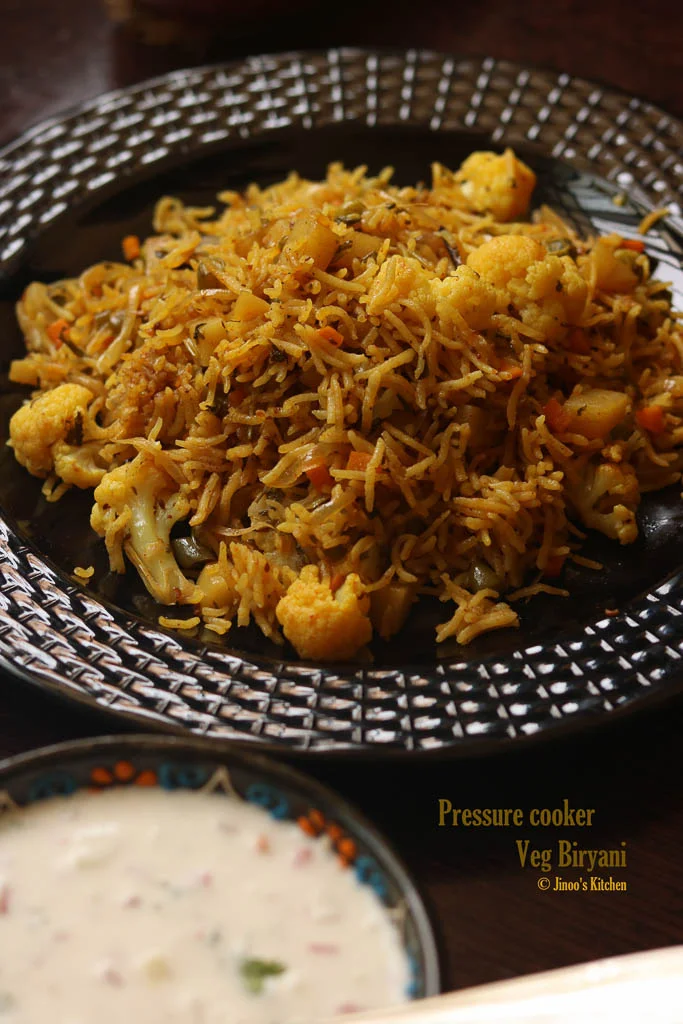
This pressure-cooker vegetable biryani brings basmati rice, mixed vegetables and warmly spiced yoghurt together in one pot. It makes a fragrant, filling meal with a straightforward method and minimal washing up.
Ingredients
- 250 ml (1 cup)basmati rice
- 15 ml (1 tbsp)oil
- 5 ml (1 tsp)ghee
- 1 long leaf, brokenbay leaf
- 2.5 cm (1 inch)cinnamon
- 5cloves
- 3green cardamom pods
- 1black cardamom pod
- 5 ml (1 tsp)shahi jeera
- 15 ml (1 tbsp)curd
- 2, thinly slicedonions
- 15 ml (1 tbsp)ginger garlic paste
- 1, finely choppedcarrot
- 5–6, finely choppedgreen beans
- 2, slitgreen chillies
- 1 medium, finely choppedpotato
- 125 ml (½ cup)cauliflower florets
- to tastesalt
- 30 ml (2 tbsp)green peas
- 1.25 ml (¼ tsp)turmeric powder
- 1.25 ml (¼ tsp)chilli powder
- 5 ml (1 tsp)coriander powder
- 5 ml (1 tsp)biryani masala
- 31 ml (⅛ cup)curd
- 310 ml (1¼ cups)water
- 1 handful, choppedcoriander and mint leaves
- 0.6 ml (⅛ tsp)rose water
- 15 ml (1 tbsp)ghee
Instructions
- 1
Soak the rice
Soak the basmati rice in water for 15 minutes, either before you begin cooking or while you prepare the other ingredients.
- 2
Heat the spices
Heat the oil and 1 tsp ghee in a pressure cooker. Add the bay leaf, cinnamon, cloves, green and black cardamom, and shahi jeera, then add 1 tbsp curd.
- 3
Fry the onions
Stir quickly and add the sliced onions straight away. Fry until transparent, then add the ginger garlic paste and fry until brown.
- 4
Cook the vegetables
Add all the vegetables and salt, then fry for a minute or two until they are slightly roasted.
- 5
Add the spices
Add the turmeric, chilli powder, coriander powder and biryani masala. Mix well and fry for 1 minute.
- 6
Stir in curd
Add the remaining ⅛ cup curd to the vegetable mixture and combine well.
- 7
Add the water
Measure 1¼ cups water and pour it into the cooker.
- 8
Add rice and herbs
Mix well and adjust the salt. Add the chopped coriander and mint leaves, then drain the rice and add it to the cooker.
- 9
Top with ghee
Mix once, then finish with 1 tbsp ghee on top.
- 10
Pressure cook
Close the cooker and pressure cook on a simmer for 10 minutes. Turn off the heat and leave it unopened for 15 minutes.
- 11
Fluff and serve
Fluff the rice and serve hot with raita.
What is vegetable biryani?
Biryani is a spiced rice dish associated with the Indian subcontinent, made in many regional styles. This version cooks basmati rice and mixed vegetables together in a pressure cooker, with whole spices, ground masalas and curd adding depth.
The one-pot approach is convenient, while soaking the rice first helps it cook more evenly. Fresh coriander and mint bring a lively finish.
Nutrition and macros by portion
The nutrition label shows one serving as written: 370 calories, 8g protein, 57g carbs, 12g fat.
| Portion | Adjustment | kcal | Protein | Carbs | Fat |
|---|---|---|---|---|---|
| Lighter | Use less ghee | 259 kcal | 6g | 40g | 8g |
| This serving | As written | 370 kcal | 8g | 57g | 12g |
| Hungry | Serve a larger portion | 555 kcal | 12g | 86g | 18g |
The rice and potato provide most of the carbohydrates, while the oil and ghee contribute much of the fat. The vegetables and curd add smaller amounts of protein, alongside fibre from the vegetables. Pair a serving with extra vegetables or a side salad to balance the plate.
Build the flavour base
Whole spices: warming bay, cinnamon, cloves, cardamoms and shahi jeera flavour the oil and ghee at the beginning. Add the curd and onions promptly as directed, stirring quickly so the spices do not sit too long in the hot fat.
Onions and paste: fry the onions until transparent, then cook the ginger garlic paste until brown. This gives the base a savoury, aromatic foundation.
Prepare the vegetables
Even pieces: chop the carrot, beans and potato finely, and keep the cauliflower florets small so the vegetables cook alongside the rice. The slit chillies release flavour as they cook; leave them whole if you want to remove them easily before serving.
Brief frying: cook the vegetables with salt for just a minute or two until slightly roasted. They will continue cooking under pressure, so this stage is for coating and lightly frying them rather than softening them completely.
Get the rice ready
Soaking: give the basmati 15 minutes in water, then drain it before adding it to the cooker. Draining keeps the measured cooking water close to the recipe's intended amount.
Water and curd: add the 1¼ cups water after stirring the remaining curd into the vegetables. Mix in the rice and herbs gently, then avoid further stirring once the cooker is closed.
Use the resting time
Pressure cooking: simmer for 10 minutes, then switch off the heat. Leave the cooker closed for another 15 minutes before opening it, as the recipe directs.
Finishing: fluff the rice gently to separate the grains without crushing the vegetables. The rice should be tender and the vegetables cooked through; if it is not, keep the lid on briefly and check again.
Serve it with
Raita: serve the biryani hot with raita, as suggested in the method. Its cool, creamy texture is a simple contrast to the warm spices.
Fresh herbs: keep the chopped coriander and mint in the dish rather than cooking them for a long time. Their fresh flavour is most noticeable when the rice is fluffed just before serving.
Recipe notes & tips
- Rinse and soak the basmati before cooking, then drain it well.
- Chop the vegetables to a similar small size so they cook more evenly.
- Have the onions ready before adding curd to the hot whole spices.
- Taste and adjust the salt before closing the cooker.
- Let the pressure cooker rest unopened for the full 15 minutes.
- Fluff with a fork or rice paddle using a light hand.
Variations
- More vegetables: Increase the mix of vegetables while keeping the pieces small.
- Milder chillies: Use one green chilli instead of two for a gentler heat.
- Extra herbs: Add more chopped coriander and mint at the end.
- Bolder spices: Adjust the biryani masala to suit your preference.
- Richer finish: Keep the full tablespoon of ghee for topping just before cooking.
Common mistakes to avoid
- Skipping the soak: the rice may cook less evenly; soak it for 15 minutes first.
- Adding onions late: the hot spices can catch; add the sliced onions promptly after the curd.
- Over-frying the vegetables: they cook further under pressure; limit this stage to a minute or two.
- Leaving excess soaking water: it changes the liquid balance; drain the rice well before adding it.
- Opening too soon: the rice needs the resting time to finish cooking; wait 15 minutes after turning off the heat.
- Stirring roughly: this can break the grains; fluff gently when serving.
How to store
Cool leftovers promptly and store them in a covered container in the fridge for up to 2 days. Reheat until piping hot, adding a small splash of water if the rice has dried out.
Frequently asked questions
Can I make this without a pressure cooker?
This method is written for a pressure cooker, so cooking times and liquid needs may differ in a saucepan. Use a covered pot and check the rice and vegetables as they cook, adding water only if needed.
Should I rinse the basmati rice?
Rinse it before soaking if you usually do so, then soak for 15 minutes and drain well before adding it to the cooker.
How do I know when the biryani is ready?
After the 10-minute simmer and 15-minute rest, the rice should be tender and the vegetables cooked through. Fluff gently to check the texture.
Can I use different vegetables?
You can swap in other vegetables, but cut them into small pieces so they cook in a similar time. The ingredient list here uses carrot, beans, potato, cauliflower and peas.
What can I serve with vegetable biryani?
Raita is the suggested accompaniment. A simple salad or extra vegetables also works alongside it.
Can I prepare the ingredients ahead?
You can chop the vegetables and onions in advance and measure out the spices. Soak the rice for 15 minutes before cooking, then drain it.
Cook it from the original
This recipe comes from jinooskitchen.com. Their page has the author’s own photos, notes and tips — the best place to cook it from.
Open the recipe on jinooskitchen.com