
Homemade Roscón de Reyes: soft, aromatic and delicious
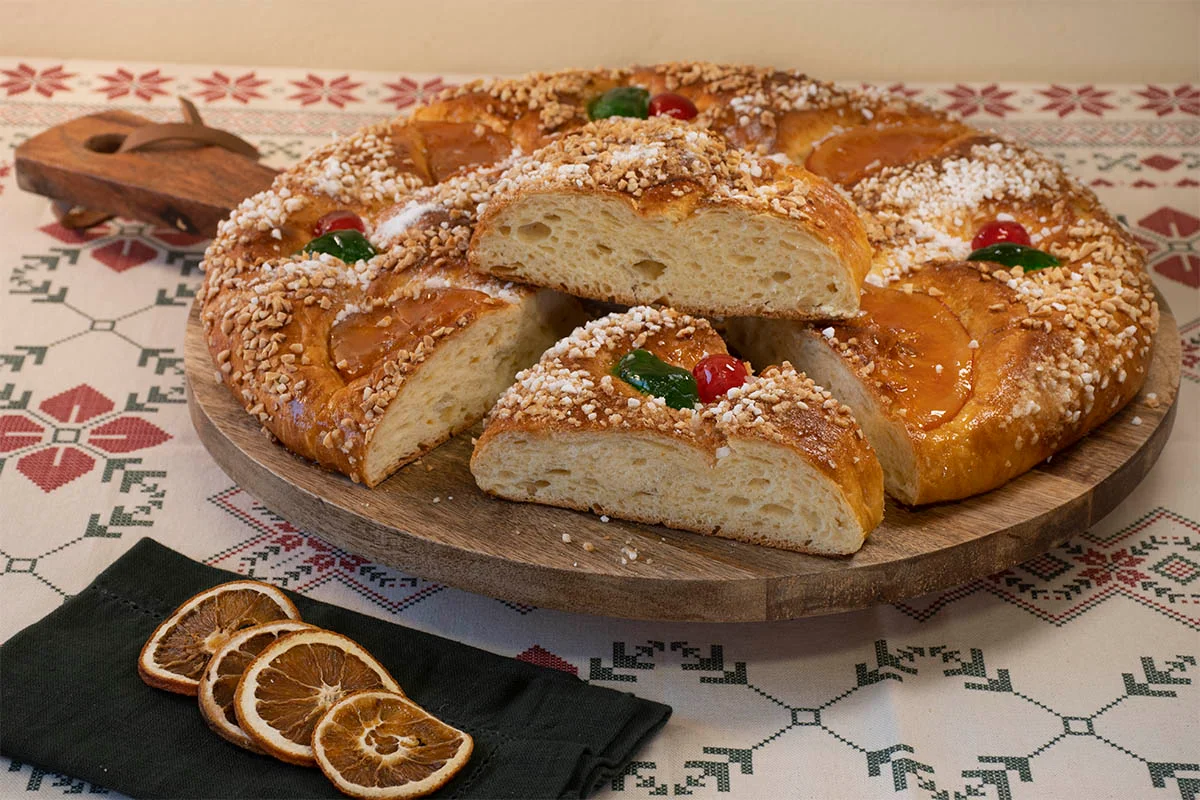
Roscón de Reyes is a soft, enriched Spanish festive bread scented with citrus and orange blossom water. This homemade version takes time to rise, but its tender crumb and generous decorations make it a lovely centrepiece to share.
Ingredients
- 130 gstrong bread flour
- 90 gmilk
- 10 g (or 4 g active dried baker’s yeast)fresh baker’s yeast
- 1 teaspoonsugar
- 100 gmilk
- 130 gsugar
- Zest of 1 lemon and 1 orangelemon and orange zest
- 100 gbutter
- 3eggs
- 15 g (or 5 g active dried baker’s yeast)fresh baker’s yeast
- 30 gorange blossom water
- 450 gstrong bread flour
- 1 pinchsalt
- As neededbeaten egg, for brushing
- As neededsugar lightly moistened with a couple of drops of water, chopped almonds, candied fruit, cherries, and similar decorations
- As neededcandied orange slices
Instructions
- 1
Make the preferment
Dissolve the yeast in the lukewarm milk. Add the remaining preferment ingredients and knead until they form a ball. Cover with a cloth and leave until the next day; in a hurry, let it ferment for at least 2 hours before using.
- 2
Combine the dough
Put all the main dough ingredients except the butter into a stand-mixer bowl, adding the preferment in pieces. Use the paddle attachment or a dough hook.
- 3
Knead the dough
Mix on the lowest speed for 1 minute, then knead on high speed for 4 minutes. Stop the mixer and leave the dough to rest for 10 minutes.
- 4
Add the butter
Restart the mixer on high and add the very cold butter a little at a time, waiting for each addition to be incorporated before adding more. Once all the butter is mixed in, knead at maximum speed for 4 minutes.
- 5
Let it rise
Turn the dough onto an oiled work surface, fold it and shape it into a ball. Put it in an oiled bowl, cover and leave somewhere warm to rise; at 28°C, the recipe took a little over 1½ hours.
- 6
Shape the roscón
Line a baking tray with baking paper. Gently deflate the dough, shape it into a ring and place it on the tray. Leave it for 5 minutes, then gently widen the ring again. If using a surprise, tuck it underneath the dough at one point, brush the ring with beaten egg and leave it somewhere warm for about 50–60 minutes.
- 7
Decorate the dough
Brush the risen roscón with beaten egg again and add the decorations.
- 8
Bake until done
Bake at 170°C with heat from above and below for 35–40 minutes. For the stated doneness check, insert a probe thermometer into the centre of the crumb; it should read 97–99°C.
- 9
Cool and serve
Move the baked roscón to a wire rack, leave it to cool and serve with hot chocolate.
What is Roscón de Reyes?
Roscón de Reyes is a Spanish ring-shaped sweet bread traditionally enjoyed around Three Kings Day. Its festive shape and decorations make it easy to share at a holiday table.
This version uses a preferment, citrus zest and orange blossom water for a fragrant, enriched dough. The long rise and careful butter incorporation help give it a soft, bread-like crumb.
Nutrition and macros by portion
The nutrition label shows one serving as written: 370 calories, 10g protein, 57g carbs, 11g fat.
| Portion | Adjustment | kcal | Protein | Carbs | Fat |
|---|---|---|---|---|---|
| Lighter | Use less topping | 259 kcal | 7g | 40g | 8g |
| This serving | As written | 370 kcal | 10g | 57g | 11g |
| Hungry | Serve a larger slice | 555 kcal | 15g | 86g | 17g |
Most of the carbohydrates come from the flour and sugar, while butter and eggs provide much of the fat; eggs and flour also contribute protein. Serve a slice with fruit or alongside a meal with a protein-rich dish if you want a more balanced plate.
Why make a preferment?
Preferment: the first small dough is made with flour, milk, yeast and a little sugar, then left to ferment before the main mix. The recipe calls for leaving it until the next day, with a minimum of 2 hours if you are short on time.
Temperature: the original method leaves it in a cool kitchen in winter rather than refrigerating it. Room conditions vary, so use the dough’s rise and appearance as your guide.
Build the dough patiently
Rest: after the initial mixing and kneading, the dough rests for 10 minutes before the butter goes in. Keep this pause in the schedule rather than adding the butter straight away.
Butter: add it very cold, in small increments, and wait for each portion to be absorbed. Adding the next piece too soon can make it harder for the dough to take up the butter evenly.
Shape and proof the ring
Ring: shape the dough on baking paper, then give it 5 minutes before gently widening it again. This brief pause lets the dough relax between shaping movements.
Second rise: after brushing with egg, leave the shaped dough somewhere warm for about 50–60 minutes. If adding a surprise, tuck it underneath the ring before this final proof.
Check the bake
Colour: brush the risen dough with egg once more before decorating, then bake at 170°C for 35–40 minutes with heat above and below. Oven performance differs, so the stated time is a guide rather than a guarantee.
Centre: the recipe gives a probe reading of 97–99°C as the sign that the crumb is cooked through. Insert the thermometer into the centre of the bread, avoiding the tray.
Choose the decorations
Toppings: lightly moistened sugar, chopped almonds, candied fruit, cherries and candied orange are suggested. Arrange them over the egg-washed dough before it goes into the oven.
Serving: let the roscón cool on a wire rack before slicing. Hot chocolate is the suggested accompaniment and suits the bread’s citrus and floral notes.
Recipe notes & tips
- Measure the preferment ingredients before starting so it has the full time it needs to rise.
- Add the cold butter gradually and let each addition disappear into the dough before continuing.
- Oil the work surface and bowl lightly to make the soft dough easier to handle.
- Leave the shaped ring for 5 minutes before widening it again.
- Use a probe thermometer to check the centre reaches 97–99°C.
- Keep an eye on the roscón towards the end of baking, as ovens may need slightly more or less than the stated time.
Variations
- Extra citrus: add more finely grated zest for a stronger citrus aroma.
- Almond topping: use chopped almonds and moistened sugar as the main decoration.
- Candied fruit: arrange candied fruit and cherries over the egg wash before baking.
- Orange finish: use candied orange slices as the main topping.
- Surprise inside: tuck a suitable wrapped surprise beneath the dough at one point in the ring before the final proof.
Common mistakes to avoid
- Adding butter too quickly: wait until each portion has been absorbed before adding the next.
- Skipping the rest: give the dough its full 10-minute pause before incorporating the butter.
- Rushing the first rise: allow the preferment to ferment overnight, or at least 2 hours if time is short.
- Forgetting the second shaping: leave the ring for 5 minutes, then gently widen it again.
- Relying only on the timer: check the centre with a probe, aiming for 97–99°C.
- Overlooking your oven: watch the bread near the end of the 35–40-minute bake and adjust to suit its progress.
How to store
Once completely cool, store the roscón in an airtight container at room temperature and eat within 2 days for the best texture. Refresh slices briefly in a low oven before serving; avoid storing it while warm, as trapped steam can soften the crust.
Frequently asked questions
Can I make the preferment the same day?
Yes. The recipe says to leave it for at least 2 hours if you are short on time, although its usual method is to leave it until the next day.
Can I use dried yeast instead of fresh?
Yes. The ingredient list gives active dried yeast alternatives: 4 g for the preferment and 5 g for the main dough.
Can I knead the dough without a stand mixer?
The method uses a stand mixer with a paddle or dough hook. It does not give hand-kneading timings, so expect the process to take longer and use the dough’s texture as a guide.
How do I know the roscón is baked through?
The recipe gives a centre temperature of 97–99°C as the doneness cue. The stated baking time is 35–40 minutes at 170°C, but ovens can vary.
When do I add the surprise?
After shaping the ring and letting it rest for 5 minutes, tuck the surprise underneath the dough at one point. Then brush with egg and leave the ring to proof.
What should I serve with Roscón de Reyes?
The recipe suggests serving it with hot chocolate. Let the bread cool on a wire rack before slicing.
Cook it from the original
This recipe comes from lacocinadefrabisa.lavozdegalicia.es. Their page has the author’s own photos, notes and tips — the best place to cook it from.
Open the recipe on lacocinadefrabisa.lavozdegalicia.es