
Beginner’s Three Kings’ cake with an extra-soft crumb
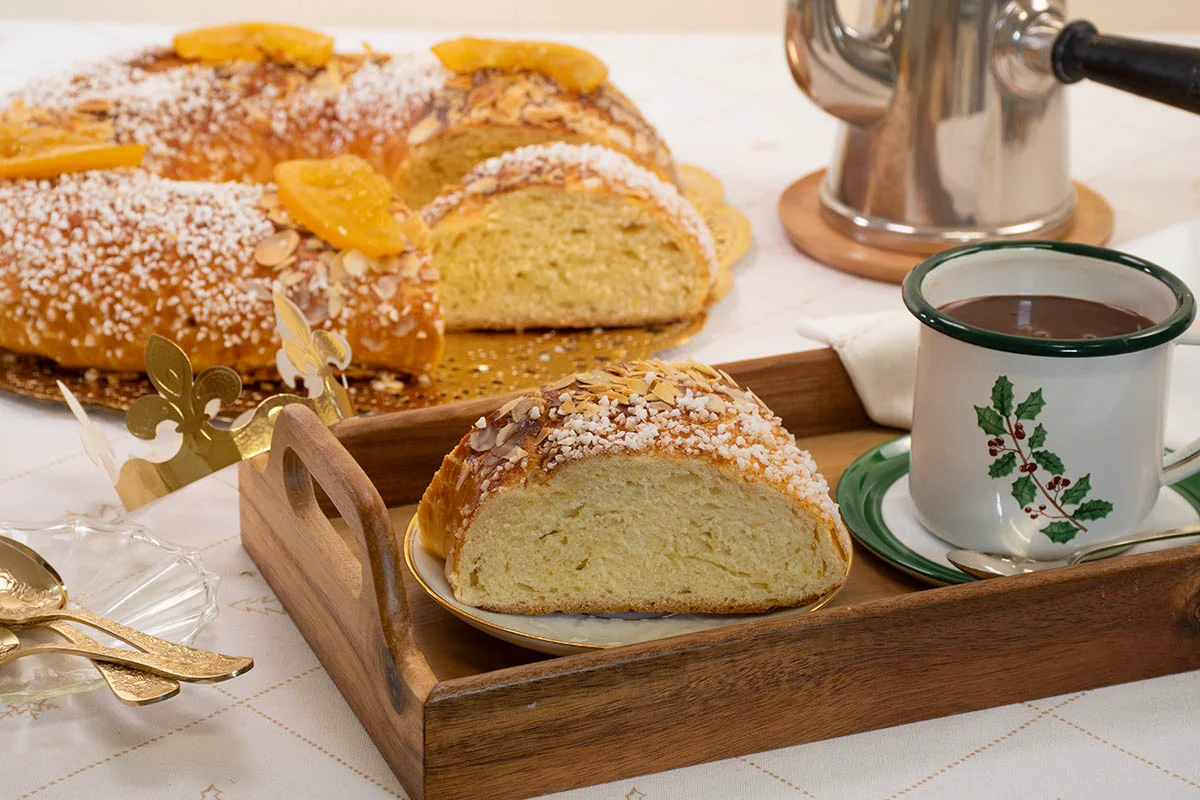
This Spanish Three Kings’ cake, or roscón de Reyes, is a soft, enriched ring-shaped bread flavoured with orange. Cream cheese helps give the dough a tender crumb, while a gradual knead and a warm rise make this a friendly version for first-time dough makers.
Ingredients
- 500 gstrong or medium-strength flour
- 80 gwarm milk
- 150 gcream cheese
- 2 largeeggs
- 20 gorange blossom water
- 90 gcooked beef fat or butter
- 90 gsugar
- 20 g fresh or 8 g driedbaker’s yeast
- Zest of 1orange
- 3–4 gsalt
- 1egg, beaten
- To tastepearl sugar or sugar moistened with water
- To tasteorange slices in syrup
- To tasteflaked almonds
Instructions
- 1
Mix the yeast
Stir the yeast into the warm milk and set it aside.
- 2
Combine wet ingredients
In a bowl, mix the sugar, eggs, invert sugar or honey mentioned in the method, and cream cheese until thoroughly combined.
- 3
Start the dough
Put the flour and salt in the mixer bowl, add the egg mixture and pour in the warm milk mixed with yeast.
- 4
Knead slowly
Using the dough hook, knead at low speed (about speed 3 on a 1–9 scale) for around 5 minutes, until the ingredients come together. After the first 2 minutes, increase the speed slightly if needed. Leave the dough to rest for about 10 minutes.
- 5
Knead again
Knead at a slightly higher speed, about 5, for around 8 minutes. If the flour has absorbed a lot of liquid and the dough feels very firm, add a couple of tablespoons of milk.
- 6
Add the fat
Increase the speed a little, to about 7, and add the butter in small pieces, allowing each addition time to work into the dough.
- 7
Check the dough
The dough is ready when the fat is incorporated and it pulls away from the sides of the mixer bowl.
- 8
Let it rise
Turn the dough out onto the work surface and, if you like, stretch a small piece thinly to check that it forms a membrane without tearing. Shape it into a ball, put it in an oiled bowl and leave it somewhere warm until doubled in size; a 30°C oven is suggested.
- 9
Shape the ring
Take out the dough, press out the gas, shape it into a ball and form it into a ring. Brush with beaten egg and leave to rise somewhere warm for 40–60 minutes.
- 10
Heat the oven
Preheat the oven to 160°C, with heat from both the top and bottom.
- 11
Decorate the dough
Brush the ring with beaten egg again, then sprinkle with pearl sugar or moistened sugar and scatter over the flaked almonds.
- 12
Bake the roscón
Bake for about 35 minutes. If it browns too much halfway through, cover it with aluminium foil. If using a probe thermometer, the recipe says the centre should not exceed 95°C.
- 13
Cool in the oven
When baking is finished, turn off the oven and let the roscón cool gradually with the door ajar, held open by a wooden spoon.
- 14
Finish and serve
Move the roscón to a wire rack. Decorate with orange slices in syrup that have been patted dry with kitchen paper, leave it to cool completely and serve.
What is a Three Kings’ cake?
Roscón de Reyes is a Spanish ring-shaped sweet bread traditionally associated with the Feast of the Epiphany. It is often decorated with candied fruit and eaten on 6 January.
This version uses cream cheese alongside the usual enriched-dough ingredients, aiming for a particularly soft crumb. Its staged mixing and two rises make the process manageable for a first attempt.
Nutrition and macros by portion
The nutrition label shows one serving as written: 350 calories, 9g protein, 50g carbs, 12g fat.
| Portion | Adjustment | kcal | Protein | Carbs | Fat |
|---|---|---|---|---|---|
| Lighter | Smaller slice | 245 kcal | 6g | 35g | 8g |
| This serving | As written | 350 kcal | 9g | 50g | 12g |
| Hungry | Larger slice | 525 kcal | 14g | 75g | 18g |
Most of the carbohydrates come from the flour and sugar, while butter or cooked beef fat, cream cheese and eggs contribute much of the fat. The flour, eggs and dairy also provide protein. Pair a slice with fruit or plain yoghurt for a more balanced plate.
The ingredients that shape the crumb
Flour: Strong or medium-strength flour gives the dough enough structure to rise into a ring. Different flours absorb liquid differently, so the method allows for a little extra milk if the dough seems unusually firm.
Cream cheese and fat: Cream cheese, butter or cooked beef fat, and eggs enrich the dough and contribute to its tender texture. Add the fat gradually so it has time to blend in.
Aromatics: Orange blossom water and orange zest bring the familiar fragrant character of a roscón. The supplied method does not specify when to add them; include them with the wet ingredients when mixing.
Kneading a soft dough
Start gently: The first low-speed mix brings the ingredients together without pushing the mixer too hard. A short rest before the second knead gives the flour time to absorb moisture.
Add fat slowly: Work in small pieces and wait for each addition to be incorporated before adding more. The dough is ready when it pulls away from the bowl; a thin stretched piece should form a membrane without tearing.
Rising and shaping
First rise: Leave the dough in an oiled bowl in a warm place until it has doubled in size. The recipe suggests a warm oven at 30°C as one option.
Shape: Press out the gas, round the dough and form a ring before brushing with egg. Give it a second warm rise for 40–60 minutes, until it looks puffed.
Baking and doneness
Gentle heat: Bake at 160°C with heat from both above and below for about 35 minutes. Keep an eye on the top and cover it with foil if it is browning too quickly.
Check the centre: The method gives 95°C as the maximum internal temperature when using a probe thermometer. After baking, let the cake cool gradually in the switched-off oven with the door held ajar, then transfer it to a rack.
Finishing and serving
Decoration: Add the flaked almonds and sugar before baking, then finish with the syrupy orange slices once the cake is on the rack. Pat the orange slices dry first so they do not drip syrup over the crust.
Serving: Let the roscón cool completely before slicing so the soft crumb has time to set. Serve it on its own or alongside coffee or tea.
Recipe notes & tips
- Use warm rather than hot milk when mixing it with the yeast.
- Give the dough the full rest between the two kneading stages.
- Add the butter or cooked beef fat in small pieces so the dough can absorb it gradually.
- Use a lightly oiled bowl for the first rise to make the dough easier to remove.
- Watch the cake near the end of baking and cover it with foil if it is browning too fast.
- Pat the syrupy orange slices dry before using them to decorate.
Variations
- Use butter: Choose butter instead of cooked beef fat for a straightforward alternative.
- Choose dried yeast: Use 8 g dried yeast in place of 20 g fresh yeast.
- Add more almonds: Scatter extra flaked almonds over the top before baking.
- Change the citrus: Use orange zest as listed, or add the zest to the wet mixture for fragrance throughout the dough.
- Make a simple topping: Use moistened sugar if you do not have pearl sugar.
Common mistakes to avoid
- Adding the fat all at once: Work it in a little at a time so it incorporates into the dough.
- Using very hot milk: Keep the milk warm, not hot, when mixing it with the yeast.
- Rushing the first rise: Wait until the dough has doubled before shaping.
- Skipping the second rise: Leave the shaped ring for 40–60 minutes so it can become puffy.
- Letting the top overbrown: Check during baking and cover with foil if necessary.
- Decorating with wet orange slices: Pat them dry first to avoid excess syrup on the finished cake.
How to store
Once completely cool, store the roscón in an airtight container at room temperature and eat within 2–3 days for the softest texture. Warm individual slices briefly in a low oven before serving.
Frequently asked questions
Can I use dried yeast instead of fresh yeast?
Yes. The ingredient list gives 8 g dried yeast as an alternative to 20 g fresh yeast.
What if my dough feels too firm?
Flours vary in how much liquid they absorb. The method suggests adding a couple of tablespoons of milk if the dough is very compact.
How do I know when the dough has risen enough?
For the first rise, wait until it has doubled in size. After shaping, let it rise for 40–60 minutes in a warm place.
Can I knead the dough by hand?
The supplied method uses a mixer with a dough hook, so it does not give hand-kneading timings. If kneading by hand, use the dough’s texture and the membrane test as your cues.
How can I tell when the roscón is baked?
Bake for about 35 minutes at 160°C and check the centre with a probe thermometer if you have one; the method says it should not exceed 95°C. Cover with foil if the cake browns too much during baking.
Cook it from the original
This recipe comes from lacocinadefrabisa.lavozdegalicia.es. Their page has the author’s own photos, notes and tips — the best place to cook it from.
Open the recipe on lacocinadefrabisa.lavozdegalicia.es