
Argentinian medialunas
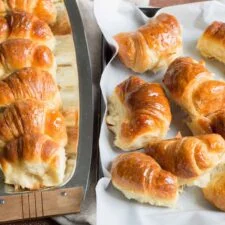
Argentinian medialunas are buttery, crescent-shaped pastries with delicate layers and a shiny sugar syrup finish. They make a special breakfast treat, especially served warm with coffee.
Ingredients
- 300 mlwhole milk
- 14 gdried yeast
- 525 gplain flour
- 40 gsugar
- 15 ghoney
- 1 teaspoonvanilla extract
- 1 teaspoonlemon zest, optional
- 10 gsalt
- 2eggs (1 for the dough and 1 for brushing)
- 40 gplain flour
- 225 gbutter, at room temperature
- 120 ml (½ cup)water
- 100 g (½ cup)sugar
Instructions
- 1
Activate the yeast
Warm the milk to no more than 43°C. Stir in the yeast until dissolved, then leave it for 10 minutes; it should become very bubbly. If it does not, repeat with fresh, active yeast.
- 2
Prepare the butter
Use a fork to mix the butter with 40 g of flour. Spread it on baking paper into a square about 15 cm on each side, then refrigerate for at least 15 minutes.
- 3
Mix the dough
Put the remaining flour, sugar, honey, vanilla, lemon zest, salt and 1 egg in a bowl. Mix while adding the yeast and milk mixture, then work the sticky dough for about 5 minutes with a stand mixer. Change to the dough hook and knead for 10 minutes. Turn the dough out on to a floured worktop.
- 4
Enclose the butter
Roll the dough into a square about 30 cm on each side. Place the butter square in the centre and fold the dough over it to enclose it, pinching the edges together. Roll it into a rectangle without exposing the butter, then fold it in thirds, starting with the left side. Put it on a floured tray and refrigerate for 1 hour.
- 5
Fold the dough
Set the dough on a floured worktop with its longest side facing you. Roll it into a rectangle and fold it in thirds again, starting with the left side. Refrigerate for 30 minutes, then repeat this rolling, folding and chilling process twice more.
- 6
Cut the triangles
Roll the dough on a floured worktop into a 45 × 30 cm rectangle about 5 mm thick, trimming the edges straight. Cut it into three long strips, each 10 cm wide. Cut each strip into three pieces, then cut each piece diagonally to make 18 triangles.
- 7
Roll the pastries
Stretch each triangle and roll it up, starting at the base.
- 8
Shape the crescents
Butter a small baking tray. Place each roll on it and curve it into a crescent, pressing the tips against the tray. Arrange the pastries almost touching, until the tray is full.
- 9
Mix the egg wash
Beat the remaining egg with a little water or milk in a small bowl until combined.
- 10
Heat the oven
Preheat the oven to 180°C.
- 11
Prove and bake
Leave the tray in a warm place for 30–45 minutes, until the medialunas have risen but not doubled in size. Brush them with the egg mixture and bake for 30 minutes, turning the tray if needed.
- 12
Make the syrup
Meanwhile, put the water and sugar in a small saucepan. Cook over a medium heat, stirring until the sugar dissolves, then boil for 4 minutes to reduce.
- 13
Glaze the pastries
Take the medialunas out of the oven when well browned. Prick them in several places with a toothpick and brush with the syrup several times, allowing it to soak in.
- 14
Serve warm
Serve the medialunas warm. They stay fresh for 3 days and can also be frozen and reheated.
What are Argentinian medialunas?
Medialunas are crescent-shaped pastries enjoyed across Argentina, commonly at breakfast or with coffee. Their name means “half-moons”, and they are known for a soft, rich crumb and a glossy finish.
This version uses a yeasted dough layered with butter, then brushed with a simple syrup after baking. The repeated folds create pastry layers, while honey and vanilla add gentle sweetness.
Nutrition and macros by portion
The nutrition label shows one serving as written: 194 calories, 4g protein, 25g carbs, 9g fat.
| Portion | Adjustment | kcal | Protein | Carbs | Fat |
|---|---|---|---|---|---|
| Lighter | Serve a smaller pastry | 136 kcal | 3g | 18g | 6g |
| This serving | As written | 194 kcal | 4g | 25g | 9g |
| Hungry | Serve two medialunas | 291 kcal | 6g | 38g | 13g |
The flour and sugar provide most of the carbohydrates, while butter supplies much of the fat. The flour, eggs, milk and yeast contribute protein; serve a medialuna with fruit or yoghurt for a more balanced breakfast plate.
Building the layers
Butter square: mixing the butter with a little flour helps it hold its shape as it is enclosed in the dough. Keep it chilled so it stays distinct during rolling.
Folding: roll and fold the dough in thirds, beginning with the left side each time as directed. Chilling between folds makes the dough easier to handle and helps keep the butter from softening too much.
Working with the dough
Yeast mixture: the milk should be warm rather than hot, no higher than 43°C. Bubbles after the 10-minute rest indicate that the yeast is active.
Sticky dough: begin by mixing with the paddle attachment for about 5 minutes, then knead with the dough hook for 10 minutes. A lightly floured worktop makes it easier to roll without adding too much extra flour.
Shaping even crescents
Triangles: trim the rolled dough to a neat 45 × 30 cm rectangle before cutting. The recipe’s cuts make 18 triangles, even though the stated serving count is 24.
Rolling: start at the wide base of each triangle and roll towards its point. Curve the finished roll into a crescent and press the tips down so they hold their shape on the tray.
Proofing and baking cues
Proofing: allow 30–45 minutes in a warm spot, looking for visible growth without waiting for the pastries to double. The exact time can vary with the warmth of the room.
Baking: bake at 180°C for 30 minutes, turning the tray if needed. The pastries should be well browned before they come out of the oven.
The syrup finish
Syrup: stir the water and sugar over medium heat until the sugar dissolves, then boil for 4 minutes to reduce it. Make this while the pastries bake so it is ready to use.
Glazing: prick the warm medialunas in several places and brush on the syrup in several passes. This gives the surface its characteristic shine and lets some syrup soak into the pastry.
Serving suggestions
Serve the medialunas warm, either on their own or alongside coffee for breakfast. Their buttery sweetness also makes them a good fit for a simple fruit plate.
Because the recipe makes a batch, bake only what you want to serve and freeze the rest. Reheat the frozen pastries before serving.
Recipe notes & tips
- Check the yeast mixture for bubbles before using it in the dough.
- Chill the butter square for at least 15 minutes so it is easier to enclose.
- Keep the butter enclosed while rolling; patch any small tears before folding.
- Use only enough flour on the worktop to prevent sticking.
- Leave space for some expansion when arranging the pastries on the tray.
- Brush on the syrup in several passes so it has time to absorb.
Variations
- Add citrus: include the optional lemon zest for a light lemon note.
- Use orange zest: replace the lemon zest with orange zest for a different citrus aroma.
- Change the extract: use almond extract instead of vanilla for a subtle variation.
- Serve with fruit: pair the warm pastries with fresh fruit at breakfast.
- Freeze a batch: freeze baked medialunas and reheat them when you want to serve them.
Common mistakes to avoid
- Overheating the milk: milk above 43°C can affect the yeast; check its temperature before mixing.
- Using inactive yeast: if the mixture does not bubble after 10 minutes, repeat with active yeast.
- Softening the butter: warm butter can leak from the dough; chill the butter square and follow the rests.
- Exposing the butter: roll gently and keep the dough closed around the butter to preserve the layers.
- Overproofing: stop when the medialunas have grown but have not doubled in size.
- Skipping the syrup: brush the baked pastries several times so the glaze can soak in.
How to store
Keep the medialunas fresh for up to 3 days in an airtight container. They can be frozen and reheated before serving.
Frequently asked questions
How many medialunas does this recipe make?
The method cuts the dough into 18 triangles, which should make 18 pastries. The recipe lists 24 servings, so the stated serving count and the method yield do not match.
Can I make the dough without a stand mixer?
Yes. Mix the ingredients by hand, then knead the dough until it is worked as described in the method. It should remain somewhat sticky.
How can I tell when the dough has proved enough?
After 30–45 minutes in a warm place, the pastries should look larger but should not have doubled in size.
Can I prepare the syrup while the pastries prove?
Yes. The method makes the syrup while the pastries bake, but you can prepare it during the proving time instead.
Can I freeze the medialunas?
Yes. The recipe says they can be frozen and reheated. Warm them again before serving.
Cook it from the original
This recipe comes from cocinachilena.cl. Their page has the author’s own photos, notes and tips — the best place to cook it from.
Open the recipe on cocinachilena.cl