
Lemon Scones Recipe
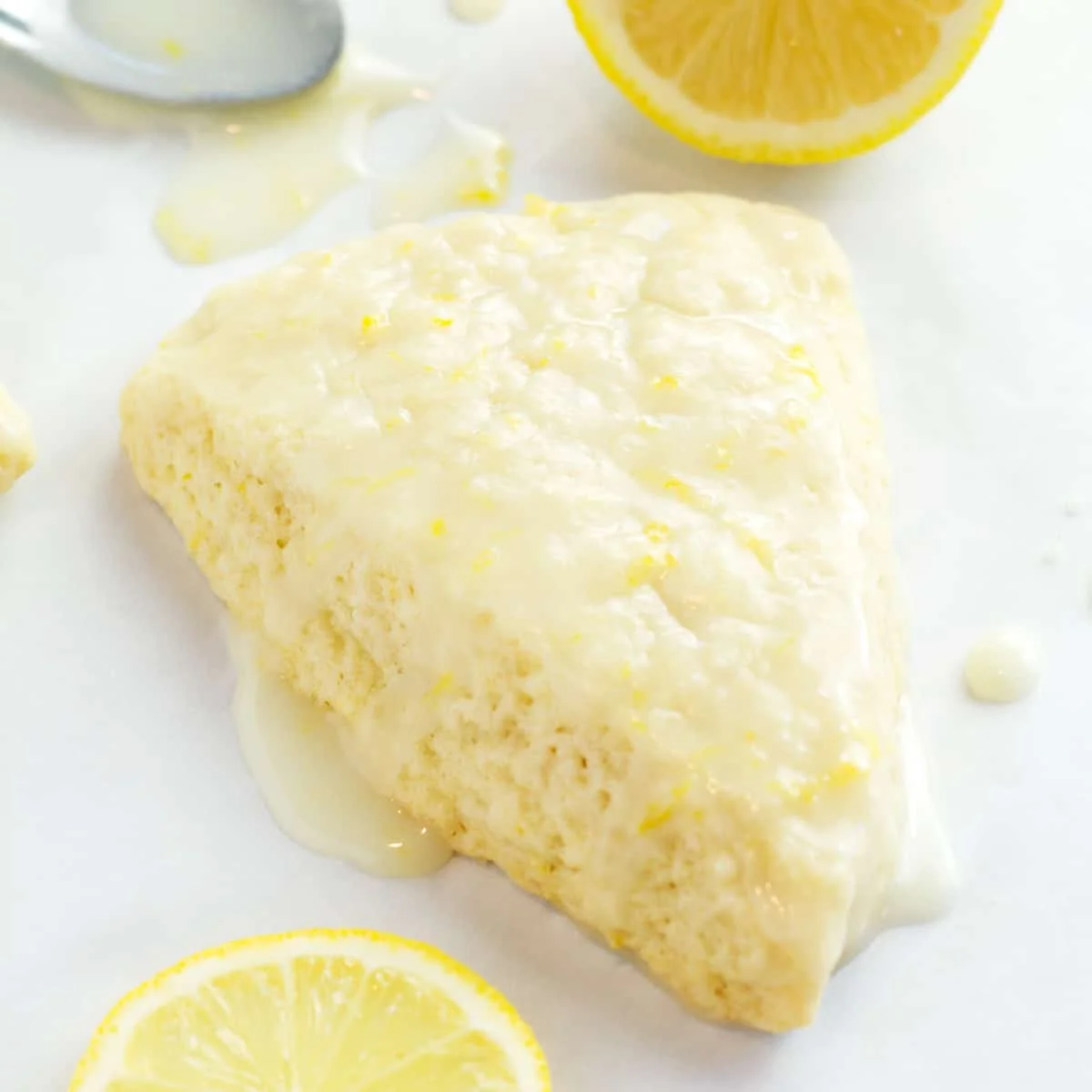
These American-style lemon scones are enriched with cold butter and cream for a tender, soft crumb, then finished with a sweet lemon glaze. They make a bright treat for breakfast, a gathering or an afternoon break.
Ingredients
- 375 gplain flour
- 133 gsugar
- 4 tsp (about 16 g)baking powder (aluminium-free)
- ¼ tspsalt
- 227 g, cut into very cold 7 g cubesbutter
- 1 largeegg
- 180 ml, very cold, plus more if neededdouble cream
- 22 ml (1½ tbsp), from about 2 lemonslemon zest
- 1 tspvanilla
- 150 gicing sugar
- 60 mlhalf-and-half or double cream
- 15 ml (1 tbsp), from about 1 lemonlemon zest
- ¼ tspvanilla
Instructions
- 1
Heat the oven
Heat the oven to 175°C (350°F). Line two baking trays with baking parchment.
- 2
Mix dry ingredients
In a stand-mixer bowl, whisk together the flour, sugar, baking powder and salt. A hand mixer will not work for this step; use a food processor instead if you do not have a stand mixer.
- 3
Cut in butter
Add the very cold butter and mix on medium-low, or pulse in a food processor, until the mixture resembles fine crumbs.
- 4
Bring dough together
In a separate small bowl, combine the egg, cream, lemon zest and vanilla. Add this to the flour mixture and mix on low, or pulse, until the dough comes together. If needed, add more cream 1 tbsp at a time until it is moist and mostly holds together.
- 5
Shape the dough
Turn the dough onto a lightly floured surface and knead it 4–5 times. Pat it by hand into a rectangle about 1.3 cm (½ inch) thick, roughly 28 cm (11 inches) long and 20 cm (8 inches) wide.
- 6
Cut the scones
With a sharp knife or bench scraper, cut the dough into 16 triangles. First halve it lengthwise and then widthwise to make 4 sections; cut each section into 4 triangles.
- 7
Bake until golden
Arrange the triangles on the prepared baking trays. Bake for 15–18 minutes, until the bottoms are lightly golden and the tops look dry.
- 8
Mix the glaze
While the scones bake, combine the icing sugar, half-and-half or double cream, lemon zest and vanilla in a bowl.
- 9
Cool and finish
Leave the baked scones on the tray for 5–10 minutes, then transfer them to a cooling rack. Once cool, drizzle over the glaze and serve.
What are lemon scones?
Scones are quick breads that are popular in Britain and have also become a familiar bake in the United States, where they are often larger and sweeter. This American-style version uses cream and butter for a tender texture, with lemon zest in both the dough and the icing.
The method keeps the dough simple: work cold butter into the dry ingredients, add the liquid, then shape and bake. A sharp citrus flavour and a sweet glaze make these scones especially suited to breakfast or sharing.
Nutrition and macros by portion
The nutrition label shows one serving as written: 307 calories, 3g protein, 37g carbs, 17g fat.
| Portion | Adjustment | kcal | Protein | Carbs | Fat |
|---|---|---|---|---|---|
| Lighter | Use a lighter glaze | 215 kcal | 2g | 26g | 12g |
| This serving | As written | 307 kcal | 3g | 37g | 17g |
| Hungry | Serve two scones | 461 kcal | 5g | 56g | 26g |
The flour and sugar provide most of the carbohydrates, while butter, cream and the glaze contribute much of the fat. The egg and cream add some protein, though the scones are not especially protein-rich; pair one with yoghurt or eggs and fruit for a more balanced plate.
Why cold ingredients matter
Cold butter: Keep it very cold and cut it into small cubes before mixing. Fine crumbs are the cue to stop; the butter should be distributed through the flour without turning the mixture into a paste.
Cold cream: Use it straight from the fridge and add it gradually with the egg and flavourings. The dough should be moist and mostly hold together, not wet or sticky.
Handle the dough gently
Light kneading: The recipe calls for just 4–5 kneads to bring the dough together. More handling can make the scones firmer, so stop once the dough is cohesive.
Even shaping: Pat the dough to an even 1.3 cm thickness so the triangles bake at a similar rate. A lightly floured surface helps prevent sticking without adding too much extra flour.
Cutting neat triangles
Divide first: Halve the rectangle lengthwise, then widthwise, to form four sections. Cut each section into four triangles to make 16 pieces.
Use a sharp knife or bench scraper and make decisive cuts rather than dragging the blade through the dough. This helps the pieces keep their shape as you transfer them to the trays.
Check for doneness
Look underneath: The recipe’s main cue is lightly golden bottoms. The tops should look dry rather than glossy when the scones are ready.
Bake for 15–18 minutes, checking towards the earlier end of the range. Tray position and oven performance can affect the timing, so use the visual cues as well as the clock.
Glaze after cooling
Mix the icing sugar with the cream, lemon zest and vanilla while the scones bake. Stir until the glaze is smooth enough to drizzle.
Cool the scones on the tray for 5–10 minutes, then move them to a rack. Wait until they are cool before glazing so the icing stays on the surface instead of melting away.
Serving ideas
Serve the scones with tea or coffee for breakfast or an afternoon snack. Fresh berries or sliced fruit make a bright accompaniment to the lemon icing.
For a more substantial plate, add plain yoghurt or eggs on the side. The recipe makes 16 pieces, so it is also convenient for a gathering.
Recipe notes & tips
- Chill the butter and cream until you are ready to use them.
- Add any extra cream by the tablespoon so the dough does not become too wet.
- Knead only 4–5 times, just until the dough mostly holds together.
- Pat the dough to an even thickness to help the scones bake uniformly.
- Use the golden bottoms and dry-looking tops as your doneness cues.
- Let the scones cool fully before adding the glaze.
Variations
- More lemon: Add extra lemon zest to the glaze for a sharper citrus finish.
- Lime version: Replace the lemon zest in both dough and icing with lime zest.
- Berry addition: Fold a small handful of fresh blueberries into the dough gently.
- Plain tops: Leave off the icing for a less sweet scone.
- Cream choice: Use double cream in the glaze for a richer finish.
Common mistakes to avoid
- Soft butter: It can smear into the flour; start with butter that is very cold.
- Overworking the dough: Too much kneading can make the scones firm; stop after 4–5 turns.
- Adding too much cream: A wet dough is difficult to shape; add extra cream 1 tbsp at a time only as needed.
- Uneven thickness: Thin and thick areas bake differently; pat the rectangle to an even 1.3 cm.
- Glazing while warm: The icing can melt off; wait until the scones have cooled.
- Baking by time alone: Ovens vary; check for lightly golden bottoms and dry-looking tops.
How to store
Keep cooled scones in an airtight container at room temperature for up to 2 days. Reheat briefly in a low oven, and add the glaze after reheating if you have stored the scones unglazed.
Frequently asked questions
Can I make the dough without a stand mixer?
The recipe advises against using a hand mixer for the dry ingredients and butter. A food processor is the suggested alternative; pulse the mixture rather than running it continuously.
How do I know if the dough needs more cream?
It should be moist and mostly hold together when mixed. If it is still crumbly and will not come together, add cream 1 tbsp at a time.
Can I prepare the scones ahead?
You can prepare and cut the dough ahead, then keep it covered and chilled until baking. Bake according to the recipe’s visual cues, allowing for a little extra time if the dough is very cold.
Can I freeze lemon scones?
Freeze the cooled, unglazed scones in an airtight container. Thaw and warm them before glazing; the icing is best added after reheating.
Can I use single cream instead?
The recipe specifies heavy cream in the dough and half-and-half or heavy cream for the glaze. For the closest result, use double cream in the dough and either listed option for the icing.
Why should I wait before icing?
The scones need to cool so the glaze can sit on top rather than melting into the warm surface. Move them to a rack after the initial 5–10 minutes on the tray.
Cook it from the original
This recipe comes from borrowedbites.com. Their page has the author’s own photos, notes and tips — the best place to cook it from.
Open the recipe on borrowedbites.com