
Lion King Roll (Sushi)
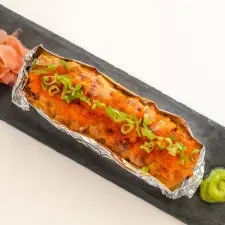
A California-style sushi roll filled with cucumber, avocado and imitation crab, then topped with salmon and a rich mayonnaise–unagi sauce. It brings a baked, saucy finish to homemade sushi, with optional chilli for a little heat.
Ingredients
- About 950 g cooked (4 cups)sushi rice
- 5 sheets, plus extra in case of tearingnori
- 3Persian cucumbers
- 2 mediumavocados
- 10imitation crab sticks
- 454 g (1 lb)skinless salmon
- 120 ml (½ cup)Kewpie mayonnaise
- 60 ml (¼ cup)unagi sauce
- To taste, optionalSriracha
- To tastemasago or tobiko
- To tastegreen onions, thinly sliced
- To serve, optionalpickled sushi ginger, wasabi and soy sauce
Instructions
- 1
Cook the rice
Cook the sushi rice according to your preferred sushi rice recipe. It should yield about 950 g (4 cups) cooked rice, enough for 5 rolls.
- 2
Prepare the fillings
Cut the cucumber, imitation crab and avocado into thin strips. Slice the salmon into large, thin sheets if possible so they can drape over the rolls.
- 3
Mix the sauce
Stir together the Kewpie mayonnaise and unagi sauce. Add Sriracha if you would like a spicy kick.
- 4
Set up your area
Cover a bamboo mat with plastic wrap to help stop the rice sticking. Set out a large bowl of water for your hands; dip them in, clap them together to remove excess water, and rewet them as needed.
- 5
Roll the sushi
Set a sheet of nori shiny-side down on the mat. Spread a thin, even layer of rice over it, covering the sides but leaving the top and bottom 2.5 cm (1 inch) clear. Arrange the cucumber, imitation crab and avocado towards the bottom, then roll it up carefully with the mat.
- 6
Add salmon sauce
Lay salmon slices over the roll. Cut it into sections, brush with the house sauce and transfer to a foil-lined sheet, folding the foil sides up to make a boat. Alternatively, place the pieces on a baking tray.
- 7
Repeat the rolling
Repeat the process with the remaining ingredients to make 5 rolls in total.
- 8
Bake the rolls
Broil the rolls in an oven at 200°C (400°F) for about 8 minutes, until the sauce is bubbling and the salmon is lightly cooked.
- 9
Finish and serve
Top with masago or tobiko and thinly sliced green onions. Serve with pickled sushi ginger and wasabi; extra soy sauce is optional.
What is a Lion King roll?
A Lion King roll is a California-style sushi roll topped with salmon and baked with a savoury, creamy sauce. It draws on the familiar combination of rice, nori, avocado, cucumber and imitation crab, then gives the outside a warm finish.
This version pairs Kewpie mayonnaise with unagi sauce, with optional Sriracha for heat. Baking the topped pieces makes the sauce bubbly and lightly cooks the salmon.
Nutrition and macros by portion
The nutrition label shows one serving as written: 650 calories, 29g protein, 77g carbs, 25g fat.
| Portion | Adjustment | kcal | Protein | Carbs | Fat |
|---|---|---|---|---|---|
| Lighter | Use less house sauce | 455 kcal | 20g | 54g | 18g |
| This serving | As written | 650 kcal | 29g | 77g | 25g |
| Hungry | Add another roll | 975 kcal | 44g | 116g | 38g |
The sushi rice supplies most of the carbohydrate, while the mayonnaise and avocado contribute much of the fat. Salmon provides protein, with smaller amounts from the imitation crab; the sauces and imitation crab also contribute sodium. Serve a roll with extra cucumber or another fresh vegetable side to balance the plate.
Build the filling
Thin strips: Cut the cucumber, avocado and imitation crab to a similar size so they sit neatly inside the roll. Keep the salmon in broad, thin sheets if you can, which makes it easier to drape over the outside.
Keep the rice manageable
Wet hands: A little water helps keep sticky sushi rice from clinging to your fingers. Shake or clap off excess water so the rice is easier to spread without making the nori soggy.
Wrapped mat: Plastic wrap on the bamboo mat helps prevent rice from sticking to it during rolling. Rewet your hands as needed while working through the batches.
Roll without overfilling
Even layer: Spread the rice thinly across the nori, leaving the specified clear space at the top and bottom. Too much rice or filling can make the roll difficult to close.
Tight shape: Arrange the fillings near the bottom edge and use the mat to guide the roll forward. Apply even pressure as you roll so the filling stays centred.
Top and bake carefully
Salmon sheets: Lay the salmon across the rolled sushi before cutting it into sections. Handle the slices gently so they stay on top as you transfer the pieces to foil or a baking tray.
Bubbly sauce: Bake for about 8 minutes at 200°C (400°F), watching for bubbling sauce and lightly cooked salmon. The recipe gives these visual cues rather than a separate internal temperature.
Serve with simple sides
Classic accompaniments: Pickled sushi ginger and wasabi bring sharp, pungent contrasts to the rich topping. Soy sauce is optional because the roll already has a generous sauce layer.
Fresh finish: Scatter the masago or tobiko and sliced green onions over the hot pieces just before serving. This keeps the garnish distinct from the creamy baked topping.
Recipe notes & tips
- Keep a bowl of water nearby and dampen your hands whenever rice begins to stick.
- Use thin, even strips of filling to make rolling and slicing easier.
- Leave the specified clear space at the top and bottom of the nori when spreading the rice.
- Use a sharp knife to cut the rolls into sections cleanly.
- Watch closely during baking and take the rolls out when the sauce bubbles and the salmon is lightly cooked.
Variations
- Add heat: Mix Sriracha into the mayonnaise and unagi sauce before brushing it on.
- Choose the roe: Use masago or tobiko as the finishing garnish, according to what you have.
- Make it milder: Leave out the Sriracha and serve wasabi on the side.
- Change the garnish: Use extra thinly sliced green onions over the finished rolls.
- Serve without soy: Offer pickled ginger and wasabi, and leave out the optional soy sauce.
Common mistakes to avoid
- Wet hands: Excess water can make the nori soggy; clap your hands together to remove it before handling rice.
- Overfilled roll: Too much filling makes the nori harder to close; arrange the strips in a restrained layer near the bottom.
- Uneven rice: Thick patches make the roll awkward to shape; spread the rice in a thin, even layer.
- Loose rolling: A slack roll can fall apart when sliced; guide it with the mat and apply even pressure.
- Overbaking: Salmon can cook more than intended; check for bubbling sauce and lightly cooked fish at about 8 minutes.
How to store
Store leftover rolls in an airtight container in the fridge and eat within 1 day for best quality. Reheat briefly in an oven until warmed through; the rice may firm up in the fridge, and the salmon will cook further when reheated.
Frequently asked questions
Can I make the sushi rice ahead?
Yes. Prepare it ahead according to your sushi rice recipe and have about 950 g (4 cups) cooked rice ready for assembly.
Do I need a bamboo mat?
The method uses a bamboo mat covered with plastic wrap to help shape the rolls. If you do not have one, you can try rolling carefully by hand, though shaping may be less consistent.
Can I leave out the Sriracha?
Yes. Sriracha is optional, so mix the Kewpie mayonnaise and unagi sauce without it for a milder topping.
How do I know when the rolls are done?
After about 8 minutes at 200°C (400°F), look for bubbling sauce and salmon that is lightly cooked.
Is extra soy sauce necessary?
No. The rolls already have a generous house sauce, so soy sauce is optional. Pickled ginger and wasabi are also served alongside.
Cook it from the original
This recipe comes from vickypham.com. Their page has the author’s own photos, notes and tips — the best place to cook it from.
Open the recipe on vickypham.com