
Mantecados de naranja
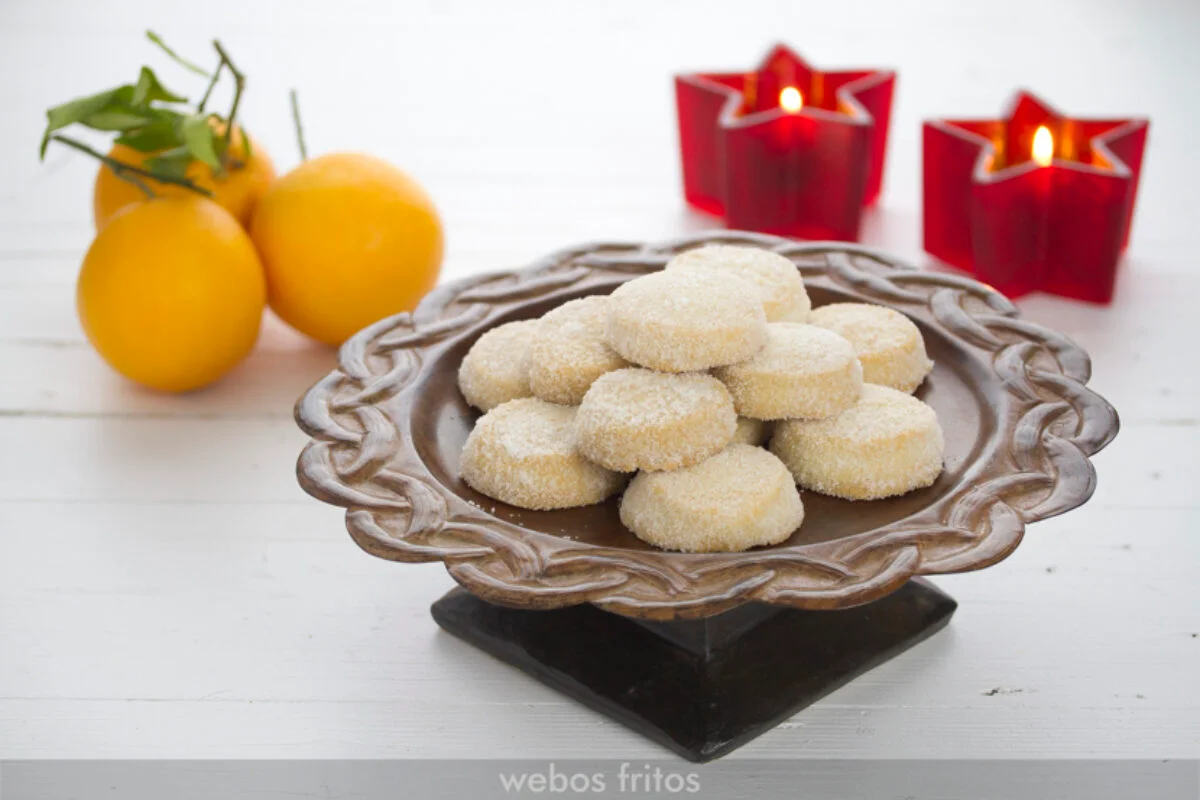
These Spanish orange mantecados are tender, crumbly pastries made with ibérico lard, white wine and orange juice. Make the dough the day before, then cut and bake the next day for a traditional festive treat.
Ingredients
- 500 g (plus a little extra if needed)plain flour
- 60 gsugar
- 350 gibérico pork lard
- 60 gwhite wine
- 1egg yolk
- Juice of 1 small orangeorange juice
- to tastegranulated sugar, for coating
Instructions
- 1
Soften the lard
Leave the ibérico pork lard at room temperature for a few hours before making the dough, until it is soft.
- 2
Make a well
Pile the flour on the work surface and shape it into a well.
- 3
Mix the dough
Put the sugar, lard, wine, egg yolk and orange juice in the well. Work everything together until the dough is slightly soft but not very sticky; it will firm up as it cools.
- 4
Chill overnight
Shape the dough into a ball, flatten it slightly and wrap it in cling film. Refrigerate it overnight.
- 5
Take off the chill
The next day, remove the dough from the fridge and leave it in the kitchen for a while so it can warm slightly.
- 6
Heat the oven
Preheat the oven to 170°C, with heat from both the top and bottom.
- 7
Roll and cut
Dust the work surface with a little flour, set the dough on it and roll it to your preferred thickness. The recipe suggests about 10 mm for baking, though the mantecados can be made thicker if you like them that way. Grease the inside of a cutter with a few drops of olive oil and cut out the pastries. Arrange them slightly apart on a baking tray lined with baking paper.
- 8
Bake the pastries
Bake the tray at 170°C for about 25 minutes.
- 9
Coat and cool
Take the mantecados out of the oven. Put plenty of sugar in a bowl and coat the pastries while they are hot, so the sugar sticks. Leave them to cool on a wire rack.
What are mantecados?
Mantecados are traditional Spanish pastries whose name refers to manteca, or lard. They are especially associated with festive baking and are prized for their delicate, crumbly texture.
This version gets its aroma from orange juice and white wine, while ibérico lard gives the dough its rich, tender character. The recipe is shared as one passed from Alicia via the writer’s friend Nieves, rather than as a claim to a single definitive style.
Nutrition and macros by portion
The nutrition label shows one serving as written: 317 calories, 3g protein, 31g carbs, 20g fat.
| Portion | Adjustment | kcal | Protein | Carbs | Fat |
|---|---|---|---|---|---|
| Lighter | Use less coating sugar | 222 kcal | 2g | 22g | 14g |
| This serving | As written | 317 kcal | 3g | 31g | 20g |
| Hungry | Serve two mantecados | 476 kcal | 5g | 47g | 30g |
The flour and added sugars provide most of the carbohydrates, while the lard supplies most of the fat; the egg yolk and flour contribute a little protein. The estimate includes an assumed amount of sugar for coating, which is not specified in the recipe, so the actual values will vary. Pair a mantecado with fruit or plain yoghurt for a more balanced snack.
Why the lard matters
Soft lard: bring it to room temperature before mixing so it can be worked evenly into the flour. It should be pliable, not melted.
Ibérico lard: its rich flavour is central to the character of these biscuits. Avoid swapping it for liquid fat, which would change how the dough holds together.
Getting the dough right
Texture: work the ingredients until the dough is soft but not very sticky. Add a little of the spare flour only if it needs it; too much can make the finished pastries dry.
Chilling: the overnight rest firms the dough and makes it easier to roll and cut. It also means the dough will feel harder the next day, so let it sit out briefly before shaping.
Rolling and cutting
Thickness: about 10 mm is the suggested thickness for baking, though the recipe notes that thicker mantecados are welcome if that is your preference. Try to keep the dough an even thickness so the pastries bake at the same rate.
Cutter: a few drops of olive oil inside the cutter help release the shapes. Space the cut-outs slightly apart on the lined tray.
When they are done
Timing: bake at 170°C for about 25 minutes, as directed. Keep an eye on the tray towards the end, since thickness and oven behaviour can affect the exact time.
Sugar coating: roll the pastries in sugar as soon as they come out of the oven. If they cool first, the coating is less likely to adhere.
Serving ideas
These rich, sweet pastries work well alongside coffee, tea or a small glass of dessert wine. Their crumbly texture makes them a natural addition to a festive biscuit plate.
For a more balanced snack, serve one with fresh fruit or plain yoghurt rather than adding another rich accompaniment.
Recipe notes & tips
- Soften the lard for a few hours before starting so it mixes readily.
- Keep the dough only slightly sticky and use extra flour sparingly.
- Let chilled dough sit out briefly if it is too firm to roll.
- Roll to an even thickness so the pastries bake consistently.
- Grease the cutter lightly with olive oil to help release each shape.
- Coat the pastries in sugar while they are still hot.
Variations
- More orange: add a little finely grated orange zest for a stronger citrus aroma.
- Cinnamon finish: mix a little ground cinnamon into the coating sugar.
- Different cutter: use festive shapes, keeping the dough at an even thickness.
- Less coating: roll the pastries lightly in sugar instead of giving them a thick coat.
Common mistakes to avoid
- Melting the lard: use it softened at room temperature, not liquid, so the dough keeps its intended texture.
- Adding too much flour: work in only a little extra if the dough is very sticky, since excess flour can dry the pastries.
- Rolling cold dough: leave it out briefly first so it is easier to handle without forcing it.
- Uneven thickness: roll the dough evenly to help the mantecados bake at a similar rate.
- Coating after cooling: toss them in sugar straight from the oven so it adheres.
- Crowding the tray: leave a little space between pastries so they are easy to handle after baking.
How to store
Once completely cool, store the mantecados in an airtight tin at room temperature; they should keep well for about a week. They are best served at room temperature, so reheating is not necessary.
Frequently asked questions
Can I make the dough ahead?
Yes. The recipe calls for chilling it overnight, wrapped in cling film.
Why does the dough feel firm after chilling?
The lard firms as it cools. Leave the dough out in the kitchen for a while before rolling so it softens slightly.
How thick should I roll the dough?
About 10 mm is suggested for baking, although you can make them thicker if you prefer. Aim for an even thickness throughout.
How do I know when the mantecados are ready?
Follow the recipe’s guide of about 25 minutes at 170°C. Check them towards the end, especially if your pastries are thicker or thinner than 10 mm.
When should I add the coating sugar?
Coat the mantecados as soon as they come out of the oven. The sugar adheres better while they are hot.
Can I freeze the dough?
The recipe does not specify freezing. For the method provided, chill the wrapped dough overnight in the fridge.
Cook it from the original
This recipe comes from webosfritos.es. Their page has the author’s own photos, notes and tips — the best place to cook it from.
Open the recipe on webosfritos.es