
British Roast Potatoes - Roasties
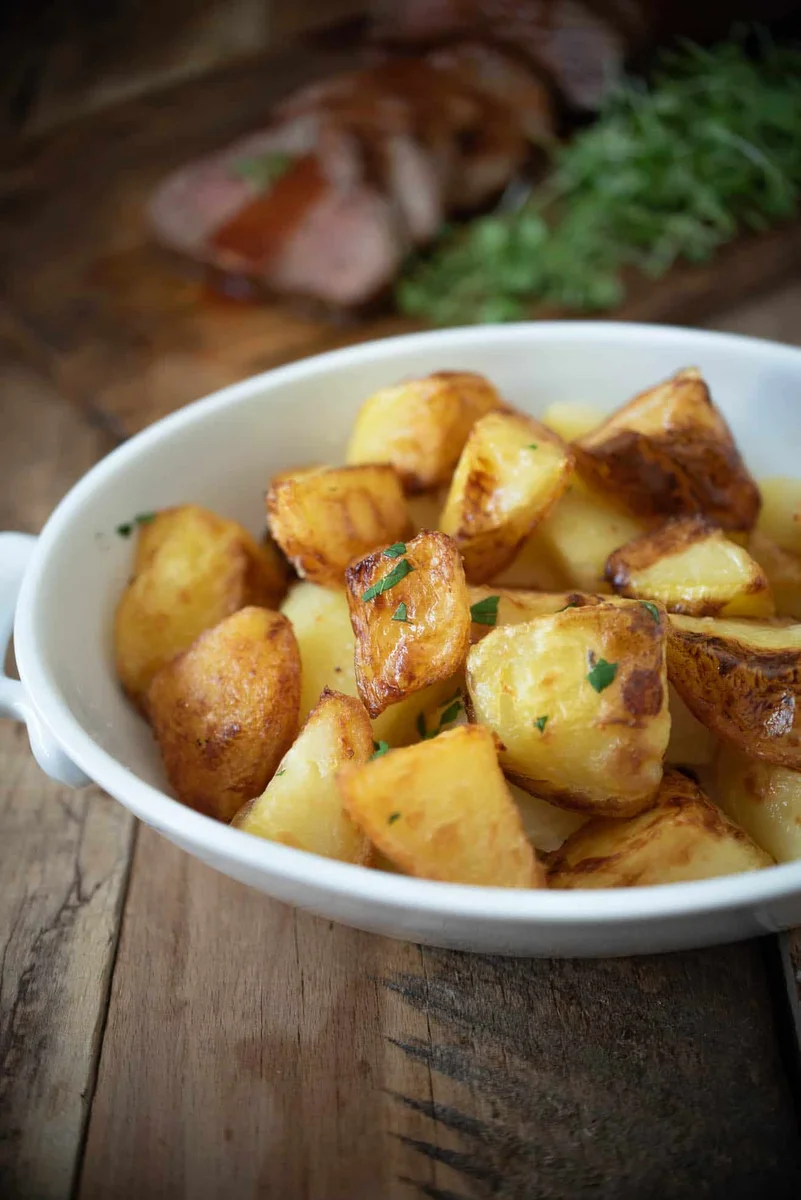
British roast potatoes, or roasties, are fluffy potato chunks with a crisp, golden exterior. Parboiling and roughing up the surface helps them roast beautifully for a Sunday lunch or other hearty meal.
Ingredients
- 1 kg (2 pounds)potatoes, peeled and cut into large chunks
- 5 g (1 teaspoon)salt
- As neededvegetable oil
Instructions
- 1
Boil the potatoes
Put the potatoes in a large pan and cover them with water. Bring to the boil, then add a good pinch of salt.
- 2
Simmer until tender
Simmer gently for 15–20 minutes, until a sharp knife slips easily into a potato.
- 3
Rough and dry
Drain the potatoes in a colander and shake them to roughen the surfaces without breaking them up. Arrange them in an even layer on a cooling rack and leave to dry for about 10 minutes.
- 4
Heat the oven
Preheat the oven to 200°C (400°F).
- 5
Heat the oil
Pour a thick, even layer of vegetable oil into a high-sided roasting pan. Heat the pan in the oven for 10 minutes.
- 6
Roast until crisp
Carefully remove the pan and arrange the potatoes in the hot oil in an even layer, leaving a little space between them. Return the pan to the oven and roast for 30–40 minutes, turning the potatoes every 15 minutes so they brown and crisp evenly. Sprinkle with a little salt while still warm.
What are roast potatoes?
Roast potatoes, often called roasties, are a familiar part of British roast dinners. Their appeal is the contrast between a crisp, browned outside and a soft, fluffy centre.
This version uses a straightforward sequence: simmer the chunks until tender, roughen their surfaces, dry them, then roast them in preheated oil. Those steps help create texture without adding extra ingredients.
Nutrition and macros by portion
The nutrition label shows one serving as written: 211 calories, 6g protein, 48g carbs, 0g fat.
| Portion | Adjustment | kcal | Protein | Carbs | Fat |
|---|---|---|---|---|---|
| Lighter | Use less vegetable oil | 148 kcal | 4g | 34g | 0g |
| This serving | As written | 211 kcal | 6g | 48g | 0g |
| Hungry | Serve a larger portion | 317 kcal | 9g | 72g | 0g |
The potatoes provide most of the carbohydrates, while the vegetable oil contributes fat; the recipe contains no substantial protein source. Serve a portion alongside a protein-rich main and vegetables to make a more balanced plate.
Choose and cut the potatoes
Potato chunks: Cut the peeled potatoes into large pieces of similar size so they cook at roughly the same pace.
Surface area: A little roughness on the outside gives the oil more potato surface to crisp during roasting.
Get the parboil right
Gentle simmer: Cook the potatoes for 15–20 minutes rather than letting them tumble vigorously, which can break up the edges.
Doneness cue: A sharp knife should enter a potato easily. If the centre is still firm, give the chunks a little more time before draining.
Dry before roasting
Rough edges: Shake the drained potatoes in the colander until their surfaces look a little scuffed, but stop before the chunks fall apart.
Drying time: Spread them on a cooling rack for about 10 minutes. Letting the surface dry before it meets the hot oil helps it roast rather than steam.
Use properly heated oil
Hot pan: Heat the oil in the roasting pan for 10 minutes in the 200°C oven. Take care when moving the pan, as the oil will be very hot.
Room to brown: Arrange the potatoes in one layer with a little space between the pieces. If they are packed tightly, they may not brown as evenly.
Turn for even colour
Roasting time: Roast for 30–40 minutes, turning the potatoes every 15 minutes as directed. The exact time depends on their size and how quickly they colour.
Serving cue: Look for crisp, golden surfaces and a fluffy centre. Add a light sprinkle of salt while the potatoes are warm.
Serve with a roast dinner
Roast potatoes pair naturally with roast vegetables, gravy and a main such as roast meat or a vegetarian centrepiece. Add green vegetables or a fresh salad for contrast.
Bring them to the table soon after roasting so their crisp edges are at their best.
Recipe notes & tips
- Cut the potatoes into similarly sized chunks for more even cooking.
- Shake the drained potatoes gently so the edges roughen without the chunks breaking apart.
- Give the potatoes the full 10 minutes on the rack to dry.
- Leave a little space between the chunks in the roasting pan.
- Turn the potatoes every 15 minutes for more even browning.
- Season while the potatoes are still warm so the salt adheres.
Variations
- Add garlic: Add peeled garlic cloves to the roasting pan during the final part of cooking.
- Add herbs: Toss the hot potatoes with chopped rosemary or thyme before serving.
- Use duck fat: Replace the vegetable oil with duck fat for a richer roast.
- Add black pepper: Finish with freshly ground black pepper alongside the salt.
- Serve with gravy: Offer hot gravy at the table, keeping it separate until serving to preserve the crisp edges.
Common mistakes to avoid
- Uneven chunks: Pieces of very different sizes cook at different rates; cut them to a similar size.
- Overboiling: Potatoes that break apart in the pan are difficult to handle; simmer gently and check them with a knife.
- Skipping the drying: Wet surfaces can hinder crisping; leave the drained potatoes on the rack for about 10 minutes.
- Cool oil: Potatoes added to oil that has not been heated may brown less effectively; heat the pan for 10 minutes first.
- Crowding the pan: Closely packed pieces have less room to brown; arrange them in one layer with space between.
- Forgetting to turn: One side may colour more than the others; turn the potatoes every 15 minutes.
How to store
Cool leftovers and refrigerate them in a covered container for up to 3 days. Reheat in a hot oven until heated through and crisp again; they may be softer than freshly roasted potatoes.
Frequently asked questions
Can I prepare the potatoes ahead?
You can boil, roughen and dry them ahead, then refrigerate them until you are ready to roast. Heat the oil in the pan before adding the potatoes.
How do I know when the potatoes are parboiled?
A sharp knife should slide easily into a potato. The pieces should be tender but still hold together when drained and shaken.
Why do the potatoes need to dry?
The method dries the roughened surfaces before roasting. This helps the potatoes roast in the hot oil rather than carrying excess water into the pan.
Can I use another oil?
Use an oil suitable for roasting at 200°C. The recipe specifies vegetable oil, but another appropriate cooking fat will change the flavour.
Can I make these without peeling the potatoes?
The recipe calls for peeled potatoes. Leaving the skins on changes the texture, so scrub them well if you choose to keep them.
Cook it from the original
This recipe comes from culinaryginger.com. Their page has the author’s own photos, notes and tips — the best place to cook it from.
Open the recipe on culinaryginger.com