
Vegetarian Soba Noodles
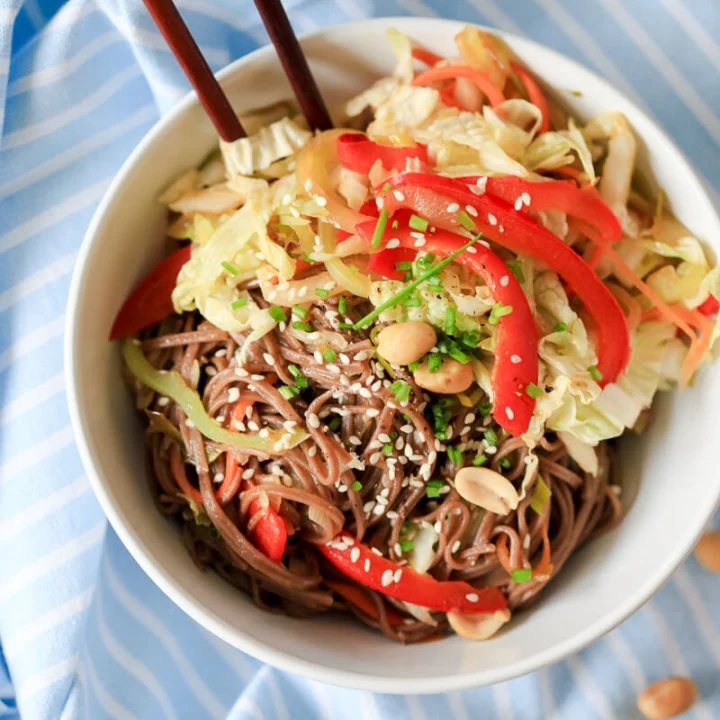
These vegetarian soba noodles pair nutty buckwheat noodles with cabbage, peppers and other quick-cooking vegetables. A fast stir-fry makes them a handy hot meal, finished with soy sauce, sesame seeds and peanuts.
Ingredients
- 140 gsoba noodles
- 1onion
- 1 clovegarlic
- 1 smallleek
- 1 smallcarrot
- to tastegreen and red bell pepper
- about 70 g (1 cup)Chinese cabbage
- to tastesesame seeds and peanuts, for topping
- 1 spoonoil
- to tastesoy sauce
- to tastesalt and pepper
Instructions
- 1
Prepare the vegetables
Wash and peel the vegetables, then slice and chop them.
- 2
Cook the noodles
Bring a pot of water to the boil and add the soba noodles. Cook according to the packet instructions, about 3 minutes, then drain and rinse.
- 3
Stir-fry and serve
Heat a spoon of oil in a wok or large pan. When hot, add the onion and stir quickly until translucent. Add the garlic, leek and carrot and stir-fry for a minute or two, until the vegetables begin to soften. Add the bell peppers and stir-fry, then add the cabbage, sesame seeds and peanuts. Add the noodles, soy sauce, salt and pepper to taste, and stir until everything is well mixed. Serve hot.
What are soba noodles?
Soba are Japanese noodles traditionally made with buckwheat, which gives them their characteristic earthy, slightly nutty flavour. This version takes an Asian-inspired stir-fry approach, combining them with crisp-tender vegetables and a savoury soy-seasoned finish.
The quick cooking and rinse keep the noodles from becoming overly soft before they go into the pan. Peanuts and sesame seeds add a crunchy contrast to the cabbage and peppers.
Nutrition and macros by portion
The nutrition label shows one serving as written: 460 calories, 17g protein, 66g carbs, 15g fat.
| Portion | Adjustment | kcal | Protein | Carbs | Fat |
|---|---|---|---|---|---|
| Lighter | Use fewer peanuts | 322 kcal | 12g | 46g | 11g |
| This serving | As written | 460 kcal | 17g | 66g | 15g |
| Hungry | Add more soba noodles | 690 kcal | 26g | 99g | 23g |
The soba noodles provide most of the carbohydrates, while the oil, peanuts and sesame seeds contribute much of the fat. The noodles and peanuts also add some protein, alongside smaller amounts from the vegetables. For a more balanced plate, serve with an extra portion of vegetables or a protein-rich side such as tofu.
Choosing and preparing the vegetables
Even pieces: Slice the onion, leek, carrot and peppers into similar-sized pieces so they cook at a similar pace. Chop the garlic finely so it can be stirred through without leaving large raw-tasting pieces.
Cabbage: Cut or tear the Chinese cabbage into manageable pieces. It cooks quickly, so keep it ready to add near the end of the stir-fry.
Cooking the soba
Packet timing: Soba cooking times differ between brands, so use the packet as your guide; the recipe gives about 3 minutes as an indication. Start checking near the lower end of the stated time.
Rinse well: Drain and rinse the noodles after cooking, as directed. This cools them and helps remove surface starch before they are mixed with the vegetables.
Getting the stir-fry right
Hot pan: Heat the oil before adding the onion, then keep the ingredients moving as they cook. A wok or wide pan gives the vegetables room to stir-fry rather than sit in a pile.
Order matters: Start with onion, then add garlic, leek and carrot. Follow with the peppers and cabbage so the quickest-cooking vegetables do not spend too long in the pan.
Texture and seasoning
Vegetable cues: The onion should turn translucent, while the leek and carrot should begin to soften after a minute or two. The peppers and cabbage can retain a little bite for contrast.
Season gradually: Soy sauce brings savoury flavour, while salt and pepper are added to taste. Stir the noodles through thoroughly so the seasoning reaches the vegetables as well.
When to add the toppings
Mix in: The method adds sesame seeds and peanuts with the cabbage, letting them warm briefly as the vegetables finish cooking.
Finish: Keep a little extra sesame or chopped peanut aside if you would like a crunchy garnish at the table. Serve the noodles hot once everything is combined.
What to serve alongside
These noodles can be served on their own as a simple meal for two. For a larger spread, pair them with a light vegetable soup or a crisp salad.
If serving a side, choose something fresh and simply dressed so it does not compete with the soy-seasoned noodles.
Recipe notes & tips
- Have all the vegetables sliced before you start heating the pan.
- Follow the noodle packet timing, since soba brands can cook at different speeds.
- Rinse the noodles promptly after draining, as the recipe directs.
- Keep the ingredients moving in the hot pan for an even stir-fry.
- Add soy sauce a little at a time and taste before adding extra salt.
- Chop the peanuts roughly if you want them distributed through each portion.
Variations
- Add tofu: Stir-fry cubes of firm tofu before the vegetables for a more substantial meal.
- Use other cabbage: Swap in finely sliced green cabbage if Chinese cabbage is unavailable.
- Change the crunch: Replace the peanuts with extra sesame seeds if preferred.
- Add heat: Stir in chilli to taste with the soy sauce.
- Finish with citrus: Serve with a squeeze of lime for a brighter flavour.
Common mistakes to avoid
- Overcooking the noodles: Check them at the packet's suggested time and drain as soon as they are ready.
- Crowding a small pan: The vegetables may soften without stir-frying; use a wide pan or wok.
- Adding garlic too early: It can catch in the hot oil; add it after the onion as directed.
- Cooking the cabbage for too long: Add it near the end so it does not lose all its texture.
- Over-seasoning at once: Soy sauce varies in saltiness; add it gradually and taste before finishing.
How to store
Refrigerate leftovers in an airtight container and eat within 2 days. Reheat in a pan over medium heat, stirring until hot; add a small splash of water if the noodles seem dry.
Frequently asked questions
Can I use a different type of noodle?
Yes, another noodle can work, though it will change the flavour and texture. Cook it according to its packet instructions before adding it to the stir-fry.
How do I know when soba noodles are cooked?
Use the packet timing and taste a noodle near the end of cooking. It should be tender but not falling apart.
Do I need to rinse the noodles?
Yes, this recipe calls for rinsing them after draining. Rinse promptly, then drain well before adding them to the pan.
Can I prepare the vegetables ahead?
You can wash and slice them in advance, then keep them covered in the refrigerator. Stir-fry them shortly before serving for the best texture.
Can I make the dish gluten-free?
Check the soba packet, as some soba noodles contain wheat, and choose noodles labelled gluten-free if needed. Use soy sauce labelled gluten-free as well.
Can I serve these noodles cold?
The method is intended for serving hot. You can chill leftovers, but the noodles may firm up, so loosen them gently when reheating.
Cook it from the original
This recipe comes from vibrantplate.com. Their page has the author’s own photos, notes and tips — the best place to cook it from.
Open the recipe on vibrantplate.com