
Cerdo Kalua al estilo hawaiano
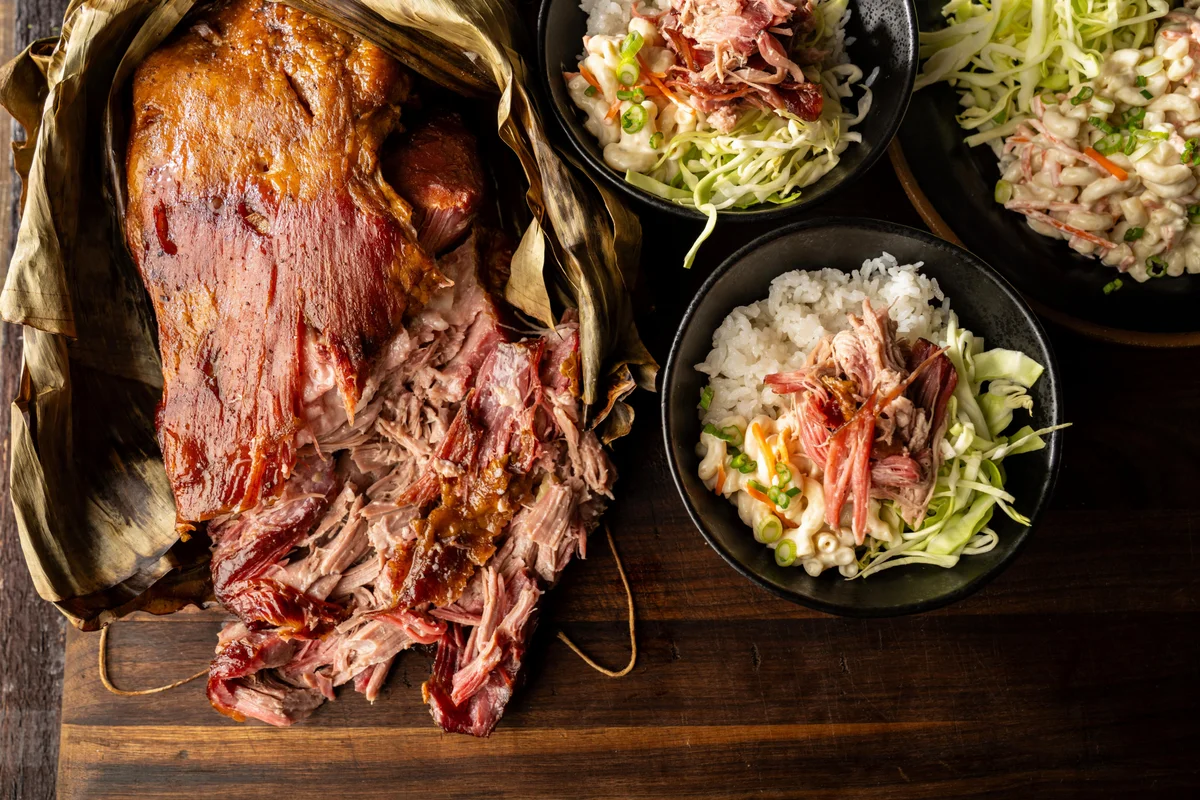
Hawaiian-style kalua pork is slow-smoked pork shoulder seasoned with sea salt and garlic, then wrapped in banana leaves until tender enough to pull apart. It takes time, but the ingredient list is simple and the result works well for a generous shared meal.
Ingredients
- 1 (3.6–4.5 kg)bone-in pork shoulder
- 80 ml alaea Hawaiian sea salt (or 60 ml Himalayan sea salt or kosher salt)Alaea Hawaiian sea salt
- 14garlic cloves
- 1 packet, 2 strips (61 cm each), thawed and rinsedfrozen banana leaves
Instructions
- 1
Season the pork
Trim excess fat from the pork shoulder, leaving about 6 mm across the top. Make 14 evenly spaced cuts around it, each about 2.5 cm long and 5 cm deep. Season with salt, working some into the cuts, and place one garlic clove in each. Put the pork on a wire rack set over a tray and refrigerate uncovered overnight.
- 2
Preheat the grill
Set the Traeger to 107°C (225°F) and preheat with the lid closed for 15 minutes. Use Super Smoke if available. Insert a wired or wireless leave-in thermometer into the thickest part of the pork, parallel to the work surface and clear of the bone.
- 3
Smoke the pork
Set the pork directly on the grill grates, fat side down. Cook for 4–6 hours, until its internal temperature reaches 71°C (160°F).
- 4
Wrap in leaves
When the pork reaches 71°C (160°F), arrange two long banana-leaf strips in a T shape on a work surface. Cut four 76 cm lengths of kitchen twine. Take the pork off the grill and set it in the centre of the leaves. Wrap it snugly, folding the first layer around the pork and then the second so the meat is fully enclosed. Tie the leaves firmly with the twine.
- 5
Cook until tender
Return the wrapped pork to the grill, fat side down, and reinsert the thermometer. Cook for another 4–6 hours, until it reaches 96°C (204°F), or until the thermometer slides in with the feel of room-temperature butter.
- 6
Rest the pork
Remove the pork from the grill and leave it to rest, still wrapped, for 1 hour.
- 7
Shred and serve
Remove and discard the twine and banana leaves. Shred the pork with two forks and serve straight away. It is traditionally served with macaroni salad, rice and cabbage.
What is kalua pork?
Kalua pork is a Hawaiian dish traditionally cooked in an underground imu, where hot stones and leaves gently cook the meat. This version uses a grill and banana leaves to echo that slow, enclosed cooking style.
A bone-in pork shoulder, salt and garlic keep the seasoning straightforward. The long cook softens the meat until it can be pulled apart easily.
Nutrition and macros by portion
The nutrition label shows one serving as written: 1500 calories, 150g protein, 0g carbs, 100g fat.
| Portion | Adjustment | kcal | Protein | Carbs | Fat |
|---|---|---|---|---|---|
| Lighter | More cabbage, less pork | 1050 kcal | 105g | 0g | 70g |
| This serving | As written | 1500 kcal | 150g | 0g | 100g |
| Hungry | Larger serving of pork | 2250 kcal | 225g | 0g | 150g |
The pork shoulder supplies most of the protein and fat, while the garlic contributes very little energy; the salt adds sodium but no calories. Serve the pork with cabbage and a measured portion of rice or macaroni salad to balance the plate. The estimate assumes the four listed servings divide the edible meat evenly, but bone and trimming affect the amount each person receives.
Choosing the salt
Alaea salt: The recipe calls for Hawaiian red sea salt, but gives Himalayan or kosher salt as alternatives. Use the specified volume for the chosen salt, since different crystals can pack differently.
Seasoning: Work some salt into the cuts as well as over the surface. This helps season the thick shoulder beyond its outer layer.
Garlic in the cuts
Even spacing: Make 14 cuts around the pork and keep them roughly the same size. That gives each garlic clove a place to sit and distributes its flavour across the joint.
Keep the cuts contained: Avoid slicing all the way through the meat. The pockets should hold the cloves while the shoulder stays intact for cooking.
Why wrap with banana leaves?
Leaf layers: Overlap the leaves around the pork so the joint is enclosed on every side, then tie the bundle securely. The leaves provide a fragrant covering during the second stage of cooking.
Handle gently: Banana leaves can tear, especially at folds. If a section splits, position the second layer to cover it as you wrap.
Reading the doneness cues
Use temperature: The first stage ends at 71°C (160°F); the wrapped cook continues until 96°C (204°F). Keep the thermometer clear of the bone for a useful reading.
Check tenderness: The recipe also describes the target as feeling like room-temperature butter when probed. The probe should move through the meat easily before you take it off the grill.
Plan the long cooking time
Overnight seasoning: The pork rests uncovered in the fridge overnight before it goes on the grill. Allow for that stage as well as the two long cooking periods and the final hour of resting.
Stay with the thermometer: The stated cooking windows are 4–6 hours for each grill stage, but the internal temperatures and tenderness cues determine when the pork is ready.
What to serve with it
Traditional sides: Serve the shredded pork with macaroni salad, rice and cabbage, as suggested in the recipe. These give the rich, salty meat a mix of soft, crisp and fresh accompaniments.
For a balanced plate: Add a generous portion of cabbage alongside the rice and pork, and serve the macaroni salad as a side rather than the main component.
Recipe notes & tips
- Use a tray beneath the wire rack to catch any drips while the pork rests uncovered in the fridge.
- Keep the thermometer tip in the thickest part of the meat and away from the bone.
- Have the banana leaves thawed and rinsed before the pork reaches its first temperature target.
- Overlap the leaves well so the pork is fully enclosed during the second cook.
- Let the wrapped pork rest for the full hour before opening and shredding it.
- Pull the meat apart with two forks while it is still warm.
Variations
- Use kosher salt: Substitute the listed 60 ml measure for the alaea salt.
- Use Himalayan salt: Measure 60 ml as specified in the ingredient list.
- Serve with rice: Pair the pork with rice and cabbage for the traditional-style plate described in the method.
- Make sandwiches: Pile the shredded pork into rolls and serve cabbage on the side.
- Add a fresh side: Serve with extra sliced cabbage to bring a crisp contrast to the tender pork.
Common mistakes to avoid
- Cutting too deeply: Keep the 14 garlic pockets within the joint so it stays intact.
- Placing the thermometer by the bone: Insert it in the thickest meat, clear of bone, for the specified temperature checks.
- Wrapping loosely: Fold both banana-leaf layers snugly around the whole joint and tie them firmly.
- Stopping by time alone: Check for 71°C (160°F) before wrapping and 96°C (204°F) or the stated butter-soft feel before finishing.
- Skipping the rest: Leave the wrapped pork undisturbed for an hour before shredding.
- Opening the wrap early: Keep the leaves on during the second cook and the resting period.
How to store
Refrigerate leftover pork in an airtight container within 2 hours of serving and use within 3–4 days. Reheat until steaming hot, adding a little water if needed to keep the meat moist.
Frequently asked questions
Can I make this without a Traeger?
The method is written for a Traeger grill. Use a grill that can hold a steady 107°C (225°F) and follow the same thermometer targets if adapting it.
Can I use a boneless pork shoulder?
The recipe specifies bone-in pork shoulder. A boneless joint may cook differently, so use the internal temperature and tenderness cues rather than relying only on the stated times.
Do I need to salt the pork overnight?
Yes. The method seasons the pork and refrigerates it uncovered overnight before cooking.
What if I cannot find banana leaves?
Banana leaves are a defining ingredient in this version. The supplied method does not give a substitute, so the result will differ if you use another wrapping material.
How do I know when the pork is ready?
After wrapping, cook until the centre reaches 96°C (204°F), or until a thermometer feels like it is passing through room-temperature butter.
Can I prepare it ahead?
The pork can be seasoned the night before, as directed. After cooking, refrigerate leftovers promptly and reheat them thoroughly before serving.
Cook it from the original
This recipe comes from traeger.com. Their page has the author’s own photos, notes and tips — the best place to cook it from.
Open the recipe on traeger.com