
Apple Pear Pan-Less Pie
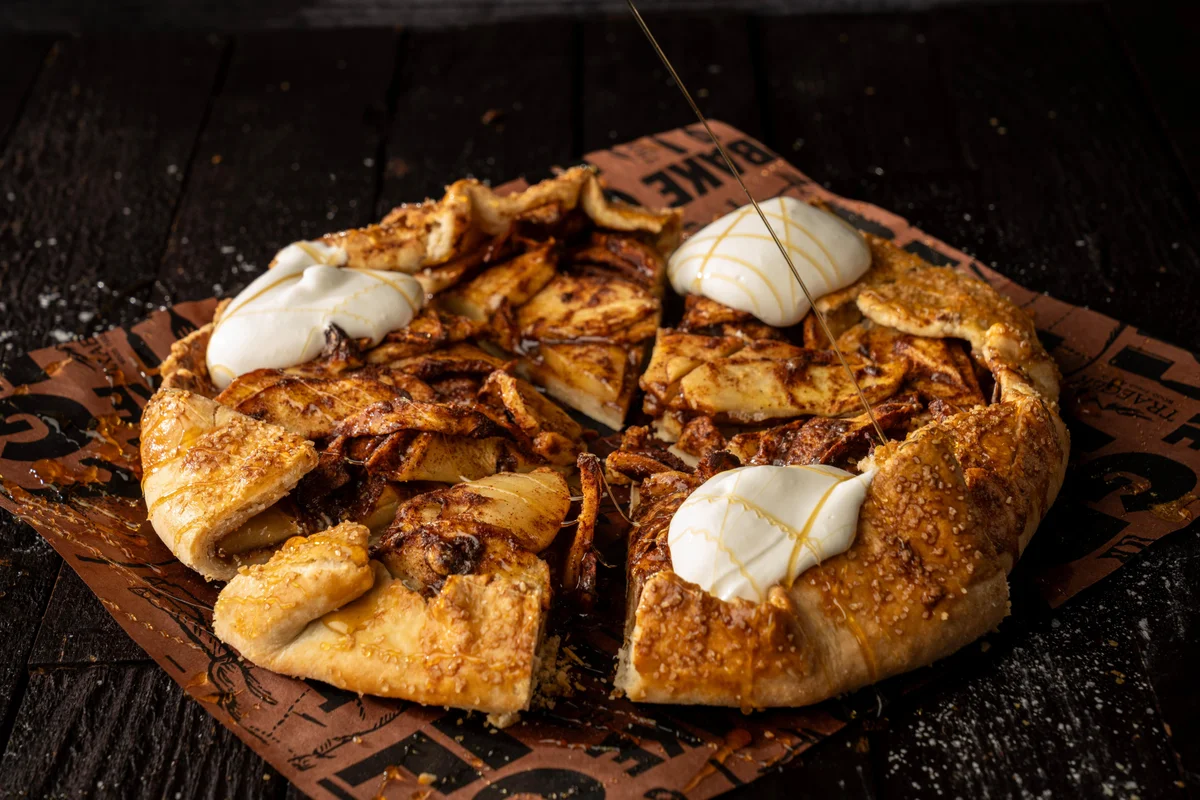
This apple and pear galette wraps warmly spiced fruit in a flaky, folded pastry crust, with no pie tin needed. It makes a relaxed fruit dessert for a holiday table or an everyday treat.
Ingredients
- 79 mlice water
- 15 mldistilled white vinegar
- 156 gplain flour
- 2.5 gkosher salt
- 113 g, cold and cut into 15 g piecesunsalted butter
- 2apples, cored and sliced 6 mm thick
- 2Bosc pears, cored and sliced 6 mm thick
- ½lemon, zest and juice
- 8 gground cinnamon
- 55 gbrown sugar
- 8 gcornflour
- 2 tablespoons (about 28 g)butter
- 15 mlapple cider vinegar, apple cider or apple juice
- 1 gground nutmeg
- 1, split and scraped, or 5 mlvanilla bean or vanilla extract
- 1egg
- 50 gturbinado sugar
Instructions
- 1
Mix the pastry
Stir the ice water and distilled white vinegar together in a small bowl and set aside. In a medium bowl, combine the flour, sugar, salt and cold butter. Tip the mixture onto a clean work surface and use a rolling pin to flatten the butter into long, thin strips. Gather the mixture with a bench scraper and repeat until the butter forms very thin ribbons.
- 2
Add the liquid
Sprinkle the water mixture over the flour and butter, removing any ice cubes first. Toss with your hands until the liquid is distributed.
- 3
Fold and chill
Gather the mixture with a bench scraper and roll it into a long rectangle. Fold it into thirds; the dough will still look loose and rough. Turn it 90 degrees, then roll and fold again, collecting any dry or loose pieces as you go. Repeat twice more, shaping the final fold into a circle. Wrap the dough in cling film and refrigerate for at least 30 minutes and up to overnight.
- 4
Season the fruit
In a large bowl, toss the apples and pears with the lemon juice and zest, cinnamon, brown sugar, cornflour, butter, apple cider vinegar, nutmeg and vanilla until evenly coated. Set aside.
- 5
Roll the dough
Line a large baking tray with baking parchment. Take the dough from the fridge and roll it into a circle about 6 mm thick. Transfer it to the prepared tray.
- 6
Preheat the grill
Set the Traeger to 220°C and preheat for 15 minutes with the lid closed.
- 7
Shape the galette
Pile the fruit in the centre of the dough, leaving a 5 cm border. Fold the edges over the fruit, pleating them as you go to seal the galette.
- 8
Brush and sugar
Whisk the egg in a small bowl. Brush it over the pastry edge, then sprinkle the edge with turbinado sugar.
- 9
Bake and rest
Put the tray on the grill and reduce the temperature to 180°C. Bake for 45–60 minutes, until the juices have thickened and the crust is deep golden brown. Remove from the grill and leave at room temperature for 1 hour before slicing and serving.
What is a pan-less pie?
A pan-less pie is a free-form tart, often called a galette, with pastry folded up around fruit rather than fitted into a pie dish. Galettes are associated with French home cooking, where their informal shape makes them easy to assemble.
This version pairs apples and Bosc pears with lemon and warm spices. The folded, laminated-style pastry gives the fruit a sturdy, flaky casing without requiring a tin.
Nutrition and macros by portion
The nutrition label shows one serving as written: 565 calories, 6g protein, 82g carbs, 24g fat.
| Portion | Adjustment | kcal | Protein | Carbs | Fat |
|---|---|---|---|---|---|
| Lighter | Smaller slice, no topping | 396 kcal | 4g | 57g | 17g |
| This serving | As written | 565 kcal | 6g | 82g | 24g |
| Hungry | Larger slice | 848 kcal | 9g | 123g | 36g |
The fruit and brown sugar provide most of the carbohydrates, while the butter-rich pastry contributes much of the fat. The egg adds a little protein, though the recipe is mainly a fruit-and-pastry dessert. Pair a slice with plain yoghurt for a more balanced plate.
Building flaky pastry
Cold butter: flattening the pieces into thin ribbons creates layers through the dough. Work briskly so the butter stays cool rather than melting into the flour.
Ice water: add it gradually across the flour mixture and toss rather than knead. The dough should come together when pressed, even if it looks rough.
Folding and chilling
Three folds: rolling the dough into a rectangle and folding it into thirds several times builds layers while gathering stray dry bits. Use the bench scraper to lift and fold the loose dough without adding extra flour.
Chill time: refrigerate for at least 30 minutes, or up to overnight, as directed. Chilled dough is easier to roll and shape.
Preparing the fruit
Even slices: cut the apples and pears about 6 mm thick so they cook at a similar rate. Toss them thoroughly with the lemon, spices, sugar and cornflour to coat the pieces.
Thickened juices: the cornflour helps bind the fruit juices as the galette bakes. Letting the baked pie rest for an hour also gives the filling time to settle before slicing.
Shaping without a tin
The border: leave about 5 cm of dough uncovered around the fruit so there is enough pastry to fold over. Pleat the edges around the filling to hold the galette together.
The egg wash: brush the pastry edge, then add the turbinado sugar as specified. This helps the exposed crust take on colour and a crisp finish.
Baking and doneness
Two temperatures: preheat the Traeger to 220°C for 15 minutes with the lid closed, then reduce it to 180°C once the galette is on the grill. The recipe allows 45–60 minutes of baking.
Look for a deep golden crust and fruit juices that have thickened. If the pastry is still pale or the filling looks very loose, use the visual cues rather than taking it out early.
Serving ideas
Rest before cutting: leave the galette at room temperature for 1 hour after baking so the filling can settle. This helps the slices hold their shape.
Serve it on its own or alongside a spoonful of yoghurt or custard. Keep accompaniments simple so the apple, pear and spiced fruit remain the focus.
Recipe notes & tips
- Keep the butter cold while making the pastry to help preserve its flaky texture.
- Use a bench scraper to gather and fold the dough without working it excessively.
- Remove any ice cubes from the water mixture before sprinkling it over the flour.
- Line the baking tray with parchment to make transferring and serving easier.
- Allow the full 1-hour rest after baking before cutting into the galette.
Variations
- Choose firm fruit: use apples and pears that hold their shape during baking.
- Use vanilla extract: substitute 5 ml extract for the split and scraped vanilla bean.
- Swap the liquid: use apple cider or apple juice in place of the apple cider vinegar listed for the filling.
- Change the spice balance: adjust the cinnamon or nutmeg to suit your taste.
- Serve with yoghurt: add a spoonful alongside each slice for a cool contrast.
Common mistakes to avoid
- Warm butter: it can blend into the flour instead of forming layers; keep it cold and work quickly.
- Overworking the dough: this can make the pastry less tender; toss and fold only until it comes together.
- Skipping the border: leave about 5 cm around the fruit so the pastry can fold over it.
- Cutting too soon: the filling may run; rest the galette for 1 hour before slicing.
- Baking by time alone: check for thickened juices and a deep golden crust within the 45–60-minute window.
How to store
Once cool, cover and refrigerate leftovers for up to 3 days. Reheat slices in a low oven until warmed through, or serve them cold.
Frequently asked questions
Can I make the dough ahead?
Yes. The method allows the wrapped dough to chill for at least 30 minutes and up to overnight.
Do I need a pie dish?
No. This is a free-form galette baked on a parchment-lined tray.
How thick should I roll the dough?
Roll it into a circle about 6 mm thick, then transfer it to the prepared baking tray.
How do I know when the galette is baked?
The crust should be deep golden brown and the fruit juices should look thickened. The stated baking time is 45–60 minutes at 180°C.
Why does the galette need to rest?
The 1-hour rest gives the filling time to settle, making the slices easier to serve.
Can I use vanilla extract instead of a vanilla bean?
Yes. The ingredient list gives 5 ml vanilla extract as an alternative to one split and scraped vanilla bean.
Cook it from the original
This recipe comes from traeger.com. Their page has the author’s own photos, notes and tips — the best place to cook it from.
Open the recipe on traeger.com