
Pineapple Mango Smoothie
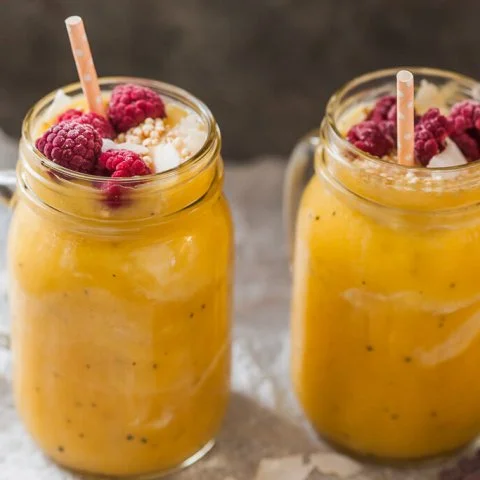
A creamy, fruit-packed smoothie made with pineapple, mango, banana, passion fruit and orange, blended with Greek yoghurt. It makes a refreshing breakfast or snack, with optional toppings for a little crunch.
Ingredients
- 1 smallpineapple
- 1mango
- 1banana
- 1passion fruit
- 1orange
- 120 ml (½ cup)Greek yoghurt
- optional, to tastetoasted coconut flakes
- 2 tspquinoa puffs, optional
- to tasteraspberries, to top
- 240 ml (1 cup), plus more if neededwater
Instructions
- 1
Prepare the fruit
Peel and slice the pineapple, mango and banana, then put them in a blender. Halve the passion fruit and scoop in its juice and seeds. Halve the orange, squeeze in its juice and discard the peel.
- 2
Blend until smooth
Add the Greek yoghurt and 240 ml (1 cup) water to the blender. Blend on high for a couple of seconds, until smooth; add more water if the mixture is too thick.
- 3
Pour and top
Divide the smoothie between glasses. Top with toasted coconut flakes and quinoa puffs, if using, and a couple of fresh or frozen raspberries. Serve.
What is a pineapple mango smoothie?
A fruit smoothie is a blended drink, commonly served at breakfast or as a snack. This version combines tropical fruit with orange and passion fruit for a bright, tangy flavour.
The recipe relies on ripe fruit for sweetness and Greek yoghurt for a creamy finish. Water loosens the mixture so it pours easily.
Nutrition and macros by portion
The nutrition label shows one serving as written: 320 calories, 7g protein, 73g carbs, 4g fat.
| Portion | Adjustment | kcal | Protein | Carbs | Fat |
|---|---|---|---|---|---|
| Lighter | Use less banana | 224 kcal | 5g | 51g | 3g |
| This serving | As written | 320 kcal | 7g | 73g | 4g |
| Hungry | Serve with toast | 480 kcal | 11g | 110g | 5g |
Most of the carbohydrates come from the pineapple, mango, banana, orange and passion fruit; the yoghurt contributes much of the protein, while coconut flakes can add fat. Pair a glass with eggs or another savoury protein source if you want a more substantial breakfast.
Choosing and preparing the fruit
Ripe fruit: choose a mango and banana that yield slightly when pressed, and a pineapple that smells fragrant at its base. Ripe fruit blends more readily and gives the drink a naturally sweet flavour.
Passion fruit and orange: scoop the passion fruit seeds and pulp into the blender, then squeeze in the orange juice. The seeds add a little texture, while the citrus brings a tart note.
Getting the texture right
Start with the stated water: blending the fruit with 240 ml gives you a starting point, while the extra water is there to adjust the consistency. Add it gradually if the smoothie is too thick to pour.
Blend until the fruit is evenly broken down and the mixture looks smooth. The recipe calls for only a couple of seconds on high, so check the texture and blend again briefly if needed.
The role of yoghurt
Greek yoghurt: it adds body and a creamy, slightly tangy contrast to the fruit. Use plain yoghurt to keep the recipe’s flavour focused on the fresh ingredients.
Water: this thins the yoghurt and fruit without adding another flavour. Adjusting it at the end lets you choose a thicker or more drinkable smoothie.
Finishing and serving
Crunchy toppings: toasted coconut flakes and quinoa puffs are optional, but provide contrast to the smooth drink. Add them just before serving so they keep their texture.
Raspberries: a couple on top add a tart finish and a colourful garnish. Serve the smoothie straight after blending, when it is cold and freshly mixed.
Recipe notes & tips
- Cut the fruit into pieces small enough to fit comfortably in your blender.
- Squeeze the orange directly over the blender to catch all its juice.
- Add extra water a little at a time so the smoothie does not become too thin.
- Taste the blended mixture before pouring and adjust its thickness with water.
- Add the toppings just before serving to keep them crisp.
Variations
- Use frozen fruit: blend frozen pineapple or mango pieces for a colder, thicker drink.
- Swap the yoghurt: use plain dairy-free yoghurt for a non-dairy version.
- Add ginger: blend in a small piece of fresh ginger for a warming note.
- Change the topping: use extra raspberries instead of coconut or quinoa puffs.
- Make it thicker: reduce the water and add it gradually until the smoothie reaches your preferred consistency.
Common mistakes to avoid
- Using underripe fruit: the smoothie can taste less sweet; choose ripe fruit for better flavour.
- Adding too much water at once: the drink may become thin; pour in extra water gradually.
- Skipping the orange juice: the blend can be less bright; squeeze the orange into the blender as directed.
- Blending with large fruit pieces: the mixture may take longer to smooth out; slice the fruit before adding it.
- Adding toppings too early: they can lose their crunch; scatter them over the glasses just before serving.
How to store
For the freshest flavour and texture, serve the smoothie straight after blending. If needed, cover and refrigerate leftovers for up to 24 hours, then stir or shake well before serving; the fruit may separate as it stands.
Frequently asked questions
Can I use frozen fruit?
Yes. Frozen pineapple or mango works well and makes the smoothie colder and thicker. You may need to add a little more water to help it blend.
Can I make this smoothie without yoghurt?
Yes, though it will be less creamy. Use a plain dairy-free yoghurt or adjust the water to suit the texture.
How can I make the smoothie thinner?
Blend in extra water a little at a time until it pours easily.
Can I prepare it ahead?
It is best freshly blended, but you can refrigerate it in a covered container for up to 24 hours. Shake or stir before serving.
Are the toppings essential?
No. The coconut flakes and quinoa puffs are optional, and the raspberries are used as a topping. The smoothie itself can be served without them.
Cook it from the original
This recipe comes from vibrantplate.com. Their page has the author’s own photos, notes and tips — the best place to cook it from.
Open the recipe on vibrantplate.com