
Smoked Ricotta Ravioli in Sage Butter Sauce
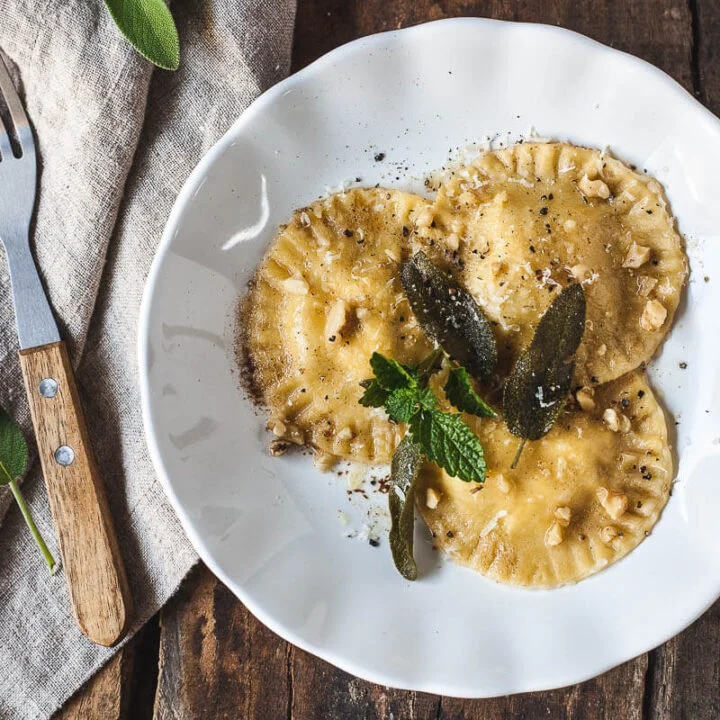
These homemade ravioli pair smoked ricotta filling with browned butter, crisp sage and toasted-tasting nuts. They make a satisfying Italian-style meal for two, with fresh pasta and a savoury, smoky centre.
Ingredients
- 100 gbutter
- to tastesage leaves
- a handfulwalnuts or pecans
- to tastegrated aged Pustotnik cheese, or Parmesan
- 120 ml (½ cup)smoked sheep’s ricotta or other smoked ricotta
- 1egg
- 2 tspsour cream
- to tastesalt, black pepper, red paprika and nutmeg
- 200 gflour
- 2eggs
- 1 tspoil
Instructions
- 1
Make the dough
Put the flour in a bowl and make a well in the middle. Crack in the 2 eggs and scramble them with your fingers or a fork. Add 1 teaspoon of oil, then gradually work in the flour until combined. Knead the dough into a ball, cover with a napkin or foil and leave it to rest for 30 minutes.
- 2
Mix the filling
While the dough rests, crumble the smoked ricotta into a bowl and mash it with a fork. In a separate bowl, whisk the egg and add about half of it to the ricotta. Stir in 1–2 teaspoons of sour cream, season to taste with salt, black pepper, red paprika and grated nutmeg, then combine well and refrigerate.
- 3
Prepare the toppings
Wash and thoroughly dry the sage leaves. Roughly chop the walnuts or pecans, and grate the aged cheese or Parmesan.
- 4
Roll and cut
Divide the dough into 6 pieces and roll each piece thinly, to about 2 mm thick, by hand or with a pasta maker. Use a large round cutter or a glass about 8–10 cm wide to cut circles, re-rolling as needed until you have used all the dough. Each ravioli needs 2 circles.
- 5
Fill the ravioli
Place a small lump of filling in the middle of a dough circle. Dip a finger in water and moisten all around its edge, then place another circle on top. Press the edges together firmly with your fingers and seal the pattern with a fork. Repeat until you have used all the dough.
- 6
Brown the butter
Put the butter in a large pan over medium heat and melt it. Continue cooking until it browns. Add the sage leaves and fry for about 1–2 minutes, until they change colour and stiffen. Turn them over, fry for a few more seconds, then transfer them to a plate lined with kitchen paper.
- 7
Cook and serve
Bring a large pot of water to the boil and season it with salt. Carefully add the ravioli, reduce the heat and cook gently for about 4 minutes, until they have increased in size and are al dente. Lift them out with a skimmer, drain and add them straight to the butter sauce. Toss, plate up and top with the crisp sage, chopped nuts and grated cheese; season with extra salt and pepper if needed, and serve hot.
What are smoked ricotta ravioli?
Ravioli are filled pasta parcels associated with Italian cooking, traditionally made by enclosing a savoury filling between sheets of pasta. This version uses smoked ricotta for a creamy centre with a distinct smoky flavour.
The combination works because the filling is rich but gently seasoned, while browned butter, sage, nuts and aged cheese bring a range of savoury, fragrant and crunchy finishes.
Nutrition and macros by portion
The nutrition label shows one serving as written: 1046 calories, 28g protein, 81g carbs, 68g fat.
| Portion | Adjustment | kcal | Protein | Carbs | Fat |
|---|---|---|---|---|---|
| Lighter | Use less butter | 732 kcal | 20g | 57g | 48g |
| This serving | As written | 1046 kcal | 28g | 81g | 68g |
| Hungry | Make a larger portion | 1569 kcal | 42g | 122g | 102g |
The flour and pasta dough supply most of the carbohydrates, while butter is the main source of fat. Ricotta, egg and cheese contribute protein as well as some fat. A green salad or a portion of vegetables alongside can add freshness and balance the rich sauce.
The filling and its seasoning
Smoked ricotta: Mash it with a fork so the filling is cohesive but still has some texture. The egg and a little sour cream help bind and soften it.
Seasoning: Salt, pepper, paprika and nutmeg are added to taste. Keep in mind that aged cheese can be salty, so you can adjust the final seasoning after plating.
Rolling and sealing the pasta
Thin sheets: Roll the dough to about 2 mm so the pasta cooks through quickly without overwhelming the filling. If rolling by hand, work with one piece at a time and keep the remaining dough covered.
Sealed edges: Moisten the rim lightly, then press firmly around the filling before crimping with a fork. Keep filling away from the edge so the dough can meet and seal cleanly.
Getting the butter and sage right
Browned butter: Let the butter melt over medium heat and cook it a little longer until it browns. Watch it closely as it approaches that point so it does not burn.
Sage leaves: Dry them thoroughly before frying, as moisture can make the butter splutter. Take them out once crisp and changed in colour, then reserve them for the topping.
Checking the ravioli are cooked
Gentle cooking: Once the ravioli are in the boiling water, lower the heat and cook them gently for about 4 minutes. The recipe’s cues are that they increase in size and are al dente.
Careful draining: Lift them out with a skimmer rather than tipping them into a colander, which can damage the filled pasta. Add them straight to the butter sauce while hot.
Serving the dish
Finish each plate with crisp sage, chopped walnuts or pecans and grated aged cheese. Serve immediately while the pasta is hot and the sage still has its crisp texture.
For a more balanced plate, pair the ravioli with a simply dressed green salad or a side of cooked vegetables.
Recipe notes & tips
- Keep the unused dough covered while you roll and cut each portion.
- Use a light hand with the filling so the ravioli edges can seal properly.
- Dry the sage leaves thoroughly before frying them in the butter.
- Have the toppings ready before cooking the ravioli, as they are best served straight from the pan.
- Taste before adding extra salt, especially if your aged cheese is salty.
Variations
- Try pecans: Use them in place of walnuts for a different nutty topping.
- Swap the cheese: Use grated Parmesan instead of aged Pustotnik cheese.
- Add extra herbs: Fry a few more sage leaves for a more aromatic finish.
- Adjust the seasoning: Add paprika or nutmeg gradually to suit your taste.
- Serve with greens: Add a simple green salad alongside the ravioli.
Common mistakes to avoid
- Overfilling the pasta: A large mound makes sealing difficult; use a small lump and keep the rim clear.
- Leaving the edges dry: The two pasta circles may not stick together; moisten the rim with water before pressing.
- Rolling the dough too thick: Thick pasta can overpower the filling; aim for about 2 mm.
- Burning the butter: It can go from browned to burnt quickly; watch it as it cooks over medium heat.
- Boiling too vigorously: The ravioli can be knocked about; reduce the heat and cook them gently.
How to store
These ravioli are best eaten immediately after cooking. If you have leftovers, refrigerate them in a covered container and reheat gently in a pan; the pasta may soften and the sage will lose its crispness.
Frequently asked questions
Can I use a pasta maker?
Yes. The recipe allows you to roll the dough by hand or with a pasta maker; aim for sheets about 2 mm thick.
Can I use ordinary ricotta?
The recipe calls for smoked sheep’s ricotta or another smoked ricotta. Ordinary ricotta will give a milder filling without the smoky flavour.
How do I know the ravioli are done?
Cook them gently for about 4 minutes. They should increase in size and be al dente.
Can I use Parmesan instead of Pustotnik cheese?
Yes. The recipe specifically offers grated Parmesan as a substitute for the aged Pustotnik cheese.
Can I make the filling while the dough rests?
Yes. Prepare and season the ricotta filling during the 30-minute dough rest, then refrigerate it until you assemble the ravioli.
Cook it from the original
This recipe comes from vibrantplate.com. Their page has the author’s own photos, notes and tips — the best place to cook it from.
Open the recipe on vibrantplate.com