
Greek salad
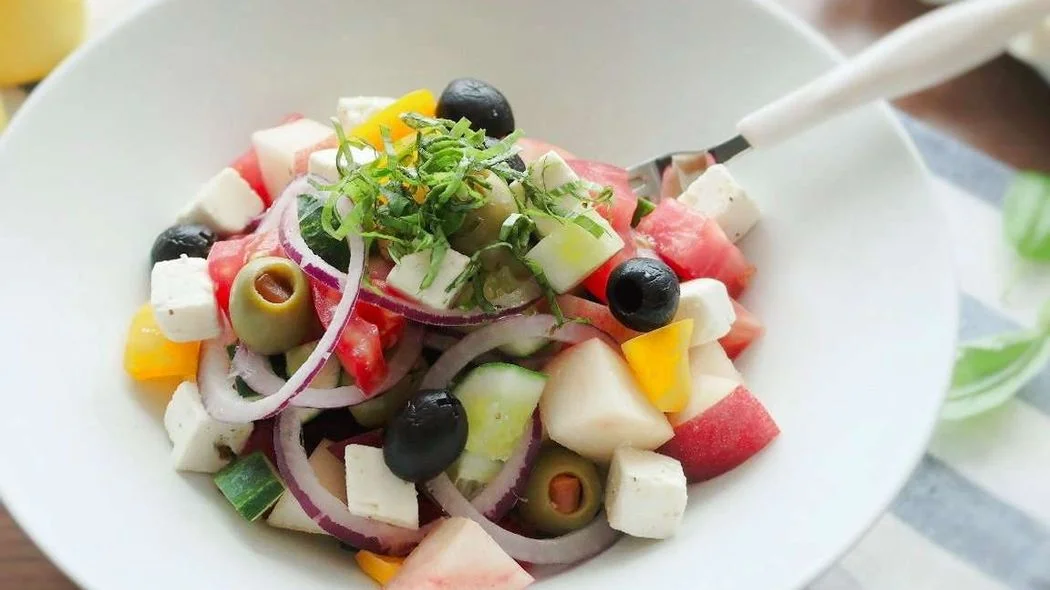
This Greek-style salad combines crisp vegetables, olives and crumbly feta with ripe peach and a tangy lemon dressing. It comes together in 15 minutes and makes a fresh, colourful side or light meal.
Ingredients
- 1firm peach
- 1tomato
- 1cucumber
- ½yellow pepper
- ½red onion
- 5green olives
- 5black olives
- 45 ml (3 tablespoons; about 10 pieces)feta
- 4–5 leavesbasil
- 60 ml (4 tablespoons)olive oil
- 30 ml (2 tablespoons)lemon juice
- 30 ml (2 tablespoons)finely chopped onion
- 22.5 ml (1½ tablespoons)sugar
- 22.5 ml (1½ tablespoons)vinegar
- 2.5 ml (½ teaspoon)salt
- to tasteblack pepper
Instructions
- 1
Prepare the produce
Choose a firm peach, wash its skin well and cut it into 1.5 cm pieces. Cut the tomato, cucumber and pepper into similar bite-sized pieces. Slice the red onion thinly and soak it in cold water to mellow its sharpness; roll the basil leaves together and slice them finely.
- 2
Mix and assemble
Stir the dressing ingredients together in a bowl until combined. Arrange the peach, tomato, cucumber, red onion, pepper, olives and feta in a serving dish, then add the basil. Drizzle over the lemon dressing just before serving.
What is Greek salad?
Greek salad is associated with Greece and is commonly built around fresh vegetables, olives and feta. This version adds peach for a juicy, sweet contrast and uses a lemon dressing for a bright finish.
Feta is a crumbly cheese traditionally made from sheep’s milk or a blend of sheep’s and goat’s milk. Its salty tang gives the crisp vegetables and fruit a savoury counterpoint.
Nutrition and macros by portion
The nutrition label shows one serving as written: 410 calories, 6g protein, 38g carbs, 28g fat.
| Portion | Adjustment | kcal | Protein | Carbs | Fat |
|---|---|---|---|---|---|
| Lighter | Use less olive oil | 287 kcal | 4g | 27g | 20g |
| This serving | As written | 410 kcal | 6g | 38g | 28g |
| Hungry | Add a larger serving | 615 kcal | 9g | 57g | 42g |
Olive oil and feta provide most of the fat, while the peach, vegetables and sugar contribute most of the carbohydrates; feta adds some protein. Pair a serving with beans or another protein-rich food and wholegrain bread for a more balanced meal.
Choosing the ingredients
Firm peach: Choose fruit that gives only slightly when pressed, so the pieces hold their shape when tossed. Wash the skin well and leave it on for colour and texture.
Feta and olives: Feta contributes a salty, crumbly bite, while green and black olives bring different savoury notes. If feta is unavailable, mozzarella or ricotta can be used, though the salad will taste milder.
Preparing the vegetables
Even pieces: Cut the peach, tomato, cucumber and pepper to roughly the same 1.5 cm size. Consistent pieces make the salad easy to eat and help each serving include a mix of ingredients.
Mellow onion: A brief soak in cold water takes the edge off the thinly sliced red onion. Drain it well before adding it, so excess water does not dilute the dressing.
Getting the dressing right
Mix well: Combine the olive oil, lemon juice, chopped onion, sugar, vinegar, salt and pepper until evenly blended. Taste and adjust the seasoning to suit your ingredients.
Dress at the end: Add the dressing just before serving, as directed, to keep the vegetables and peach crisp. If the salad sits dressed, the vegetables will release moisture and soften.
Keeping the texture fresh
Basil: Roll the leaves together and slice them thinly for delicate ribbons. Add them over the assembled salad so their fresh aroma remains noticeable.
Feta: Scatter the cheese over the top rather than mixing vigorously. This keeps its crumbly pieces visible and avoids breaking up the softer ingredients.
Serving the salad
As a side: Serve it alongside grilled vegetables, bread or a simple main dish. The salty cheese and olives pair well with plain, warm accompaniments.
As a light meal: Divide the salad between two plates and serve promptly after dressing. For a more filling plate, pair it with a source of protein such as beans or grilled chicken.
Recipe notes & tips
- Use a firm peach so it stays in neat pieces when served.
- Drain the soaked red onion thoroughly before adding it to the salad.
- Cut the vegetables and peach to a similar size for an even mix.
- Stir the dressing well before pouring it over the salad.
- Add the dressing immediately before serving to keep the ingredients crisp.
Variations
- Swap the cheese: Use mozzarella or ricotta for a milder flavour.
- Add leafy greens: Serve the salad over lettuce for extra crunch.
- Use fresh herbs: Replace some or all of the basil with mint.
- Adjust the sweetness: Reduce the sugar if the peach is very ripe.
- Make it more substantial: Add cooked chickpeas just before serving.
Common mistakes to avoid
- Overripe peach: It can turn mushy when cut; choose firm fruit instead.
- Wet onion: Excess soaking water can thin the dressing; drain the slices well.
- Uneven chopping: Large pieces are awkward to eat; aim for roughly 1.5 cm pieces.
- Dressing too early: The vegetables soften as they stand; dress the salad just before serving.
- Mixing too roughly: Feta can crumble into the dressing; scatter it over the top gently.
How to store
For the freshest texture, serve the salad as soon as it is dressed. Refrigerate any leftovers in a covered container and use within a day; the vegetables may soften, so keep extra dressing separate if preparing ahead.
Frequently asked questions
Can I make the salad ahead?
You can chop the ingredients ahead and refrigerate them separately or in a covered bowl. Add the basil, feta and dressing just before serving for the best texture.
What can I use instead of feta?
Mozzarella or ricotta both work, as suggested in the recipe. They are milder, so check the seasoning before serving.
Do I need to peel the peach?
No. The method says to wash the skin well and cut the peach with its skin on.
Why soak the red onion?
A short soak in cold water softens its sharp raw flavour. Drain it well before adding it to the salad.
Can I use bottled lemon juice?
Yes, bottled lemon juice can be used, though freshly squeezed juice often has a brighter flavour. Keep the listed quantity the same to start.
Cook it from the original
This recipe comes from wtable.co.kr. Their page has the author’s own photos, notes and tips — the best place to cook it from.
Open the recipe on wtable.co.kr