
Japchae - Korean Glass Noodle Stir-fry
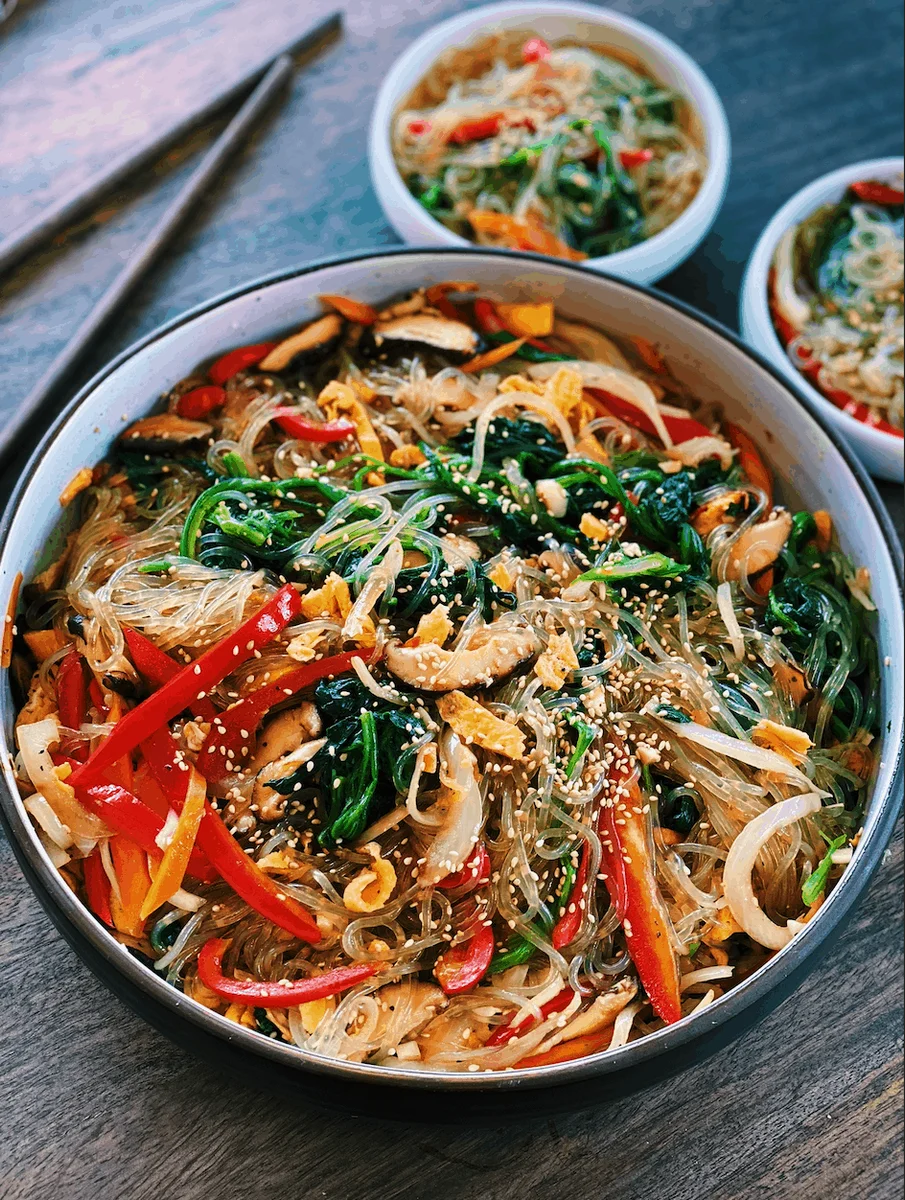
Japchae is a Korean stir-fry of springy sweet potato glass noodles, colourful vegetables and a savoury-sweet sesame sauce. This vegetarian version is a flexible, satisfying meal that comes together in about 35 minutes.
Ingredients
- 250 gKorean sweet potato starch glass noodles
- 3eggs
- 1red pepper, sliced
- 1/2carrot, shredded
- 5shiitake mushrooms, sliced
- 1onion, sliced
- 3 clovesgarlic, minced
- 3 cupsspinach
- 0.5 tspsalt
- 1 tspsesame oil
- 5 tbspsoy sauce
- 2 tbspsesame oil
- 2 tbsphoney
- 1 tspblack pepper
- 1 tbsproasted sesame seeds
Instructions
- 1
Cook the noodles
Cook the glass noodles according to the packet instructions. Drain and rinse them under cold water, then toss with 1 tbsp of sesame oil and set aside.
- 2
Cook the pepper
Drizzle oil into a pan and sauté the red pepper for 2–3 minutes. Remove it from the pan and set aside.
- 3
Cook the mushrooms
In the same pan, sauté the mushrooms for 1–2 minutes, then remove and set aside.
- 4
Cook the carrot
Sauté the shredded carrot for 1–2 minutes, then remove it from the pan and set aside.
- 5
Cook onion and garlic
Sauté the onion and garlic for 2–3 minutes, then remove them from the pan and set aside.
- 6
Season the spinach
Blanch the spinach in hot water for 30 seconds, then transfer it to cold water. Squeeze out all the excess water, drizzle with 1 tsp sesame oil, season with 0.5 tsp salt and set aside.
- 7
Cook the eggs
Whisk the eggs and season with salt and pepper. Drizzle a little oil into a non-stick pan and pour in the eggs to make a very thin layer. When set, roll it up and set aside; cook in batches if needed. Once cool, slice the egg into thin strips.
- 8
Mix the sauce
In a bowl, combine the soy sauce, 2 tbsp sesame oil, honey, black pepper and roasted sesame seeds.
- 9
Combine and serve
Pour half of the sauce over the noodles and mix well. Add all the vegetables and egg, pour over the remaining sauce and mix until thoroughly combined.
What is japchae?
Japchae is a Korean dish of glass noodles tossed with vegetables and a savoury-sweet seasoning. It is often served at celebrations and family meals, and can be enjoyed warm or at room temperature.
This version keeps the noodles and vegetables at the centre, with egg strips adding richness. Cooking the vegetables separately helps each one keep its colour and texture before everything is tossed together.
Nutrition and macros by portion
The nutrition label shows one serving as written: 433 calories, 9g protein, 73g carbs, 13g fat.
| Portion | Adjustment | kcal | Protein | Carbs | Fat |
|---|---|---|---|---|---|
| Lighter | More vegetables, fewer noodles | 303 kcal | 6g | 51g | 9g |
| This serving | As written | 433 kcal | 9g | 73g | 13g |
| Hungry | Add a larger noodle portion | 650 kcal | 14g | 110g | 20g |
The noodles provide most of the carbohydrates, while sesame oil and egg contribute much of the fat; eggs, noodles and vegetables provide some protein. For a more balanced plate, serve a moderate portion with extra vegetables or a fresh side salad.
Choose the right noodles
Sweet potato starch noodles: These are the classic japchae-style noodles, with a chewy, springy texture. Follow the packet directions, as cooking times can vary between brands.
Cold rinse: Rinsing the cooked noodles stops them cooking further and removes excess surface starch. Tossing them with sesame oil helps keep them from clumping while you prepare the rest.
Cook the vegetables in batches
Separate pans or batches: The pepper, mushrooms, carrot, onion and garlic are cooked one after another in the same pan. Remove each batch as directed so the vegetables do not crowd the pan.
Keep the cooking brief: The vegetables should soften but still have some bite. A hot pan and short cooking times help avoid making them limp or watery.
Handle the spinach and egg
Spinach: Blanch it briefly, cool it in cold water and squeeze it well. Too much water left in the leaves can dilute the sauce once everything is mixed.
Egg strips: A thin layer cooks quickly and is easier to roll once set. Let the roll cool before slicing so it holds together more neatly.
Balance the sauce
Sweet and savoury: Soy sauce provides the salty, savoury base, while honey softens it with sweetness. Sesame oil and roasted sesame seeds bring a nutty aroma.
Add in stages: Tossing the noodles with half the sauce first lets them take on flavour before the vegetables and egg are added. Pour in the rest and mix thoroughly to coat everything.
Serve and time the meal
Japchae can be served as a main meal or alongside other Korean dishes. It pairs well with rice, kimchi or a simple fresh salad.
The listed total time is 35 minutes, including cooking the noodles and preparing the vegetables. Set out a bowl for each cooked ingredient so the final mixing step is quick and orderly.
Recipe notes & tips
- Prepare and slice all the vegetables before you start cooking.
- Use the same pan for the vegetable batches, removing each one as soon as it is cooked.
- Rinse the noodles under cold water after draining to stop them cooking further.
- Squeeze the blanched spinach firmly so it does not water down the sauce.
- Let the egg roll cool before slicing it into strips.
- Taste the noodles after mixing and adjust the seasoning to your preference.
Variations
- Add beef: Sauté thin strips separately until cooked through, then combine with the noodles and vegetables.
- Use another protein: Add cooked pork, chicken or tofu for a more substantial version.
- Swap the mushrooms: Use another sliced mushroom variety if shiitake is unavailable.
- Make it less sweet: Reduce the honey to suit your taste.
- Add more colour: Include sliced courgette or extra pepper, cooking each briefly in the pan.
Common mistakes to avoid
- Overcooking the noodles: Follow the packet timing and rinse them with cold water as soon as they are drained.
- Crowding the pan: Cook each vegetable in its own short batch so it sauté rather than steams.
- Wet spinach: Squeeze it thoroughly after cooling so excess water does not dilute the sauce.
- Thick egg layer: Pour in just enough egg to form a thin sheet, cooking in batches if necessary.
- Adding all the sauce at once: Coat the noodles with half first, then mix in the vegetables and remaining sauce.
How to store
Refrigerate leftovers in an airtight container for up to 3 days. Reheat gently in a pan or microwave until hot, adding a small splash of water if the noodles have stuck together.
Frequently asked questions
Can japchae be served cold?
Yes. It can be served warm or at room temperature, and leftovers can also be eaten chilled.
Can I make japchae ahead of time?
You can cook the components ahead and combine them closer to serving. Refrigerate them promptly and keep them covered.
What if I cannot find sweet potato glass noodles?
Look for Korean sweet potato starch noodles, often labelled dangmyeon. Other noodles will have a different texture, so follow their packet directions if substituting.
How do I stop the noodles sticking together?
Rinse them with cold water after cooking and toss them with the measured sesame oil. Mix them well again when adding the sauce.
Can I make this without egg?
Yes. Leave out the egg for an egg-free version; the vegetables and noodles will still make a complete japchae-style dish.
Cook it from the original
This recipe comes from tiffycooks.com. Their page has the author’s own photos, notes and tips — the best place to cook it from.
Open the recipe on tiffycooks.com