
Pisto Manchego Recipe
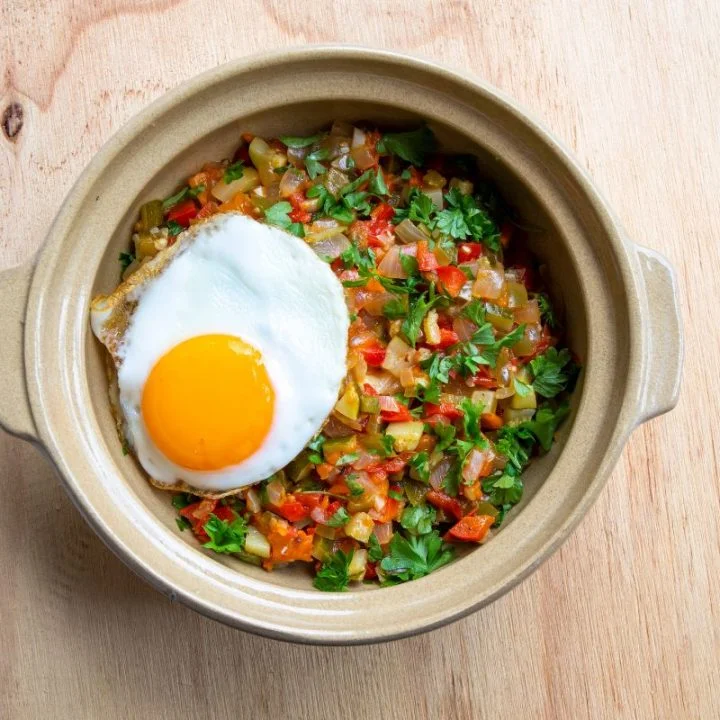
Pisto Manchego is a Spanish stew of tender vegetables simmered with ripe tomatoes, olive oil and cumin. It makes a colourful summer meal, with plenty of tomato flavour and room to serve it simply or alongside other dishes.
Ingredients
- 4ripe tomatoes
- 1onion
- 1green bell pepper
- 1red bell pepper
- 1courgette
- 3garlic cloves
- 60 ml (4 tablespoons)Spanish extra virgin olive oil
- 2 teaspoonsground cumin
- 1 teaspoon (optional)sugar
- to taste (optional)fried tomato sauce
- to tasteground pepper
- to tastesalt
Instructions
- 1
Heat the oil
Pour the Spanish extra virgin olive oil into a large pan and warm it over a medium heat.
- 2
Cook the aromatics
Chop the onion, garlic and both peppers, then add them to the pan with a pinch of salt and a little ground pepper. Sauté for a few minutes, until the onion starts to turn golden.
- 3
Add the courgette
Wash the courgette, trim off its ends and cut it into small cubes. Add it to the pan and sauté for 3–4 minutes.
- 4
Add tomatoes
Rinse the tomatoes, remove their cores and cut them into cubes. Add them to the pan, season with salt and pepper, then stir in 2 teaspoons of ground cumin.
- 5
Simmer gently
Turn the heat down and simmer the mixture for about 10 minutes.
- 6
Adjust the sauce
Taste the pisto. If it is too acidic, stir in 1 teaspoon of sugar. If it seems too thick and dry, add fried tomato sauce; if using it, cook for a few more minutes.
What is pisto Manchego?
Pisto Manchego is a Spanish vegetable dish associated with La Mancha, made by cooking vegetables until they soften into a tomato-rich stew. It belongs to a broader family of Spanish dishes that make use of seasonal produce.
This version combines tomatoes, onion, peppers and courgette, with cumin for warmth. Cooking the vegetables in stages helps them soften while keeping the finished dish full of flavour.
Nutrition and macros by portion
The nutrition label shows one serving as written: 163 calories, 9g protein, 14g carbs, 9g fat.
| Portion | Adjustment | kcal | Protein | Carbs | Fat |
|---|---|---|---|---|---|
| Lighter | Use less olive oil | 114 kcal | 6g | 10g | 6g |
| This serving | As written | 163 kcal | 9g | 14g | 9g |
| Hungry | Serve with extra bread | 245 kcal | 14g | 21g | 14g |
The tomatoes, onion, peppers and courgette provide most of the carbohydrates, while the olive oil is the main source of fat. The listed nutrition also gives 9 g of protein per serving; serve the pisto with a protein-rich accompaniment if you want a more balanced plate.
Build the flavour in stages
Onion and peppers: give these a few minutes in the oil before adding the other vegetables. The onion should begin to turn golden, rather than brown deeply.
Garlic: it goes into the pan with the onion and peppers, so keep the heat moderate and stir as they cook to avoid scorching it.
Keep the vegetables distinct
Courgette: cut it into small, even cubes so it cooks at a similar pace throughout. The brief sauté before the tomatoes go in gives it a head start.
Tomatoes: adding them after the courgette lets them release their juices during the simmer. The vegetables should become tender and saucy, not collapse into a completely smooth purée.
Let the sauce reduce
Gentle heat: once the tomatoes are in, lower the heat and simmer for about 10 minutes. A lively boil can soften the vegetables too quickly and make the sauce reduce unevenly.
Consistency: check the pan as it simmers. If the mixture looks too thick and dry, the recipe allows for a little fried tomato sauce, followed by a few extra minutes of cooking.
Balance the tomato flavour
Taste after simmering, when the ingredients have had time to mingle. If the tomatoes taste too acidic, the optional teaspoon of sugar can round the flavour out.
Season gradually with salt and ground pepper, then taste again before serving. The cumin adds an earthy note, so there is no need to add more unless you prefer a stronger flavour.
Serving ideas
Serve the pisto warm as a vegetable main or as a side with bread, rice or potatoes. It can also accompany eggs or other simple protein dishes.
For a summer meal, let it cool slightly and serve it at room temperature. Keep any accompaniments separate so the vegetables remain the focus.
Recipe notes & tips
- Cut the vegetables into similarly sized pieces so they cook more evenly.
- Keep the heat moderate while cooking the onion, garlic and peppers.
- Stir occasionally during the simmer to prevent the vegetables catching on the bottom of the pan.
- Taste before adding the optional sugar, as tomato acidity varies.
- Add fried tomato sauce only if the finished mixture seems too thick and dry.
Variations
- Use seasonal vegetables: swap in other vegetables you have to hand while keeping the tomato base.
- Make it spicier: add a little chilli with the ground pepper.
- Serve with eggs: top each portion with a cooked egg for a more substantial meal.
- Add herbs: finish with chopped fresh herbs to bring a fresh note.
- Make it saucier: stir in a little fried tomato sauce at the end and cook for a few more minutes.
Common mistakes to avoid
- Crowding the pan: use a large pan so the vegetables can cook evenly rather than steam in a pile.
- Browning the garlic: keep the heat moderate and stir it with the onion and peppers.
- Adding courgette too late: give it its stated 3–4 minutes of sautéing before adding the tomatoes.
- Boiling hard: lower the heat for the 10-minute simmer so the vegetables soften gently.
- Adding sugar too soon: taste the pisto first, then add the optional teaspoon only if it is too acidic.
How to store
Cool leftovers promptly and refrigerate them in a covered container for up to 3 days. Reheat gently in a pan until hot throughout, adding a splash of water if the mixture has thickened.
Frequently asked questions
Can I make pisto Manchego ahead of time?
Yes. Cook it as directed, cool it and refrigerate it in a covered container. Reheat gently before serving.
How do I know when the pisto is ready?
After about 10 minutes of simmering, the vegetables should be tender and the tomato mixture should be saucy. Cook for a little longer if the vegetables need more time.
Do I have to add sugar?
No, it is optional. Taste the pisto first and add the teaspoon only if the tomato flavour seems too acidic.
What if the pisto looks too dry?
The recipe suggests adding fried tomato sauce if the mixture is too thick and dry. Let it cook for a few more minutes after adding it.
Can I serve it cold?
It can be served warm or allowed to cool to room temperature. Refrigerate it if you are not serving it soon.
Cook it from the original
This recipe comes from visitsouthernspain.com. Their page has the author’s own photos, notes and tips — the best place to cook it from.
Open the recipe on visitsouthernspain.com