
Cheesy Japanese Potato Croquette - Korokke
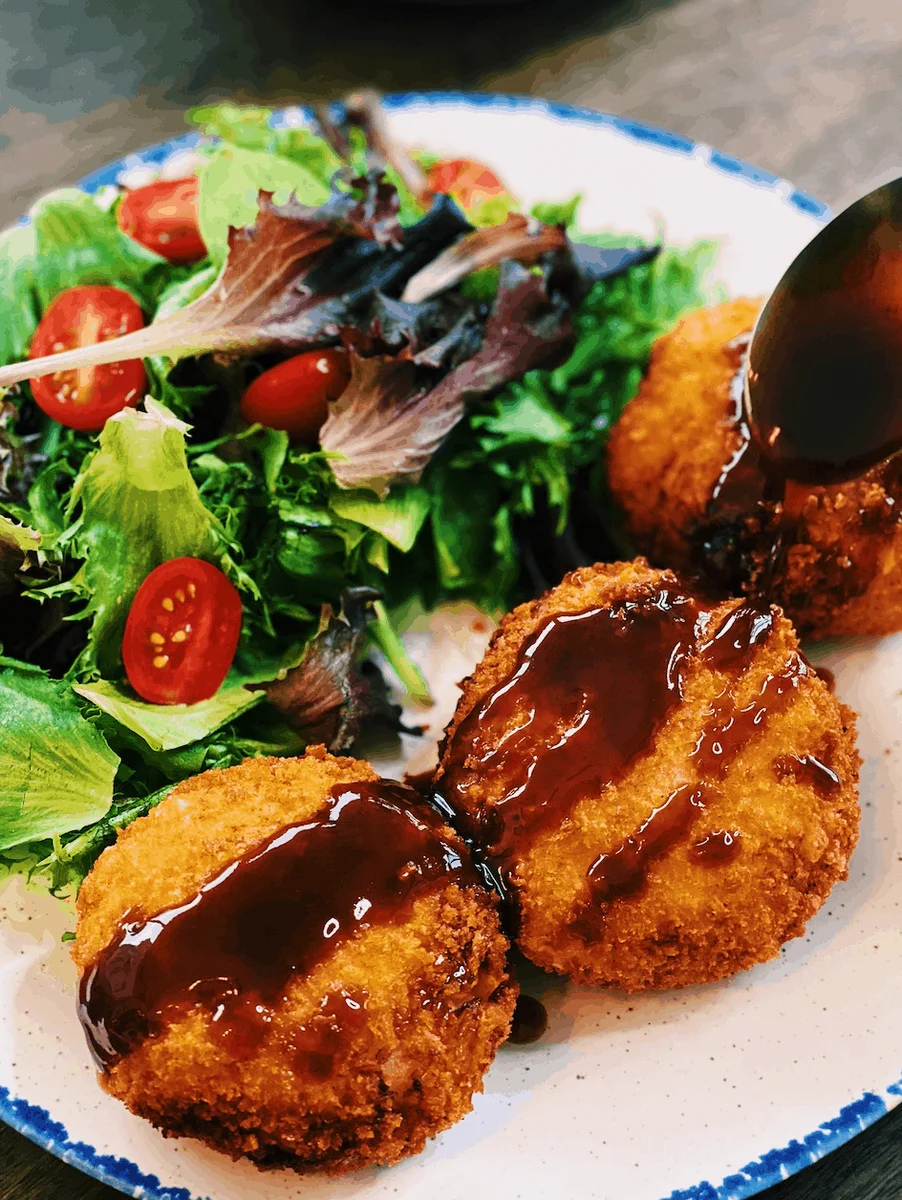
These Japanese korokke are crisp panko-coated potato croquettes with a soft, garlicky filling and a melting mozzarella centre. They take a little shaping and chilling, but make a comforting meat-free main or snack to share.
Ingredients
- 1.13 kgRusset potatoes, peeled and cut into similarly sized chunks
- 1 tbsp (15 ml)Salt
- 4 cloves, peeledGarlic
- 1½Onions, chopped
- 165 gSweetcorn
- 225 gMozzarella, cut into cubes
- To tasteSalt and black pepper
- 125 gPlain flour
- 120 mlCold water
- 2Eggs
- 120 gPanko breadcrumbs
- 2 tbsp (30 ml)Soy sauce
- 2 tbsp (30 ml)Ketchup
- 3 tbsp (45 ml)Worcestershire sauce
- 1½ tbsp (about 19 g)Sugar
Instructions
- 1
Boil the potatoes
Put the potatoes in a pan and cover them with water. Add the peeled garlic cloves and 1 tbsp (15 ml) salt. Bring to the boil over a medium-high heat and cook for 10–15 minutes, until the potatoes are tender but not waterlogged.
- 2
Cook the onions
Meanwhile, drizzle oil into a frying pan and add the chopped onions. Sauté for 4–5 minutes, until soft, translucent and lightly browned.
- 3
Mash the filling
Drain the potatoes and return them to the hob for 1–2 minutes to evaporate excess water. Mash while hot until about 90% smooth, or completely smooth if preferred. Mix in the onions and sweetcorn, season with salt and pepper, and mash together. Leave to cool until safe to handle.
- 4
Shape and chill
Take 3–4 tbsp of potato mixture and shape it into a ball. Press a cube of cheese into the centre, then close the potato around it. Toss the ball between your hands 3–4 times to pack it tightly, cover the cheese fully and remove air pockets. Chill in the freezer for 10–20 minutes, until thoroughly cooled.
- 5
Coat the croquettes
Mix the eggs, cold water and flour in a bowl to make a thick batter. Dip each potato ball in the batter, then coat it with panko, pressing the crumbs on firmly.
- 6
Fry until golden
Pour enough oil into a pan to submerge the croquettes and heat over a medium-high setting to 175°C (350°F). Fry 2–3 croquettes at a time for 2–3 minutes per side, until crisp and golden. Avoid crowding the pan.
- 7
Serve the croquettes
Drizzle with homemade tonkatsu sauce and serve with a side salad.
- 8
Freeze for later
Wait until the croquettes have cooled thoroughly, then transfer them to a container and freeze for up to one month. To serve, defrost overnight and bake at 190°C (375°F) for 15 minutes.
What are korokke?
Korokke are Japanese croquettes, generally made with a potato filling coated in breadcrumbs and fried until crisp. Their name and format reflect the influence of European croquettes, adapted into a familiar Japanese home-cooking dish.
This version combines potato, onion and sweetcorn, with mozzarella tucked inside. Panko gives the outside a light, crunchy coating while the centre stays soft.
Nutrition and macros by portion
The nutrition label shows one serving as written: 249 calories, 11g protein, 40g carbs, 5g fat.
| Portion | Adjustment | kcal | Protein | Carbs | Fat |
|---|---|---|---|---|---|
| Lighter | Serve with extra salad | 174 kcal | 8g | 28g | 4g |
| This serving | As written | 249 kcal | 11g | 40g | 5g |
| Hungry | Add another croquette | 374 kcal | 17g | 60g | 8g |
Potatoes and panko provide most of the carbohydrates, while mozzarella contributes protein and fat; the eggs and frying oil also add fat. Serve a croquette portion with salad or other vegetables for a more varied plate.
The potato filling
Even pieces: cut the potatoes into similar-sized chunks so they cook at roughly the same rate. Check them for tenderness rather than leaving them in the water once they are soft.
A little texture: the recipe suggests mashing the potatoes about 90% smooth. That leaves some potato texture in the filling, though you can mash until smooth if that is your preference.
Packing in the cheese
Seal the centre: press a cheese cube into each portion and close the potato mixture all the way around it. Pack the ball tightly with your hands so there are no gaps or trapped air pockets.
Chill before coating: the 10–20 minutes in the freezer helps cool the shaped croquettes before they go into the batter and hot oil.
Getting a crisp coating
Thick batter: combine the flour, eggs and cold water until the mixture is thick enough to cling to the potato. Coat each croquette evenly before moving on to the panko.
Press on the crumbs: pat the panko firmly around the surface so it sticks during frying. Fry in batches of 2–3 to leave room for the croquettes to crisp.
Frying and doneness
Hot oil: bring the oil to 175°C (350°F) before frying. The recipe gives a cooking time of 2–3 minutes on each side; look for an evenly crisp, golden-brown crust.
Handle carefully: use a slotted spoon or similar utensil to turn and lift the croquettes. Let excess oil drain off before serving.
Serving ideas
Sauce: serve with the homemade tonkatsu sauce made from the listed soy sauce, ketchup, Worcestershire sauce and sugar. The method calls for drizzling the sauce over the finished croquettes.
Something fresh: a simple side salad offers a cool, crisp contrast to the hot, crunchy coating and soft potato filling.
Recipe notes & tips
- Cut the potatoes into similarly sized chunks to help them cook evenly.
- Let excess moisture evaporate from the drained potatoes before mashing.
- Cool the potato mixture enough to handle before shaping the croquettes.
- Make sure the cheese is completely enclosed in each potato ball.
- Press the panko onto the batter-coated croquettes so the crumb layer holds.
- Fry only 2–3 croquettes at a time to avoid crowding the pan.
Variations
- Change the cheese: use another cheese cut into cubes, keeping the pieces small enough to seal inside the potato.
- Make them smooth: mash the potato mixture completely for a more uniform filling.
- Adjust the seasoning: add salt and pepper to taste when mixing the onions and sweetcorn into the potato.
- Serve with extra salad: add more salad alongside the croquettes for a fresh contrast.
- Shape smaller croquettes: use less potato mixture per ball and make sure each piece of cheese is still fully enclosed.
Common mistakes to avoid
- Waterlogged potatoes: drain them well and return them to the hob for 1–2 minutes to dry off excess moisture.
- Loose filling: pack each potato ball tightly and close any gaps around the cheese.
- Leaking cheese: make sure no cheese is exposed before coating the croquette.
- Crumbs falling off: press the panko firmly onto the batter-coated surface.
- Crowded frying pan: cook 2–3 croquettes at a time so they have room to crisp.
- Uneven cooking: keep the oil at 175°C (350°F) and turn the croquettes after 2–3 minutes.
How to store
Cool the croquettes thoroughly, place them in a container and freeze for up to one month. Defrost overnight and bake at 190°C (375°F) for 15 minutes before serving.
Frequently asked questions
Can I make the croquettes ahead?
Yes. Shape and coat them, then keep them chilled until you are ready to fry. The recipe also gives instructions for freezing cooked croquettes.
How do I stop the cheese leaking out?
Enclose each cheese cube fully in the potato mixture and pack the ball tightly, with no gaps or air pockets. Chilling the shaped croquettes before coating is also part of the method.
How do I know when the oil is ready?
The recipe specifies 175°C (350°F). Use a kitchen thermometer if you have one, and fry in small batches.
Can I bake the croquettes instead of frying?
The method fries them for the initial cooking. For frozen cooked croquettes, it instructs you to defrost them overnight and bake at 190°C (375°F) for 15 minutes.
What is the tonkatsu sauce made from?
The listed sauce ingredients are soy sauce, ketchup, Worcestershire sauce and sugar. The method says to drizzle homemade tonkatsu sauce over the croquettes when serving.
What should I serve with korokke?
The recipe suggests a side salad. Its fresh crunch works well alongside the crisp coating and soft filling.
Cook it from the original
This recipe comes from tiffycooks.com. Their page has the author’s own photos, notes and tips — the best place to cook it from.
Open the recipe on tiffycooks.com