
Pajeon (Korean pancake)
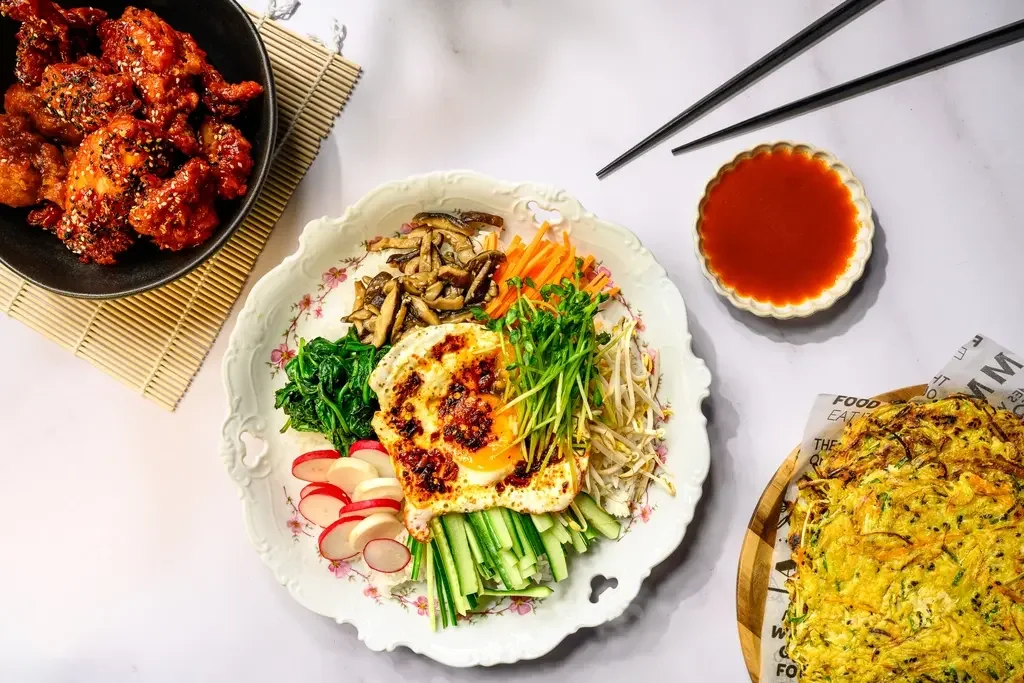
Pajeon is a savoury Korean pancake, crisp at the edges and filled here with leek, carrot, spring onion, bean sprouts and chives. It makes a quick lunch, snack or side dish, with an icy-cold batter helping the vegetables cook in a light coating.
Ingredients
- 1carrot
- 1leek
- 1 bunchspring onions
- 100 gbean sprouts
- 1red onion
- 1 bunchchives
- 100 gplain flour
- 20 grice flour
- 25 gcornflour
- 1 tspbaking powder
- 1 tsponion powder
- 1 tspturmeric
- 220 mlice-cold water
- 1 tbspsesame oil
- 1 tbspsesame seeds
- to tastesalt and pepper
Instructions
- 1
Prepare the vegetables
Cut the carrot and leek into thin strips. Slice the spring onions and red onion into rings, finely chop the chives, then put everything in a bowl.
- 2
Mix the batter
Combine the plain flour, rice flour, cornflour, baking powder, onion powder, turmeric and water to make a batter.
- 3
Add the vegetables
Pour the batter over the vegetables and mix until they are coated.
- 4
Fry the pancakes
Heat a frying pan with the sesame oil. Spoon a few mounds of batter into the pan and cook for a few minutes on each side.
- 5
Finish with sesame
Sprinkle the sesame seeds over the pancakes before serving.
What is pajeon?
Pajeon is a Korean savoury pancake whose name refers to the spring onion often used in it. This version combines spring onion with leek, carrot, bean sprouts, red onion and chives.
The batter uses both rice flour and cornflour alongside plain flour. That mix, plus cold water, gives the vegetables a light coating that can turn crisp as it fries.
Nutrition and macros by portion
The nutrition label shows one serving as written: 230 calories, 6g protein, 39g carbs, 7g fat.
| Portion | Adjustment | kcal | Protein | Carbs | Fat |
|---|---|---|---|---|---|
| Lighter | Use less sesame oil | 161 kcal | 4g | 27g | 5g |
| This serving | As written | 230 kcal | 6g | 39g | 7g |
| Hungry | Serve with rice | 345 kcal | 9g | 59g | 11g |
The flour, rice flour and cornflour provide most of the carbohydrates, while sesame oil and sesame seeds contribute much of the fat. The vegetables add some fibre, and this pancake is not especially high in protein; pair it with a protein-rich side such as eggs or tofu to make the plate more balanced.
The vegetable mix
Thin strips: Cut the carrot and leek into narrow pieces so they are easier to mix into the batter and cook through.
Fresh alliums: Spring onions, red onion and chives bring different levels of savoury flavour. Keep the chives finely chopped so they spread through the mixture.
Getting the batter right
Cold water: Use the water straight from the fridge or chill it with ice, then remove any ice before measuring. Mix the dry ingredients and water until combined rather than working the batter for longer than necessary.
Coated vegetables: Once the batter is poured over the vegetables, fold and mix until they are covered. The mixture should hold together when spooned into the pan.
Frying for crisp edges
Hot pan: Heat the pan with the sesame oil before adding the batter. This helps the underside start cooking as soon as it meets the pan.
Small batches: The recipe calls for a few mounds at a time. Leave room around them so you can turn each pancake and let both sides brown.
When they are done
Colour and texture: Cook each side for a few minutes, watching for a golden surface and edges that look set. If the middle still seems wet when you turn a pancake, give it more time before serving.
Finish: Add the sesame seeds just before serving so they sit on the warm pancakes and keep their nutty flavour.
Serving ideas
Serve the pajeon warm as a snack, a light lunch or a side dish. It also works alongside a simple salad or a bowl of rice for a more substantial meal.
A dipping sauce can be served at the table if you like, but it is not part of the listed ingredients.
Recipe notes & tips
- Slice the carrot and leek evenly so the strips cook at a similar rate.
- Keep the water ice-cold until you are ready to mix the batter.
- Mix the batter only until the dry ingredients are incorporated.
- Fry a few pancakes at a time rather than crowding the pan.
- Turn the pancakes carefully once the first side has set and browned.
- Sprinkle on the sesame seeds immediately before serving.
Variations
- Add kimchi: Fold chopped, well-drained kimchi into the vegetables for a tangy, spicy variation.
- Make it spicier: Serve with a chilli dipping sauce at the table.
- Add mushrooms: Slice mushrooms thinly and mix them in with the other vegetables.
- Use different greens: Replace some of the leek with shredded cabbage.
- Add prawns: Mix small, peeled prawns through the vegetables before adding the batter.
Common mistakes to avoid
- Cutting thick strips: They can remain firm in the middle; slice the carrot and leek thinly.
- Using warm water: The batter may fry less crisp; start with ice-cold water.
- Overmixing the batter: This can make it heavy; stop once the ingredients are combined.
- Crowding the pan: The pancakes are harder to turn; cook a few mounds at a time.
- Turning too soon: The pancake may break apart; wait until the underside has set.
- Using too little heat: The batter may cook slowly without browning; heat the pan before adding it.
How to store
Refrigerate leftovers in an airtight container and eat within 2 days. Reheat in a frying pan over a medium heat until hot and crisp again; a microwave will warm them but soften the edges.
Frequently asked questions
Can I make the batter ahead?
It is best mixed just before cooking, while the water is cold. You can prepare and slice the vegetables ahead, then combine them with the batter when ready to fry.
How do I know when to turn a pancake?
Turn it when the underside is browned and the edges look set enough to hold together. If it is still soft underneath, give it a little longer.
Can I use plain flour if I do not have rice flour?
You can, though the texture may be less crisp. The recipe's rice flour and cornflour help give the coating a lighter finish.
Can I use another oil?
Yes. A neutral cooking oil can be used in the pan, though the pancakes will have less sesame flavour.
What can I serve with pajeon?
Serve it on its own as a snack or with rice, salad or a protein-rich side for a fuller meal.
Cook it from the original
This recipe comes from 24kitchen.nl. Their page has the author’s own photos, notes and tips — the best place to cook it from.
Open the recipe on 24kitchen.nl