
Vegetable stock
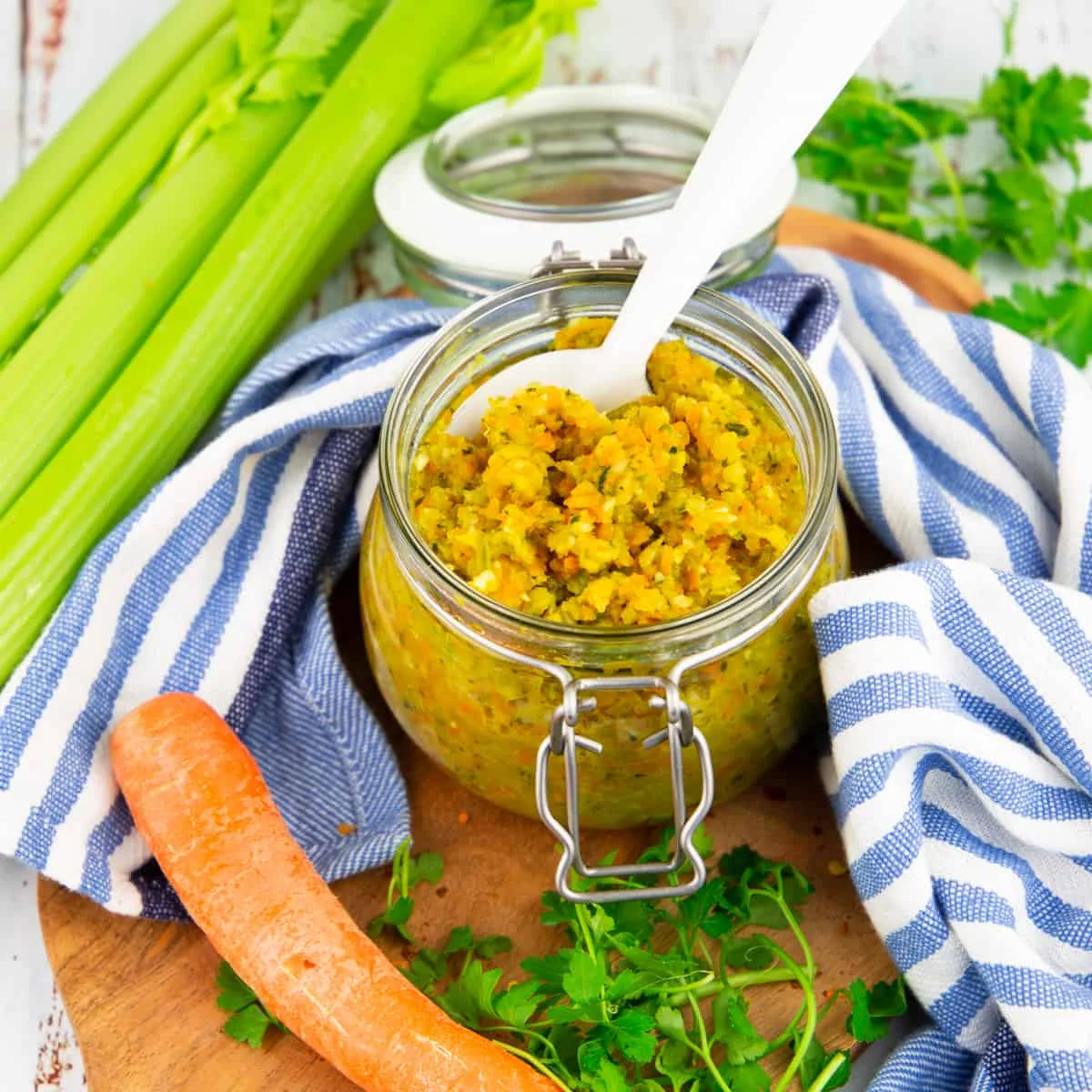
This concentrated vegetable stock paste blends fresh vegetables, herbs, salt and olive oil into a flavourful base for soups, sauces and other savoury dishes. Stir a spoonful into water whenever you need stock.
Ingredients
- 4carrots
- 1leek
- 1onion
- 250 gceleriac
- 2celery stalks
- 2garlic cloves
- ½ bunchfresh parsley
- 2fresh bay leaves
- 100 giodised salt
- 2 tablespoonsolive oil
Instructions
- 1
Chop the vegetables
Roughly chop the vegetables and put them in a food processor.
- 2
Blend until fine
Blend until the vegetables are reduced to very small pieces.
- 3
Cook the paste
Transfer the vegetables to a saucepan and add the salt and olive oil. Stir well and cook over medium heat for 20 minutes, stirring every few minutes.
- 4
Fill a container
Spoon the paste into a clean jar or airtight container. Keep it in the fridge for up to 3 months. Use 1 teaspoon of paste for every 250 ml of water.
What is vegetable stock paste?
Vegetable stock paste is a concentrated seasoning made from finely chopped vegetables, herbs, salt and oil. Rather than simmering and straining a pot of stock, this method cooks the blended mixture into a paste that can be diluted as needed.
Vegetable stocks are used in many European kitchens as a savoury base for soups and sauces. Here, carrots, leek, celeriac and celery bring a rounded vegetable flavour, while parsley and bay add herbal notes.
Nutrition and macros by portion
The nutrition label shows one serving as written: 19 calories, 0g protein, 3g carbs, 1g fat.
| Portion | Adjustment | kcal | Protein | Carbs | Fat |
|---|---|---|---|---|---|
| Lighter | Use less paste | 13 kcal | 0g | 2g | 1g |
| This serving | As written | 19 kcal | 0g | 3g | 1g |
| Hungry | Make a larger batch | 29 kcal | 1g | 4g | 1g |
The vegetables contribute most of the carbohydrates, while olive oil supplies most of the fat; the vegetables and parsley provide a small amount of protein. Salt is the main source of sodium, so use the paste sparingly and balance a dish made with it with unsalted ingredients such as vegetables, grains or protein.
Choosing and preparing the vegetables
Rough chopping: the pieces only need to be small enough to fit into the food processor. There is no need to make them neat, since they will be blended.
Fresh herbs: parsley and fresh bay leaves give the paste its herbal character. Blend them with the vegetables so their flavour is distributed throughout.
Getting the texture right
Fine pieces: blend until the vegetables are very finely chopped, as directed, rather than stopping at large chunks. A fairly even texture makes the paste easier to stir into water.
Batch size: if the food processor is crowded, blend in batches so the vegetables can move around the blade. Return everything to the saucepan before cooking.
Cooking the paste
Steady heat: medium heat cooks the mixture without requiring a rapid boil. Stir every few minutes so the vegetables heat evenly and do not stick to the pan.
Timing: cook for 20 minutes, as the recipe specifies. The mixture should remain a paste rather than becoming a clear, strained stock.
Salt and dilution
Salt level: this recipe uses 100 g of iodised salt, which helps make the paste strongly seasoned. Keep that concentration in mind when adding it to dishes that already contain salt.
Starting ratio: use 1 teaspoon of paste for 250 ml of water, then taste the resulting stock and adjust to suit the dish.
Ways to use it
Soups and sauces: stir the paste into hot water or directly into a dish that needs savoury depth. It can also season cooking liquid for grains or vegetables.
Serving balance: when the paste forms part of a meal, pair the finished dish with a source of protein and vegetables for a more complete plate.
Recipe notes & tips
- Trim and wash the leek carefully before chopping it.
- Blend the vegetables in batches if your food processor is small.
- Stir the paste every few minutes while it cooks to prevent sticking.
- Use a clean jar or airtight container for storage.
- Begin with the stated ratio of 1 teaspoon paste to 250 ml water and adjust to taste.
Variations
- Add mushrooms: blend them with the vegetables for a deeper savoury flavour.
- Use thyme: include a little thyme alongside the parsley and bay.
- Try different roots: replace some of the celeriac with another root vegetable.
- Make it less salty: reduce the amount of paste used per 250 ml water.
- Leave it chunky: stop blending while the vegetables are still in small, distinct pieces.
Common mistakes to avoid
- Large vegetable pieces: blend until very small so the paste is easy to portion.
- Crowded food processor: blend in batches so the mixture reaches an even texture.
- High heat: cook over medium heat and stir every few minutes to reduce sticking.
- Skipping the stirring: check the bottom of the pan regularly and stir the paste through.
- Adding too much paste: start with 1 teaspoon per 250 ml water and taste before adding more.
How to store
Transfer the paste to a clean jar or airtight container and keep it in the fridge for up to 3 months, as directed in the recipe. Use a clean spoon when taking portions.
Frequently asked questions
How much paste should I use for stock?
Start with 1 teaspoon of paste for 250 ml of water. Taste and adjust to suit your dish.
Do I need to strain the paste?
No. This recipe makes a vegetable paste, not a strained liquid stock. Stir it into water or into a dish that needs seasoning.
Can I use a blender instead of a food processor?
Use a machine that can finely chop the vegetables. If the mixture is difficult to process, work in smaller batches.
Why does the recipe use so much salt?
The 100 g of salt makes this a concentrated paste, so only a small amount is used for each portion of stock. Keep its saltiness in mind when seasoning the rest of a dish.
How long does the paste keep?
The recipe says to store it in a clean jar or airtight container in the fridge for up to 3 months.
Cook it from the original
This recipe comes from veganheaven.de. Their page has the author’s own photos, notes and tips — the best place to cook it from.
Open the recipe on veganheaven.de