
Pad Thai with prawns
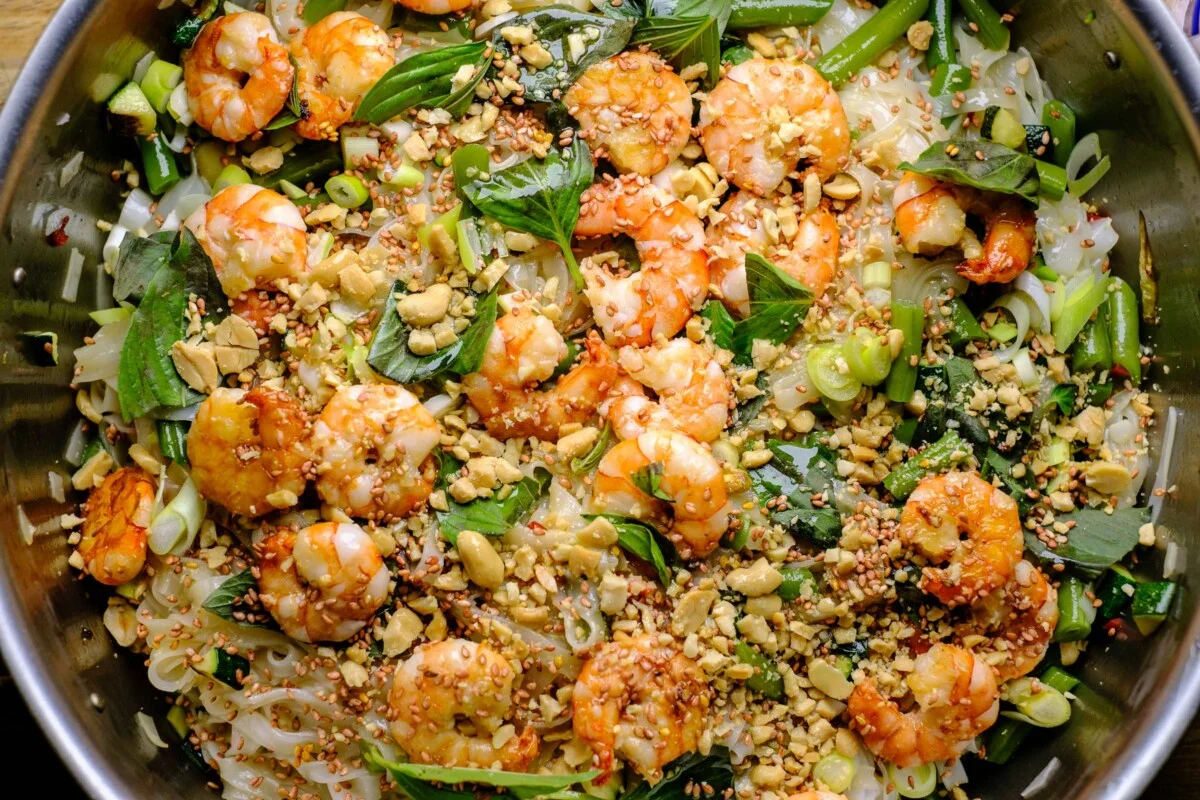
This prawn Pad Thai combines rice noodles with prawns, green beans and courgette, finished with a sweet-savoury fish sauce dressing, herbs and crushed peanuts. Preparing the ingredients separately helps each one cook properly before everything is brought together.
Ingredients
- 200 ggreen beans
- 1 tbspnatural salt
- 4 smallcourgettes
- 1 tsppeanut oil
- 1 packrice noodles
- 1fresh chilli
- 2 slicesginger
- 2 tbspbrown cane sugar
- 3garlic cloves
- 250 mlcold water
- 6 tbspfish sauce
- 1 tbspsoy sauce
- 1 tbsprice vinegar
- 1 bunchspring onions
- 5 tbsppeanuts
- 300 gprawns
- 1unwaxed lemon
- 1 bunchfresh Thai basil
- 1 tbspsesame furikake
Instructions
- 1
Gather ingredients
Set out the Pad Thai ingredients in the order listed so they are ready to use.
- 2
Prepare the beans
Put a large pan of water on the hob; you will use the boiling water to blanch the beans and cook the rice noodles. Bring it to the boil and season with the salt. Trim the ends from the green beans.
- 3
Cut the beans
Cut the beans into pieces about 1 cm long.
- 4
Blanch the beans
Blanch the beans in the boiling salted water until tender but still firm. Lift them out with a slotted spoon, drain and set aside.
- 5
Prepare the courgettes
Trim the ends from the courgettes and quarter them lengthways. Cut away the seeded centres with a horizontal cut, then slice the remaining pieces lengthways into strips and dice them.
- 6
Cook the courgettes
Heat a little peanut oil in a frying pan and brown the courgette cubes on all sides. Transfer them to a separate plate or bowl.
- 7
Peel the garlic
Peel the garlic cloves.
- 8
Prepare the chilli
Halve the chilli lengthways and remove the seeds. The recipe suggests doing this under cold running water in the sink.
- 9
Chop the chilli
Cut the chilli into small dice.
- 10
Start the sauce
Put the garlic and 1 tbsp of the sugar into a saucepan.
- 11
Caramelise the sugar
Add the ginger slices, then heat the pan and let the sugar caramelise gently.
- 12
Finish the sauce
Deglaze with about 200–250 ml water and bring briefly to the boil. Add the diced chilli and the remaining chilli half whole to flavour the sauce. Season it assertively with the soy sauce, fish sauce, rice vinegar and the remaining sugar. Leave it to stand beside the hob for at least 15 minutes to develop its flavour.
- 13
Prepare the toppings
Crush the peanuts finely in a mortar and pick the leaves from the Thai basil.
- 14
Cook the noodles
Use the bean-cooking water to cook the rice noodles, as suggested in the recipe. Add the noodles to the boiling water and cook according to the packet instructions.
- 15
Drain the noodles
Drain the cooked, softened noodles in a sieve and shake them well to remove excess water.
- 16
Fry the prawns
Fry the prawns in a pan over high heat. Season them with a little lemon juice.
- 17
Slice the onions
Trim the spring onions by removing the outer layer and root ends. Cut the white and pale green parts into very fine rings and set aside for serving.
- 18
Combine the noodles
Put the noodles, prepared beans and courgettes into a large pan, wok or wide casserole.
- 19
Add the sauce
Pour the sauce over the noodles and vegetables.
- 20
Heat everything through
Toss the noodles as you heat them, distributing the sauce evenly.
- 21
Garnish and serve
Add the prawns to the hot noodles. Finish with Thai basil, spring onions, sesame furikake and peanuts, then serve promptly.
What is Pad Thai with prawns?
Pad Thai is a Thai stir-fried noodle dish, commonly made with rice noodles and a balance of savoury, sweet and tangy flavours. This version pairs prawns with green beans and courgette, then adds herbs, spring onions and peanuts at the end.
Separate preparation is the defining feature here: the vegetables, prawns, noodles and sauce are readied individually before being tossed together. That makes it easier to manage their different cooking times and keep the final dish lively rather than overcooked.
Nutrition and macros by portion
The nutrition label shows one serving as written: 908 calories, 45g protein, 125g carbs, 20g fat.
| Portion | Adjustment | kcal | Protein | Carbs | Fat |
|---|---|---|---|---|---|
| Lighter | Use fewer noodles | 636 kcal | 31g | 88g | 14g |
| This serving | As written | 908 kcal | 45g | 125g | 20g |
| Hungry | Add more noodles | 1362 kcal | 68g | 188g | 30g |
The rice noodles and brown sugar provide most of the carbohydrates, while peanut oil, peanuts and the prawns contribute much of the fat and protein. Serve with extra greens or a simple salad for a fresh contrast and a more balanced plate.
Prepare each component first
Green beans: cut them into small, even pieces so they blanch quickly and stay firm. Save their cooking water for the noodles, as the method directs.
Courgettes: remove the seeded centres before dicing, then brown the cubes in a little oil. Keeping them aside until the final toss helps them hold their shape.
Build the sweet-savoury sauce
Caramelised sugar: warm it gently with garlic and ginger rather than rushing the process. The recipe uses one tablespoon at this stage and adds the rest with the sauces.
Seasoning: fish sauce brings savouriness, while soy sauce and rice vinegar round out the flavour. The chilli is added both chopped and in a larger piece for flavouring; remove the whole piece before serving if preferred.
Cook noodles to the packet directions
Rice noodles vary in thickness and cooking time, so follow the instructions on the pack. Drain them thoroughly and shake off excess water before they meet the sauce.
Once the noodles are in the pan, toss them gently as they heat so the dressing coats them rather than collecting at the bottom.
Keep the prawns tender
Fry the prawns over high heat as instructed, and add a little lemon juice for brightness. Have them ready before the noodle mixture is finished so they can be added at the end.
Avoid leaving the prawns in the hot pan while the noodles are being prepared. They only need to be cooked through, not kept cooking while the other components catch up.
Finish with fresh toppings
Spring onions: slice the white and pale green parts very finely so they add freshness without dominating each bite. Pick the Thai basil leaves shortly before serving.
Peanuts and furikake: crush the peanuts finely and scatter them with the sesame furikake just before serving. The toppings add contrast to the soft noodles and vegetables.
What to serve alongside
Serve the Pad Thai straight from the pan while the noodles are hot and the toppings are fresh. Lemon wedges can be offered at the table for anyone who wants more citrus.
For a fuller meal, pair it with a simple cucumber salad or lightly dressed greens. Keep additional sides mild so they do not compete with the fish sauce, chilli and herbs.
Recipe notes & tips
- Set out and prepare all the ingredients before heating the pans, as the cooking stages move quickly once underway.
- Cut the beans and courgettes to an even size so they cook at a similar rate.
- Keep the sauce at a gentle simmer while the sugar caramelises to reduce the risk of scorching the garlic.
- Check the rice noodle packet for its recommended cooking time and drain the noodles thoroughly.
- Use a wide pan or wok for the final toss so the sauce can coat the noodles evenly.
- Add the basil, spring onions, peanuts and furikake just before serving to retain their freshness and texture.
Variations
- Adjust the chilli: use less chilli for a milder dish, or add more diced chilli for extra heat.
- Add lime: swap the lemon juice for lime juice if you prefer a sharper citrus note.
- Use another herb: finish with coriander instead of Thai basil for a different fresh flavour.
- Change the vegetables: replace some of the courgette with thinly sliced pepper, keeping the vegetables separately cooked.
- Make it nut-free: leave out the peanuts and check that the furikake is suitable for your needs.
Common mistakes to avoid
- Overcooking the beans: blanch them only until tender but still firm, then lift them out promptly.
- Crowding the courgettes: cook them in a roomy pan so they can brown rather than steam.
- Burning the sugar: keep the heat gentle and watch the garlic as the sugar caramelises.
- Soggy noodles: drain them well and shake off excess water before adding them to the sauce.
- Overcooking the prawns: fry them over high heat and add them to the finished noodles just before serving.
- Adding toppings too early: scatter on the herbs, peanuts and furikake at the end so they keep their texture.
How to store
Refrigerate leftovers in an airtight container for up to 2 days. Reheat in a pan over medium heat with a small splash of water, stirring until hot; add fresh herbs and crunchy toppings after reheating.
Frequently asked questions
Can I make the sauce ahead?
Yes. Prepare it ahead and keep it covered in the fridge, then warm it before tossing it with the noodles. Remove the whole chilli piece if you do not want it in the finished dish.
How do I know when the rice noodles are ready?
Use the cooking time on the packet and check that they are softened but not falling apart. Drain them as soon as they reach that point.
Can I use frozen prawns?
Yes, thaw them fully and pat them dry before frying. This helps them sear rather than release excess water in the pan.
Can I leave out the furikake?
Yes. The dish can be served without it; the peanuts, spring onions and basil still provide a varied finish.
Why cook the vegetables separately?
The beans and courgettes need different preparation and cooking times. Cooking them separately makes it easier to keep each tender and distinct when they are combined with the noodles.
Can I make this less spicy?
Use less of the fresh chilli, and omit the whole chilli half from the sauce. Taste the sauce before mixing it with the noodles.
Cook it from the original
This recipe comes from thomassixt.de. Their page has the author’s own photos, notes and tips — the best place to cook it from.
Open the recipe on thomassixt.de