
Beef tartare
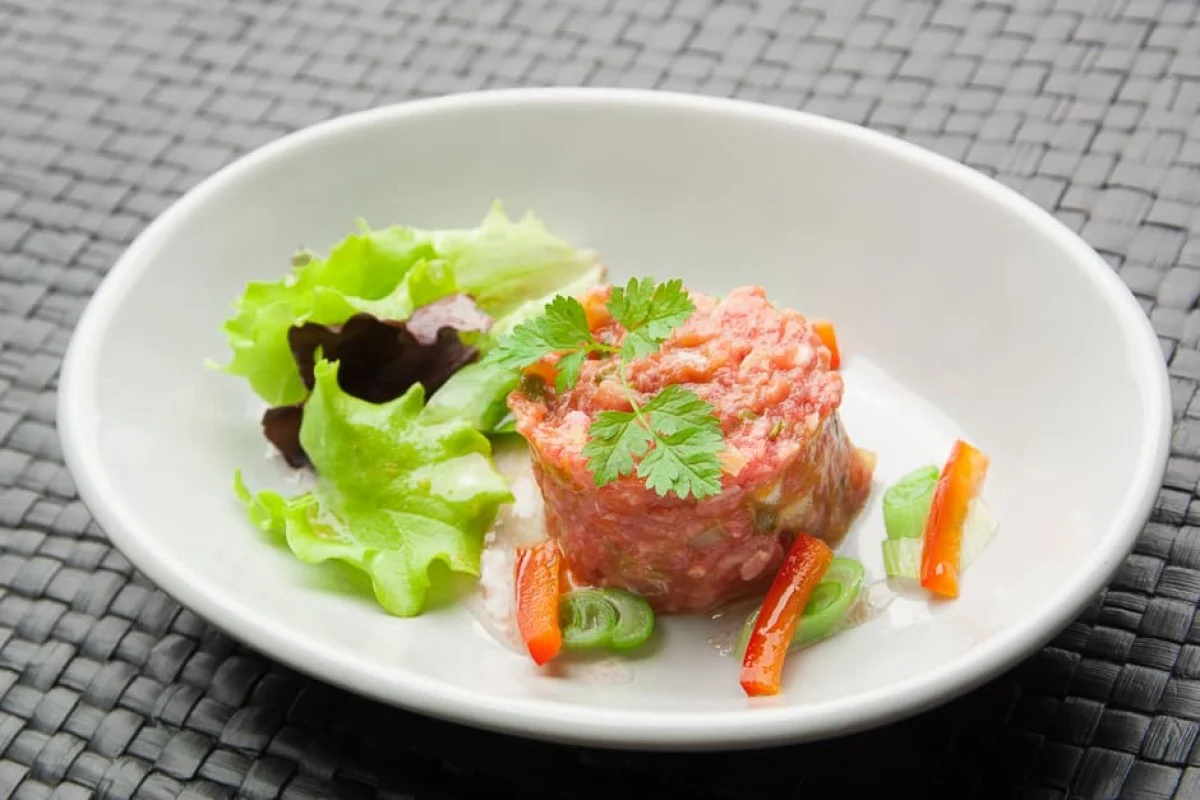
Beef tartare combines finely minced beef with capers, gherkins, mustard, tomato paste and seasonings, served with dressed salad. Fresh, very cold beef and careful seasoning are essential for this classic-style dish.
Ingredients
- 500 gbeef fillet or topside
- 4 pinchessalt
- 4 pinchespepper
- 2onions or shallots
- 15 leavesflat-leaf parsley
- 4 tbspgherkins
- 4 tbspcapers
- 4 tspWorcestershire sauce
- 2 tbspmedium-strength Dijon mustard
- 4 tbsptomato purée
- 4 clcognac
- 4egg yolks
- 8mixed salad leaves, such as Lollo Rosso, Lollo Bianco, oak leaf, radicchio and frisée
- 2 tbspsalad dressing
- 2 tbspdiced tomato
- 2 tbspfinely sliced spring onion
Instructions
- 1
Prepare the beef
Ask the butcher to remove the sinew and membranes from the beef fillet. Cut the meat into small pieces and have it minced.
- 2
Chop the gherkins
Finely chop the gherkins and capers.
- 3
Dice the onion
Peel the onion or shallots and cut them into fine dice.
- 4
Chop the parsley
Wash the parsley and chop it finely.
- 5
Gather the ingredients
Set out the minced beef, prepared gherkins and capers, diced onion, mustard, tomato purée and egg yolks ready to combine.
- 6
Season and chop
Season the minced beef with salt and pepper, then chop it through with a chef’s knife. Add Worcestershire sauce and cognac to taste, and adjust the seasoning.
- 7
Prepare the dressing
Have the dressing ready for serving. A simple salad dressing can be made with white wine vinegar, sugar, salt, pepper and olive oil.
- 8
Prepare the leaves
Wash the salad leaves and dry them thoroughly so they are ready to serve.
- 9
Prepare the garnish
Prepare diced tomato, or cut peppers into strips. If using spring onions, slice them finely on the diagonal.
- 10
Plate and serve
Shape the prepared beef tartare using a ring. Arrange the dressed salad leaves alongside, then garnish with onion slices and, if desired, pepper or diced tomato. Serve.
What is beef tartare?
Beef tartare is a dish of raw, finely chopped or minced beef served with seasonings and accompaniments. It is associated with classic European restaurant cooking, where the quality of the meat and the balance of its sharp, savoury additions matter most.
This version pairs beef with gherkins, capers, mustard, tomato purée, egg yolk, Worcestershire sauce and cognac. A fresh salad alongside gives the rich, seasoned meat a crisp contrast.
Nutrition and macros by portion
The nutrition label shows one serving as written: 363 calories, 30g protein, 8g carbs, 20g fat.
| Portion | Adjustment | kcal | Protein | Carbs | Fat |
|---|---|---|---|---|---|
| Lighter | More salad, less tartare | 254 kcal | 21g | 6g | 14g |
| This serving | As written | 363 kcal | 30g | 8g | 20g |
| Hungry | Larger tartare portion | 545 kcal | 45g | 12g | 30g |
The beef and egg yolks provide most of the protein and fat, while the tomato purée and salad garnish contribute some of the carbohydrates. Serve the tartare with plenty of dressed salad leaves to make the plate feel more balanced and fresh.
Choose and handle the beef carefully
The recipe allows beef fillet or topside. Ask the butcher to trim away sinew and membranes and mince the meat for you, as the method specifies.
Raw beef needs especially careful handling. Keep it chilled until preparation, use clean equipment and serve it promptly; choose meat from a trusted source intended for raw preparation.
Build the seasoning in stages
Gherkins and capers: Chop both finely so their sharp, briny flavour is distributed through the beef rather than landing in large bites.
Mustard and tomato: Dijon mustard adds a savoury tang, while tomato purée gives the mixture a rounded, concentrated flavour.
Worcestershire and cognac: Add these to taste, as directed, then check the overall seasoning before serving.
Keep the texture fine
Knife chopping: After seasoning, work the minced beef through with a chef’s knife as the method describes. Aim for an even, finely chopped texture without turning the mixture into a paste.
Fine additions: Cut the onion and parsley finely, too. Consistent pieces help the beef hold together when shaped and make each mouthful balanced.
Prepare the salad well
Dry leaves: Wash the mixed leaves and dry them thoroughly before dressing. Excess water can dilute the dressing and leave the salad limp.
Simple dressing: The suggested dressing uses white wine vinegar, sugar, salt, pepper and olive oil. Dress the leaves just before serving so they retain their fresh texture.
Shape and garnish just before serving
Use a ring to shape the tartare neatly on each plate, then arrange the dressed leaves alongside. The recipe also suggests onion slices and diced tomato, with sliced peppers as an alternative garnish.
Because the dish is served raw, prepare the components ahead only where practical and keep them chilled. Combine, shape and serve the tartare promptly.
What to serve alongside
The mixed salad is the recipe’s main accompaniment, adding freshness and crunch to the seasoned beef. Choose leaves such as frisée, radicchio or oak leaf for a varied mix of textures and flavours.
Keep the garnish simple: spring onion, tomato or pepper can add colour and a fresh edge without taking attention away from the tartare.
Recipe notes & tips
- Ask the butcher to trim the beef and mince it shortly before you plan to serve.
- Keep the beef cold while preparing the other ingredients.
- Chop the gherkins, capers, onion and parsley finely for an even mixture.
- Add the Worcestershire sauce and cognac gradually, tasting as you go.
- Dry the salad leaves well so the dressing clings to them.
- Shape and garnish the tartare shortly before serving.
Variations
- Use topside: Choose it instead of fillet, as allowed in the ingredient list.
- Add pepper strips: Use sliced peppers in place of the diced tomato garnish.
- Vary the leaves: Mix radicchio, frisée and oak leaf with the other suggested salad leaves.
- Adjust the heat: Add a little more Dijon mustard to taste for a sharper result.
- Change the garnish: Use finely sliced spring onion for a fresh, savoury finish.
Common mistakes to avoid
- Using warm beef: Keep it chilled during preparation and serve it promptly.
- Leaving large pieces: Chop the gherkins, capers and onion finely for a more even bite.
- Overworking the mixture: Chop until evenly combined, stopping before the beef becomes pasty.
- Adding all the spirit at once: Add cognac to taste so it does not overpower the other seasonings.
- Serving wet leaves: Dry them thoroughly before dressing to avoid a watery salad.
- Preparing too far ahead: Shape and serve the raw tartare promptly rather than leaving it out.
How to store
Beef tartare is best served immediately and is not suitable for keeping as leftovers. Do not leave it at room temperature; discard any portion that has been sitting out or handled during the meal.
Frequently asked questions
Can I use topside instead of beef fillet?
Yes. The ingredient list gives beef fillet or topside as options. Ask the butcher to trim and mince the chosen cut.
Can I mince the beef at home?
The method specifies having the butcher mince it. If preparing it yourself, use clean equipment and keep both the meat and equipment cold.
Can I make the tartare ahead?
You can prepare the chopped garnishes and wash the salad in advance, keeping them chilled and separate. Combine and shape the raw beef shortly before serving.
Is the egg yolk cooked?
No cooking step is given for the egg yolks; they are included in the raw tartare. Use fresh eggs and take care with handling, particularly when serving anyone for whom raw egg is unsuitable.
What can I use instead of tomato garnish?
The method suggests cutting peppers into strips as an alternative to the diced tomato. Spring onion is also listed as an optional garnish.
How should I serve beef tartare?
Shape it with a ring and serve it alongside dressed, washed and dried salad leaves. Finish with onion slices and the optional tomato or pepper garnish.
Cook it from the original
This recipe comes from thomassixt.de. Their page has the author’s own photos, notes and tips — the best place to cook it from.
Open the recipe on thomassixt.de