
Vegan Maki Rolls | Easy Vegan Sushi
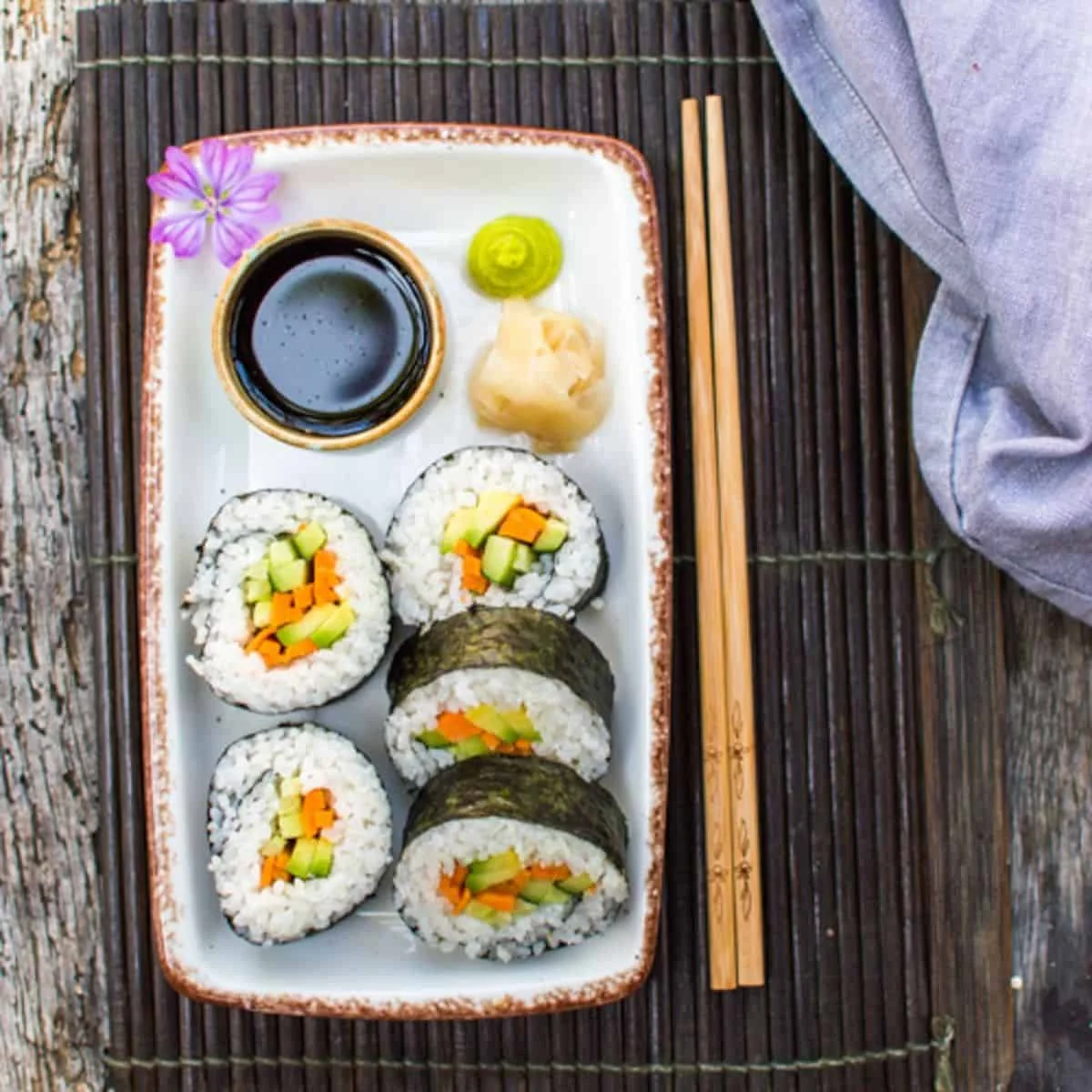
These vegan maki rolls pair seasoned short-grain rice with avocado, carrot and cucumber, wrapped in toasted nori. They make a hands-on meal to share, and the simple fillings are easy to customise at home.
Ingredients
- 370 g (2 cups)uncooked short-grain sushi rice
- 550 ml (2 1/3 cups)water
- 37.5 ml (2 1/2 tablespoons)rice vinegar
- 6 g (1/2 tablespoon)granulated sugar
- 2.5 ml (1/2 teaspoon)salt
- 5–6 sheetssushi nori (toasted seaweed)
- 1 largeavocado, pitted and sliced
- 1carrot, sliced or shredded
- 1 smallcucumber, cut into small strips
- to tastesoy sauce
- to tastewasabi
- to tastepickled ginger
Instructions
- 1
Rinse the rice
Put the rice in a large pot and cover it with tap water. Swish the grains with your hand, drain, refill and rinse again. Repeat a few times until the water remains mostly clear when swished, then drain well.
- 2
Cook the rice
Add 550 ml water to the rinsed rice and mix. Bring to the boil over high heat, stir, then turn the heat down to medium-low, cover and simmer for 15 minutes without lifting the lid. Turn off the heat and leave covered for another 10 minutes before opening.
- 3
Season the rice
Mix the rice vinegar, sugar and salt in a large bowl. Add the cooked rice and gently fluff it as you mix. Leave it to cool to room temperature before assembling the sushi.
- 4
Spread on nori
Set a sheet of nori, rough side up, in the middle of a bamboo mat, with a small bowl of water nearby. Wet your hands and spread a thin, even layer of room-temperature rice over the nori, leaving the top 1.3 cm bare. Press gently as you spread.
- 5
Fill and roll
Arrange a small strip of avocado, carrot and cucumber in a straight line about 3.8 cm from the bottom edge nearest you. Use the bamboo mat to roll the nori gently but firmly. Repeat with the remaining sheets until the rice is used.
- 6
Slice and serve
Moisten a sharp knife with water and cut each roll into 6 to 8 pieces. Serve with soy sauce, wasabi and pickled ginger.
What are vegan maki rolls?
Maki are Japanese sushi rolls made by wrapping seasoned rice and fillings in nori, then slicing the roll into bite-sized pieces. This plant-based version uses avocado, carrot and cucumber for a mix of creamy and crisp textures.
The combination works because the vegetables are cut into narrow strips that are easy to roll, while vinegar-seasoned rice gives the filling a bright, savoury-sweet backdrop.
Nutrition and macros by portion
The nutrition label shows one serving as written: 357 calories, 6g protein, 68g carbs, 6g fat.
| Portion | Adjustment | kcal | Protein | Carbs | Fat |
|---|---|---|---|---|---|
| Lighter | More cucumber, less rice | 250 kcal | 4g | 48g | 4g |
| This serving | As written | 357 kcal | 6g | 68g | 6g |
| Hungry | Larger roll portion | 536 kcal | 9g | 102g | 9g |
The rice provides most of the carbohydrates, while avocado contributes much of the fat; the vegetables add freshness, but this serving is relatively modest in protein. For a more balanced plate, serve the rolls with a protein-rich side such as edamame or tofu.
Getting the rice right
Rinsing the rice: swishing and draining several times removes loose surface starch, helping the cooked grains stay distinct rather than overly sticky.
Steaming: keep the lid closed during the 15-minute simmer and the 10-minute rest. The covered rest lets the rice finish cooking evenly.
Season and cool
Vinegar mixture: dissolve the sugar and salt into the rice vinegar before adding the cooked rice, so the seasoning can be distributed as you fluff.
Cooling: bring the rice to room temperature before rolling. Rice that is too hot can soften the nori and make assembly harder.
Choose and prepare the fillings
Avocado: slice it into a narrow strip so it sits neatly in the roll and adds a soft, creamy contrast.
Carrot and cucumber: cut them into thin strips or shred the carrot, keeping the pieces compact enough to roll without pushing out the rice.
Rolling without squeezing
Rice layer: use wet hands to prevent sticking, and spread a thin, even layer while leaving the top 1.3 cm of nori uncovered. A heavy layer of rice can make the roll difficult to close.
Tightness: start at the edge nearest you and use the mat to guide the roll snugly around the filling. Apply gentle pressure rather than crushing the ingredients.
Serving the rolls
Cutting: dampen a sharp knife before slicing each roll into 6 to 8 pieces. If rice begins to cling to the blade, moisten it again between cuts.
On the side: serve with soy sauce, wasabi and pickled ginger. These rolls also work well as part of a shared sushi-making meal.
Recipe notes & tips
- Keep a small bowl of water nearby and wet your hands before handling the rice.
- Spread the rice thinly and evenly so the rolls remain easy to close.
- Use a bamboo mat to guide the roll, but avoid pressing hard enough to crush the filling.
- Cut the vegetables into narrow, even strips for easier assembly.
- Moisten the knife between cuts to help make cleaner slices.
Variations
- Add tofu: include thin strips of firm tofu for a more substantial filling.
- Use red pepper: swap in thin strips of red pepper for some or all of the carrot.
- Add spring onion: tuck a little finely sliced spring onion alongside the vegetables.
- Try sesame: sprinkle sesame seeds over the rice before adding the filling.
- Make it spicy: mix a little wasabi into the soy sauce for serving.
Common mistakes to avoid
- Skipping the rinse: excess surface starch can make the rice gummy; rinse until the water stays mostly clear.
- Lifting the lid: steam escapes and the rice may cook unevenly; keep the pot covered through the simmer.
- Rolling warm rice: it can soften the nori; cool the rice to room temperature first.
- Overfilling the nori: bulky fillings make the roll hard to close; use a small, narrow strip of each vegetable.
- Using a dry knife: rice sticks to the blade and tears the roll; moisten the knife before slicing.
How to store
Store leftover rolls in an airtight container in the fridge and eat within 1 day for the best texture. These rolls are best served cold or at room temperature; reheating is not recommended.
Frequently asked questions
Do I need a bamboo mat?
A bamboo mat makes the rolling step easier, but you can use a clean tea towel as a guide if you do not have one.
Why does the rice need rinsing?
Rinsing removes loose starch from the surface of the grains, helping the cooked rice have a better texture for rolling.
Can I prepare the rice ahead?
You can cook and season it ahead, then let it cool before rolling. Keep it covered while it waits so it does not dry out.
How do I stop the rice sticking to my hands?
Wet your hands before spreading the rice, and re-wet them as needed while assembling the rolls.
How many pieces should I cut from each roll?
Cut each roll into 6 to 8 pieces, as directed. Use a sharp, dampened knife for neater slices.
Cook it from the original
This recipe comes from worldofvegan.com. Their page has the author’s own photos, notes and tips — the best place to cook it from.
Open the recipe on worldofvegan.com